Plate Nº 89 · recorded October 30, 2026
PhysicsReported finding
Cambridge's $10 Chip-Sized Sensor Matches Lab Instruments
Cambridge researchers built a $10 spectrometer that identified foods, plastics and medicines with 100% accuracy and tracked glucose noninvasively in one participant.
By James Calloway4 min read767 words
In brief
- A $10 chip-sized spectrometer identified plastics, pharmaceuticals, coffee, flour and tea with 100% accuracy in reported tests.
- The device measures solution concentrations to roughly 0.01% accuracy and works from -20°C to 80°C.
- The study, led by Dr. Chunhui Yao, appeared in Nature Photonics on October 22, 2026.
- It measured blood glucose, alcohol and lactate noninvasively, including extended glucose tracking in one participant.
- The chip uses a silicon nitride photonic platform across 1200–1700 nm near-infrared wavelengths and processes measurements in under a second.
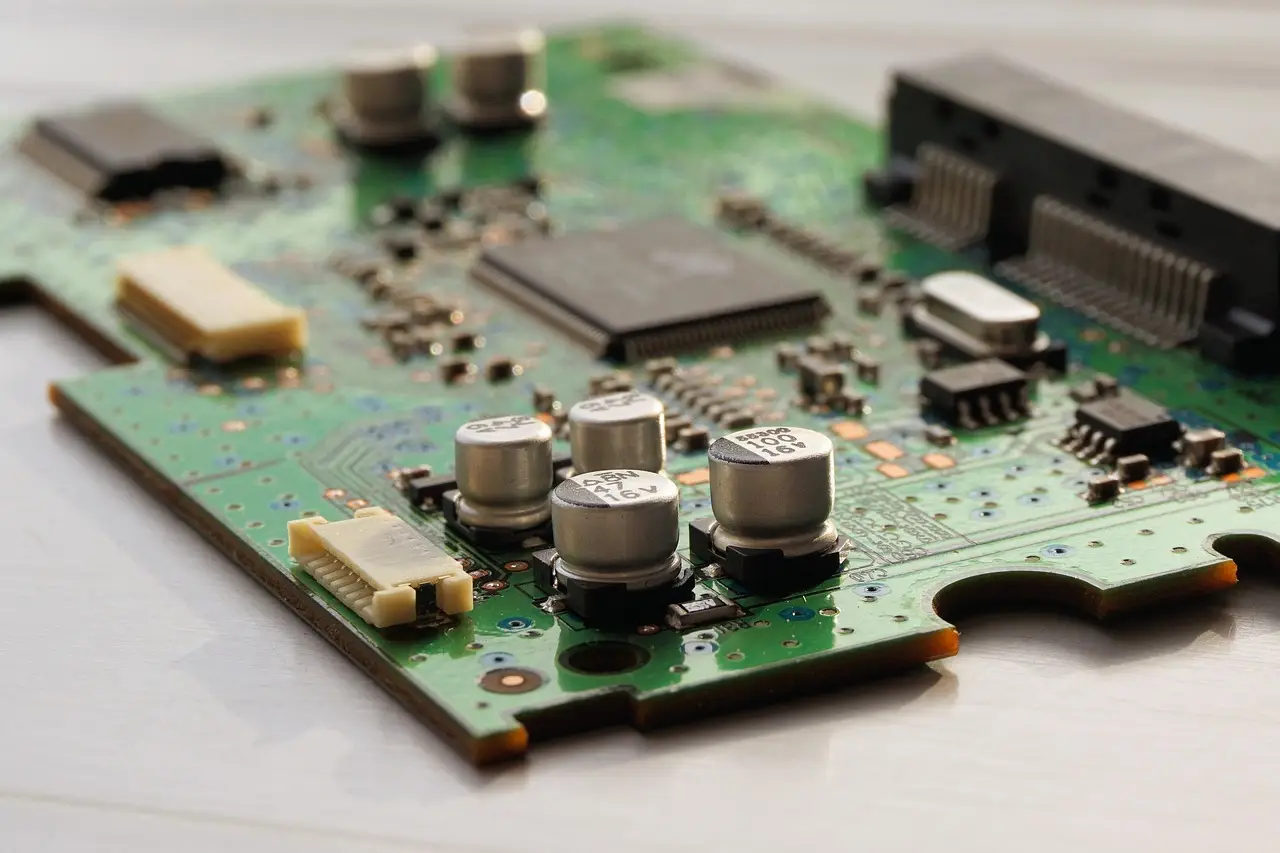
A $10 optical sensor built by University of Cambridge researchers has matched — and in some tests beaten — laboratory spectrometers, while being small enough to fit inside a wearable device. In the team's reported tests, it identified plastics, pharmaceuticals, coffee, flour and tea with a 100% success rate, and measured solution concentrations to roughly 0.01% accuracy.
The device, described in Nature Photonics on October 22, 2026, is a new kind of optical spectrometer — an instrument that analyzes light to reveal what substances it has touched. Spectrometers are workhorses of medicine, manufacturing, chemical testing and environmental research. The catch has always been size. Shrink one, and you lose resolution, range or accuracy, leaving a gadget good at naming substances but poor at measuring them.
The Cambridge team, working with the start-up GlitterinTech founded by the same research group, claims its design breaks that trade-off.
How does a convolutional spectrometer work?
Conventional spectrometers split light into its component wavelengths, or reconstruct a spectrum through heavy computation. This device does something different. It performs a mathematical operation called convolution directly on the incoming light itself, using a principle known as the convolution theorem.
In practice, the researchers arranged optical components with repeating spectral responses — unbalanced Mach-Zehnder interferometers or micro-ring resonators — in a sequence. Adjusting these components in proportion to one another shifts the system's response across wavelengths in a controlled, linear way. Fast Fourier transforms, a standard number-crunching technique, then recover the spectrum.
"The key insight was to go back to the mathematics and ask whether there was a fundamentally cleaner way to retrieve spectra," said Dr. Chunhui Yao, the study's lead author. "By using the convolution theorem directly in the optical domain, we avoid many of the limitations that have held miniaturized spectrometers back."
The team built the chip on a silicon nitride photonic platform, integrated with onboard electronics. It works across near-infrared wavelengths of 1200 to 1700 nanometers — near-infrared being light just beyond what the human eye can see — and collects and processes a measurement in under a second. Because the design uses repeating optical patterns, its bandwidth can theoretically extend almost without limit, and stacking more components increases resolution exponentially.
The approach also demands little computing power. Many miniaturized spectrometers lean on complex calibration and demanding reconstruction algorithms that falter in noisy conditions. The convolutional design avoids much of that, recovering spectra quickly because the measurements follow a linear mathematical relationship.
What did the health tests show?
Under conditions designed to mimic real physiology, the device accurately measured skin moisture, blood alcohol, blood lactate and blood glucose. The researchers also demonstrated noninvasive glucose tracking in a single participant over an extended period.
Hold that promise loosely. One participant is not a clinical trial. The researchers themselves say further testing is needed before this becomes a practical medical product. Noninvasive glucose monitoring has humbled plenty of well-funded competitors, and a press-announced demonstration is a long way from regulatory approval.
Still, the engineering signs are notable. The sensor kept working reliably between -20°C and 80°C — an unusually wide range for a miniature spectrometer — which matters for wearables, factory floors and outdoor deployments. "What makes this work stand out is not just performance in the lab, but technical readiness," said project leader Prof. Qixiang Cheng, crediting Yao with turning the mathematical concept into a packaged system robust across temperature extremes.
"The architecture is simple, scalable, and manufacturable, yet it delivers precision that rivals or exceeds much larger instruments," said Prof. Richard Penty, who contributed to the photonic system design.
What does this change for everyday devices?
For now, nothing you can buy. But the roadmap is concrete: cheap sensors distributed across factories to continuously check material quality; food-freshness monitors; environmental sensing at scale. In healthcare, the team envisions wearables that track hydration, detect alcohol, follow fitness biomarkers or monitor glucose continuously for people with diabetes.
"Our vision is to make spectrometry as ubiquitous as temperature or motion sensing," Cheng said.
The caveats deserve their own paragraph. The classification tests, however impressive, were performed under controlled conditions; real-world mixtures and dirt will test the 100% figure hard. The 0.01% concentration accuracy was measured against specific solution types, not everything a user might encounter. And the glucose demonstration, repeated, involved one person.
What's solid is the claim that elegant mathematics plus cheap silicon nitride can produce laboratory-grade optics for about ten dollars. Whether that becomes a wrist-worn lab — or stays a very good benchtop story — depends on the testing that comes next.
via elec.eng.cam.ac.uk (Original)
More from James Calloway
Show full bio
Staff writer covering regulation, policy and their impact on general science news at SciBeat.
267 articles
Nearby plates
- Mars Dust Measured Down to 100 Nanometers Aboard Perseverance Rover
- FDA Highlights Digital Health Technologies for Drug Development
- Chip-sized frequency comb matches lab giants in clock tests
- NIH and NASA Offer $7.1 Million for Quantum Sensors to Test Drug Safety
- AI tool predicts chromatography retention times on unfamiliar instruments