Plate Nº 49 · recorded October 30, 2026
PhysicsReported finding
Tested 3D thermal cloak hides objects from infrared cameras
A 3D-printed aluminum and rubber-like lattice redirected heat around complex objects, making them appear absent to infrared cameras while keeping the enclosed region thermally stable.
By Priya Raman4 min read857 words
In brief
- October 26, 2026: Researchers reported the first tested three-dimensional thermal cloak.
- The device redirects heat around complex objects and conceals them from infrared cameras in virtually any direction.
- Its structure combines a 3D-printed aluminum lattice with a poorly conducting, rubber-like filler.
- Infrared tests preserved the surrounding temperature pattern while maintaining a uniform internal temperature.
- The study appeared in Nature Communications, volume 17, issue 1, under DOI 10.1038/s41467-026-73167-0.
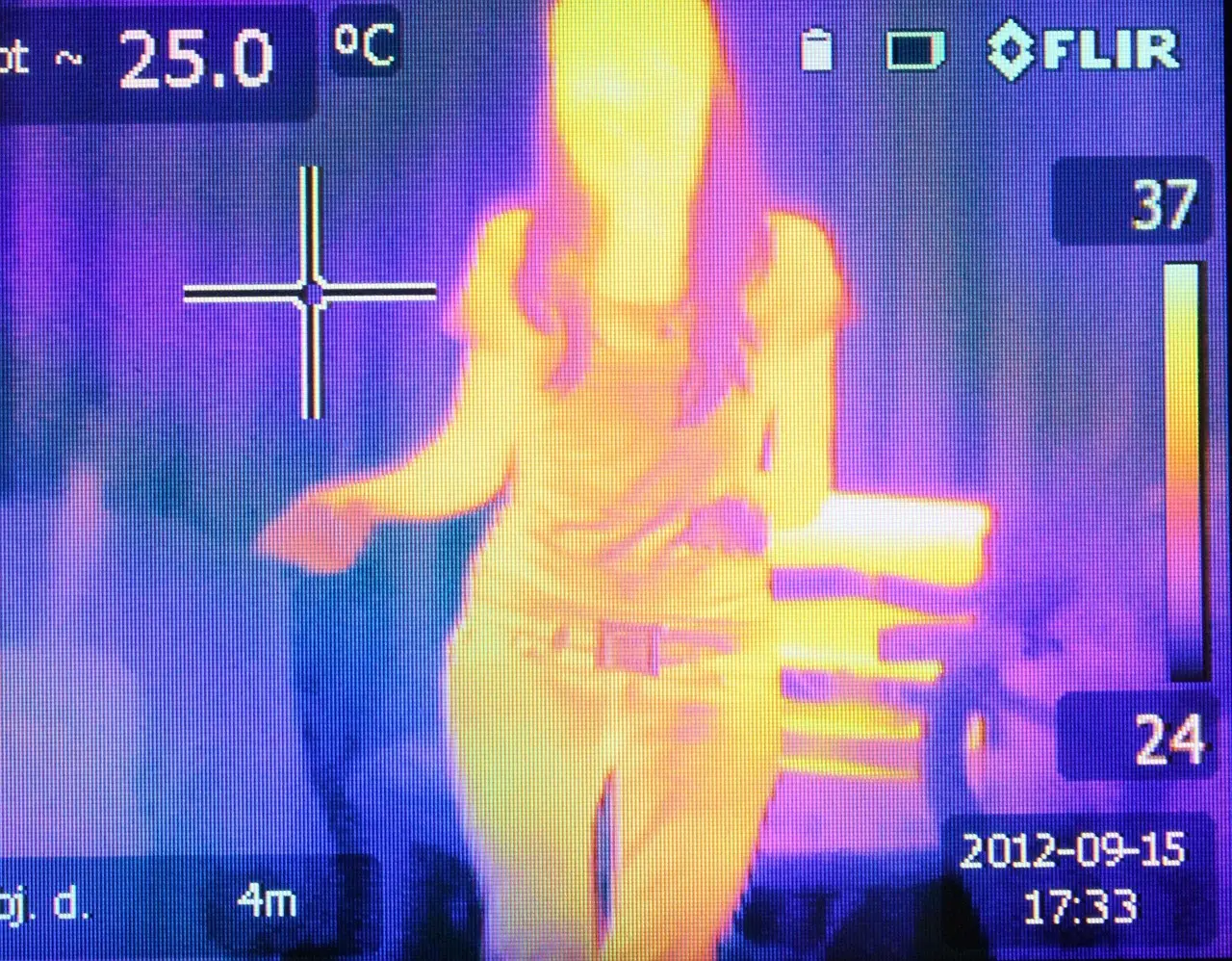
In experiments reported on October 26, 2026, an infrared camera registered an apparently empty temperature field around a detailed geometry resembling a human head, enclosed by a newly tested three-dimensional thermal cloak.
Researchers at the University of Illinois Urbana-Champaign describe their device as the first three-dimensional thermal cloak to conceal complex objects from infrared cameras in virtually any direction while protecting the enclosed space from extreme heat and cold.
A thermal cloak does not simply seal heat away from an object. It redirects heat around the concealed region, causing the camera to read a temperature pattern resembling the surrounding environment rather than the object.
The team’s civil and environmental engineering professor Shelly Zhang, postdoctoral researcher Weichen Li and graduate student Yibo Wang worked with Ole Sigmund, a professor at the Technical University of Denmark.
“A real thermal cloak should work no matter where the heat comes from,” Zhang said. “Our device can hide a complex 3D object in an infinite number of directions while keeping the temperature inside stable and protected.”
The findings appeared in Nature Communications as “Free-form thermal cloaks in three dimensions,” volume 17, issue 1. The journal reference lists Weichen Li, Yibo Wang, Ole Sigmund and Xiaojia Shelly Zhang, with DOI 10.1038/s41467-026-73167-0.
What did the new design change?
Earlier experimental cloaks either redirected heat across a flat, two-dimensional surface or worked only along a specified direction of heat flow. The Illinois design seeks to overcome both restrictions by shaping heat flow in three dimensions.
The team drew on transformation thermotics, a field that studies how engineered materials redirect heat. Its guiding question was what kind of material structure could cover nearly all the thermal properties required for a perfect cloak.
The answer was a lattice-based material, an open framework whose structure can be adjusted independently along three directions. Those adjustments let the researchers vary thermal conductivity, meaning how efficiently heat passes through each part of the cloak.
The design spans a much broader range of thermal conductivities than earlier devices and approaches the values predicted for ideal thermal cloaking. This tunability allows heat to move efficiently through selected sections while moving more slowly through others.
The researchers went beyond computer simulations and built the device. Three-dimensional metal printing produced an intricate aluminum lattice with pathways for efficient heat conduction, while mold casting filled the remaining spaces with a rubber-like material that transfers heat poorly.
The two-part structure works like pipes in a plumbing network: aluminum carries heat away from the protected center, while the poorly conducting filler limits unwanted heat transfer.
What did the infrared-camera tests show?
The team placed the cloak between hot and cold regions, creating a temperature difference that drove heat through the surrounding environment. Infrared imaging, which maps surface temperature by detecting emitted infrared radiation, then recorded the resulting temperature patterns.
The cloak guided heat around the hidden region while preserving the surrounding pattern. To the camera, that area appeared much as it would without an object. At the same time, the cloak maintained a uniform internal temperature, shielding the enclosed space from the external extremes.
Researchers also concealed intricate three-dimensional geometries, including detailed shapes resembling human heads. The team reports that earlier experimental cloaks had not demonstrated the same combination of geometric complexity and cloaking performance.
Where could the technology be used?\n
Those laboratory results point to possible uses, but the study does not report field trials of any application.
- Electronics: Redirect heat away from sensitive components, improve thermal management in microchips and protect devices operating under demanding conditions.
- Security and defense: Future versions might conceal people or equipment from thermal detection systems and shield valuable assets from severe temperatures.
- Thermal protection: Maintain stable internal conditions when surroundings are extremely hot or cold.
Zhang said any field requiring precise heat control or protection from thermal detection could benefit. The researcher placed the broader aim beyond cooling alone: hiding and protecting information carried by heat.
What remains beyond the tested cloak?
The demonstrated device handles heat arriving from outside. It does not yet show that it can conceal an object that generates its own heat, which the team identifies as a central goal for the next generation.
Meeting that goal will require materials that actively control heat inside the concealed region. Instead of merely diverting incoming heat, a future cloak would need to concentrate, distribute or guide thermal energy as conditions change.
Zhang said the team had shown that a true three-dimensional, omnidirectional thermal cloak, capable of working from any direction, was possible. The next step, in the researcher’s formulation, would produce cloaks that not only hide and protect but also actively manipulate heat in useful ways.
The project received support from the National Science Foundation, the Villum Foundation and the Air Force Office of Scientific Research. Zhang also holds appointments in mechanical science and engineering and with the National Center for Supercomputing Applications at Illinois.
For now, the cloak redirects external heat and maintains a stable protected space; controlling an object’s own heat remains the next engineering problem.
via dx.doi.org (Original)
More from Priya Raman
Show full bio
Senior reporter covering people, launches and day-to-day practice in general science news at SciBeat.
280 articles
Nearby plates
- X-rays and AI Reveal Spacecraft Heat Shields Burning in Real Time
- X-ray scans and AI capture a heat shield mid-disintegration in real time
- NASA Powers Up Roman Telescope's 300-Megapixel Camera
- NASA's NEO Surveyor Sunshade Passes Inspection Ahead of Asteroid Hunt
- Underwater Umbrellas Helped Florida Corals Survive Record Heat Stress