Plate Nº 52 · recorded November 18, 2026
Science Policy & FundingReported finding
Carbon markets could fund climate adaptation, but barriers remain
Developing nations need $305 billion a year for climate adaptation. COP31 puts carbon markets forward, but researchers warn about weak verification, high costs and limited access for small farmers.
By Elena Vasquez4 min read869 words
In brief
- Developing countries need about US$305 billion a year for adaptation; international support totaled US$28 billion in 2024.
- Murat Kurum says carbon markets could raise more than US$50 billion annually by 2030.
- The voluntary carbon market grew from about US$90 million in 2006 to US$535 million in 2024.
- About 70 million farm and forest carbon credits were used in 2024, below 1% of an estimated 8–14 billion tons of annual potential.
- A large study found fewer than one in six carbon credits reflected genuine emission cuts.
What does COP31 need to solve?
Developing countries need about US$305 billion a year for climate adaptation and received US$28 billion in international support in 2024, a gap of roughly 10 to 1.
At the COP31 climate summit in Antalya, Turkey, negotiators are trying to secure more money for adaptation. For 30 years, climate talks focused on cutting greenhouse gas emissions and preventing future global warming. The United Nations now expects global warming to exceed the 1.5°C target in the 2015 Paris Agreement.
That could bring greater risks of drought, flooding, rising seas and wildfires. Countries now have little choice but to adapt to a warming planet.
Turkey sees carbon markets as part of the answer. Turkish Environment Minister Murat Kurum, who is leading the summit, said carbon markets “could raise more than US$50 billion a year in extra finance for developing countries by 2030.”
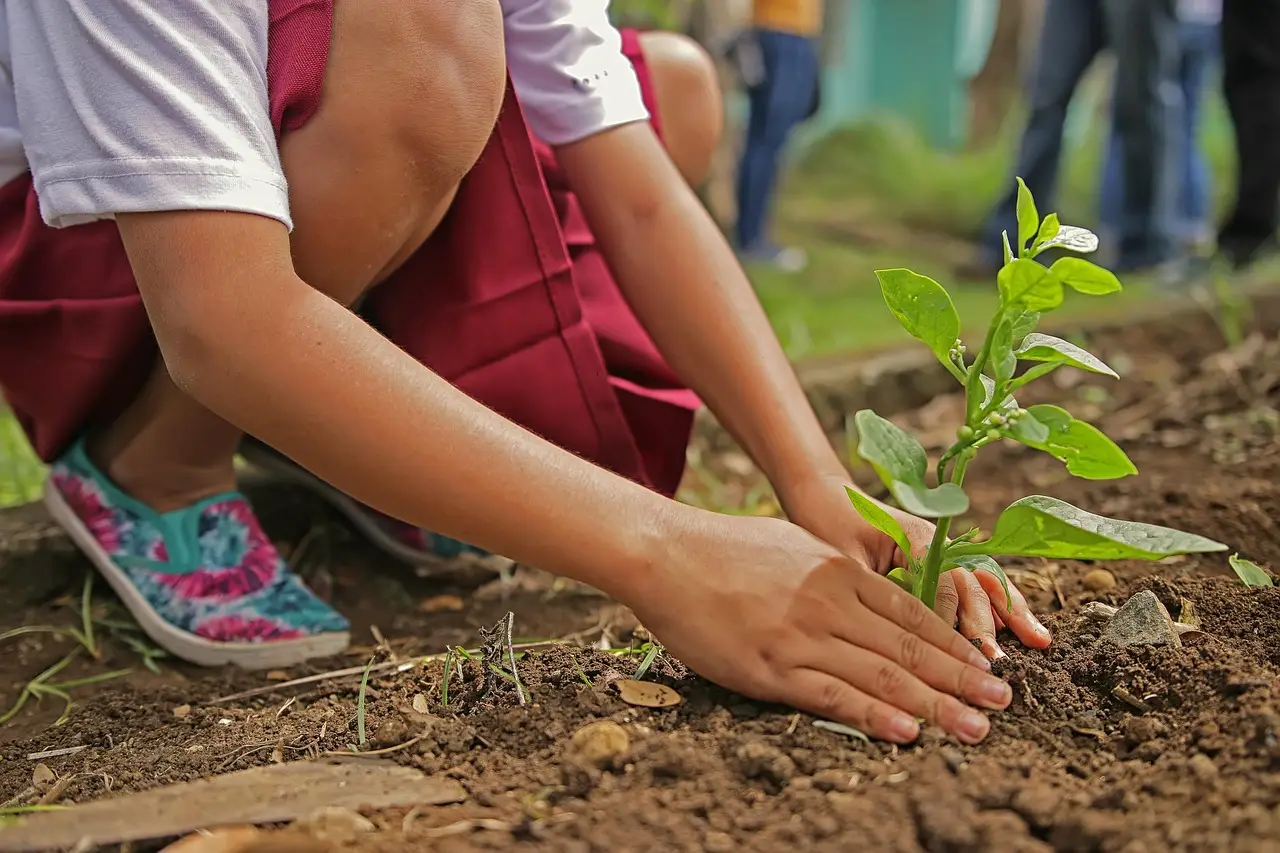
Carbon markets allow countries or companies that emit greenhouse gases to buy credits that pay for projects that reduce emissions elsewhere. Projects often plant or protect trees or change farming practices.
Takeaway: COP31 must close an adaptation funding gap while avoiding projects that cannot prove or deliver results.
How much can carbon markets deliver?
Countries called last year for efforts to at least triple adaptation finance by 2035 and agreed on 59 indicators for tracking progress. Eleven indicators concern food production and ecosystems, including farms and forests. Many practices behind those goals—improving soils, planting trees and protecting forests—match what carbon markets have tried to promote.
Yet the voluntary carbon market has grown slowly. It was worth about US$90 million in 2006 and US$535 million in 2024.
In 2024, buyers used about 70 million carbon credits from farm and forest projects. Each credit represented one ton of carbon dioxide cut or stored. That total was less than 1% of the 8 to 14 billion tons those ecosystems could deliver each year.
Turkey's US$50 billion prospect therefore depends on rapid expansion, credible reductions and delivery to places with the greatest adaptation needs.
Takeaway: Carbon markets can attract money, but their current scale remains small.
What barriers could defeat these projects?
Gaby Clark has studied carbon markets on farms and forests for two decades, with fieldwork in India, Kenya, Malawi, Mozambique, Tanzania and Vietnam. Her recently published paper and another study under peer review identify three recurring barriers.
In one of her early papers, published in 2006, Clark and colleagues warned that carbon projects could exclude poor farmers and people without formal land titles. Low carbon prices and the high cost of enrolling many small farms made benefits harder to reach. Many of those concerns remain unresolved.
A 2023 working paper Clark co-authored showed that designing projects that work, and measuring their impact, is even more difficult. Countries now seek much more adaptation money, much of it for farms and forests.
- Proving an extra cut: A project must show that the credit deal prompted forest conservation or a change in farm practices. A large study found fewer than one in six carbon credits reflected genuine emission cuts.
- Costly measurement: Measuring carbon in soils and trees can reduce returns for farmers. In Mozambique, Clark and colleagues found that a community carbon project raised household incomes only slightly, despite generous contract terms.
- Easier-to-run locations: China, India and Brazil hosted more than three-quarters of all projects under the United Nations' original carbon credit scheme. Research in Africa dating to 2008 found that insecure land rights discouraged new investment.
Climate change can weaken those projects too. In Tanzania's Uluguru Mountains, Clark's colleagues offered farmers contracts to plant and protect trees in 2009. Twenty-one months later, 63% of trees survived, with some losses linked to the failure of the short rains.
Carbon projects can convert tons of carbon dioxide into credits and sell them, giving them one common measure. Adaptation has no equivalent unit. Success might mean less flood damage or harvests that survive drought, and those benefits can take years to appear and remain hard to measure.
Adaptation projects are likely to face these barriers and more.
Takeaway: Carbon markets struggle to prove and measure results. Adaptation projects face the same problem, plus damage that lacks a single unit.
How could adaptation projects work better?
Clark's experience points to three lessons for adaptation finance.
- Keep checks simple and local: Field experiments in Vietnam found that villagers rarely cheated when monitoring their own work. Communities can help check results themselves.
- Lower upfront costs and reach farmers: Projects must pay to find buyers, negotiate contracts, obtain government approval and hire independent auditors before earning money. Governments and international organizations can simplify rules and work with community groups that sign up many farmers at once.
- Target the highest-risk places: Support should go beyond locations where projects are easy to set up. Small pilots can help countries learn what works.
Clark's conclusion is direct: “More money for adaptation is badly needed. But without credible projects on the ground, that money will struggle to make a difference.”
Takeaway: Useful adaptation finance depends on simpler rules, local verification and support for farmers in the riskiest places.
via phys.org/rss-feed/ (Source)
More from Elena Vasquez
Show full bio
Correspondent covering money, funding and market shifts around general science news at SciBeat.
503 articles
Nearby plates
- COP31 opens with climate finance clash and muted outlook
- COP31 Launches 35-by-35 Pledge to Electrify the World Economy
- COP31 Mobilises Billions in Climate Finance Push from Antalya
- Africa Demands $120 Billion a Year in Climate Finance at COP31
- Turkey Opens COP31 Climate Summit Amid 'Greenwashing' Accusations