Recorded November 23, 2026
Chemistry & MaterialsReported finding
Chernobyl Fungus Pigment Yields Material That Destroys Nerve Agent Stand-Ins
Lab-made allomelanin, a pigment from fungi thriving in Chernobyl's radiation, combined with zirconium clusters halved a nerve agent stand-in in under 10 minutes, with sunlight boosting breakdown tenfold.
By Elena Vasquez4 min read792 words
In brief
- Best-performing particles broke down half of a nerve agent stand-in in less than 10 minutes, per ACS Nano.
- Sunlight exposure for five minutes made the particles about 10 times more effective than in the dark.
- A 2026 analysis estimates roughly 11,000 deaths annually from accidental pesticide poisonings.
- Cladosporium sphaerospermum grows at Chernobyl and aboard the ISS about 250 miles above Earth.
- In May 2026, OPCW inspectors found dozens of undeclared chemical weapons in Syria.
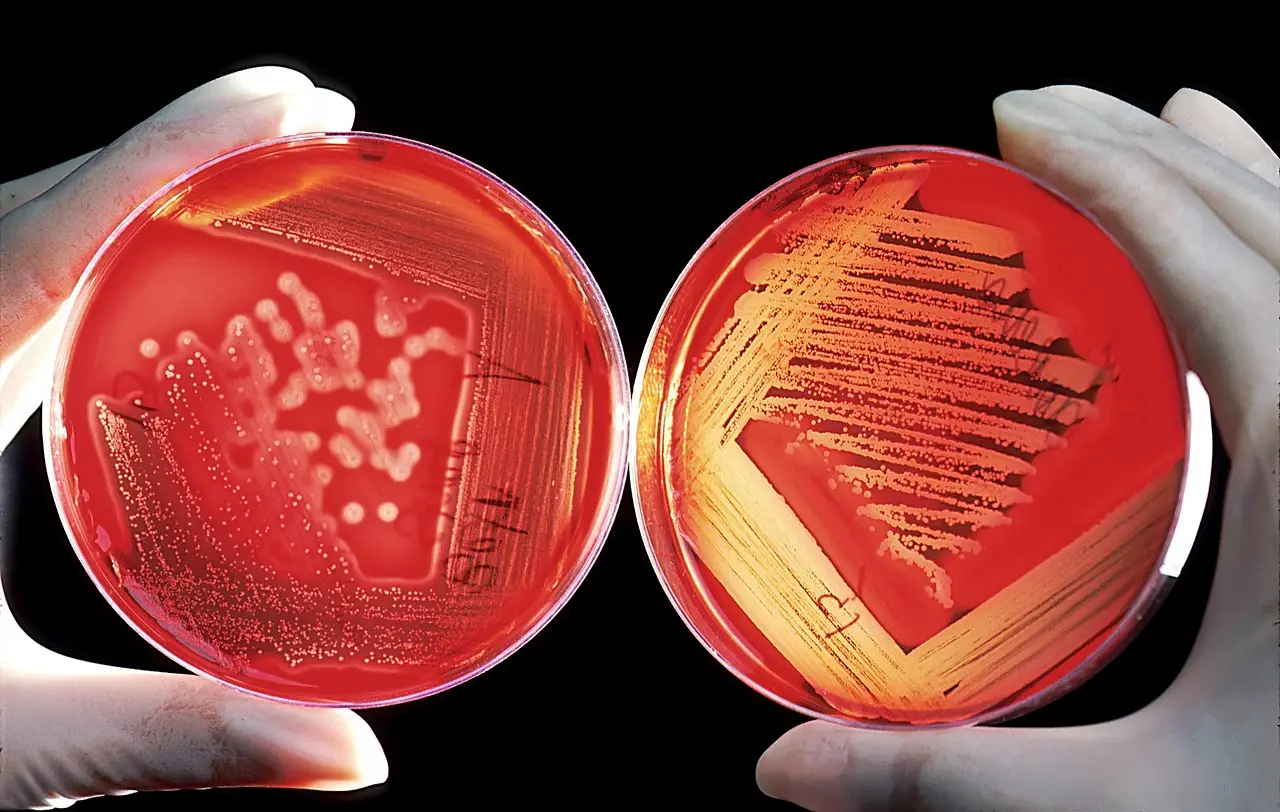
A material built from a pigment found in Chernobyl-surviving fungi broke down half of a nerve agent stand-in in under 10 minutes, researchers report in the journal ACS Nano. The particles combine a fungal pigment called allomelanin with tiny zirconium clusters, and sunlight made them roughly 10 times more effective than the same material kept in the dark.
The work points toward protective gloves, masks and uniforms that don't just trap toxic organophosphorus chemicals but destroy them on contact. Current protective gear, mostly based on activated carbon, only captures the chemicals and leaves them intact, meaning a contaminated glove or mask stays hazardous to handle.
Where does the pigment come from?
Deep inside the Chernobyl exclusion zone, where radiation has kept the area unsafe for people for 40 years, black molds of the species Cladosporium sphaerospermum climb the walls of the damaged plant. Some fungi there even grow toward radiation. The same species has also grown on the International Space Station, about 250 miles (400 kilometers) above Earth, in an experiment testing its radiation resistance. Scientists found it appeared to block a small amount of incoming radiation, thanks partly to melanin.
Melanin is a family of pigments. The version in human skin, eumelanin, is built from nitrogen-containing building blocks. The fungal version, allomelanin, uses a nitrogen-free building block instead, and that structural difference gives it unusual properties.
A 2021 study by the same research group showed lab-made allomelanin is full of built-in pores, each less than a billionth of a meter wide. Chemists call these intrinsic pores because they belong to the material's natural structure rather than being etched in later. To the researchers' knowledge, it is the only type of melanin with built-in porosity. Those nanometer-wide pores let the pigment act like a sponge for small molecules, including toxic ones, whether the allomelanin comes from natural fungi or is synthesized in the lab.
Why target nerve agents and pesticides?
Nerve agents such as sarin and VX belong to a group called organophosphorus compounds. They block an enzyme the body uses to switch off nerve signals; without it, nerves keep firing, and a large enough exposure can kill within minutes. Chemical weapons are banned under international law but remain a security concern. In May 2026, inspectors from the Organization for the Prohibition of Chemical Weapons reported finding dozens of previously undeclared chemical weapons in Syria left over from the Assad government.
Many agricultural pesticides rely on the same chemistry. A 2026 analysis estimated accidental pesticide poisonings number in the hundreds of millions each year, causing roughly 11,000 deaths annually worldwide. Farmworkers with minimal protective gear face the greatest ongoing risk.
How does it work?
Allomelanin alone traps organophosphorus molecules but leaves them chemically intact. So the team made allomelanin into tiny spheres, each hundreds of times narrower than a human hair, then attached clusters of six zirconium atoms held together by oxygen, forming cage-like structures. Similar clusters form the active core of metal-organic frameworks, among the most studied materials for degrading chemical weapons. Exposed to ambient moisture, these clusters act like molecular scissors, snipping the bonds that hold organophosphates together.
The breakdown normally requires alkaline conditions, which supply hydroxide, a negatively charged relative of water that attacks the molecule's most dangerous bond. Since adding liquid alkaline chemicals isn't practical for a jacket or mask, the researchers attached alkaline chemical groups directly to the particle surfaces.
The pores proved essential. Attaching the same clusters to non-porous melanin-like materials barely helped, and adding too much zirconium clogged the pores and slowed the reaction. The best results came from balancing metal content with open pore space. The particles kept working over several rounds of use with very little metal leaking out. Under a bright lamp for five minutes, they broke down about 10 times more of the stand-in than in the dark, and simply heating samples in the dark had a much smaller effect, suggesting light does more than warm the particles.
What are the limits?
The team tested a low-toxicity chemical surrogate in lab vials, not live nerve agents or airborne pesticides, and hasn't yet woven the particles into commercial textiles. Next steps include testing against the specific pesticides farmworkers encounter and refining the coating process. The path to fabric may be easier than it sounds: synthetic melanin naturally adheres to textile fibers without glues, and the group has previously shown synthetic melanins work as sustainable fabric dyes. Zirconium is common and inexpensive, though large-scale production costs remain unassessed.
The findings are preliminary but highlight untapped potential in natural materials — fungi spent millions of years evolving pigments to endure Earth's harshest environments.
via phys.org/rss-feed/ (Source)
More from Elena Vasquez
Show full bio
Correspondent covering money, funding and market shifts around general science news at SciBeat.
612 articles
Nearby plates
- Chernobyl's Radioactive Dust Refuses to Decay on Schedule
- Chernobyl's 40-Year-Old Fallout Particles Are More Stable Than Expected
- Weak Sunlight Can Damage Skin DNA, Australian Study Finds
- Blue Light Kills Every Strain of Chicken Food-Poisoning Bug Tested
- Florida Mushroom First Known to Pack Both Psychedelics and Deadly Toxins