Recorded November 23, 2026
Chemistry & MaterialsReported finding
Scientists Make 'Harder Than Diamond' Lonsdaleite in Bulk — With a Catch
Chinese researchers synthesized sizable amounts of lonsdaleite, a hexagonal form of diamond, for the first time — but measured hardness only matched or slightly beat the cubic kind.
By James Calloway4 min read744 words
In brief
- Chinese researchers synthesized sizable lonsdaleite amounts at 20 GPa and 1,900°C — roughly 200,000 times atmospheric pressure.
- Simulations predict lonsdaleite may be over 50% harder than cubic diamond, but lab tests showed it only matched or slightly surpassed it.
- Lonsdaleite was first found in 1967 in the Canyon Diablo meteorite, which hit Arizona about 50,000 years ago.
- The synthetic diamond industry is valued at an estimated $20bn (£15bn) and could more than double in a decade.
- Diamond cooling could become standard in advanced electronics within five years, one physicist predicts.
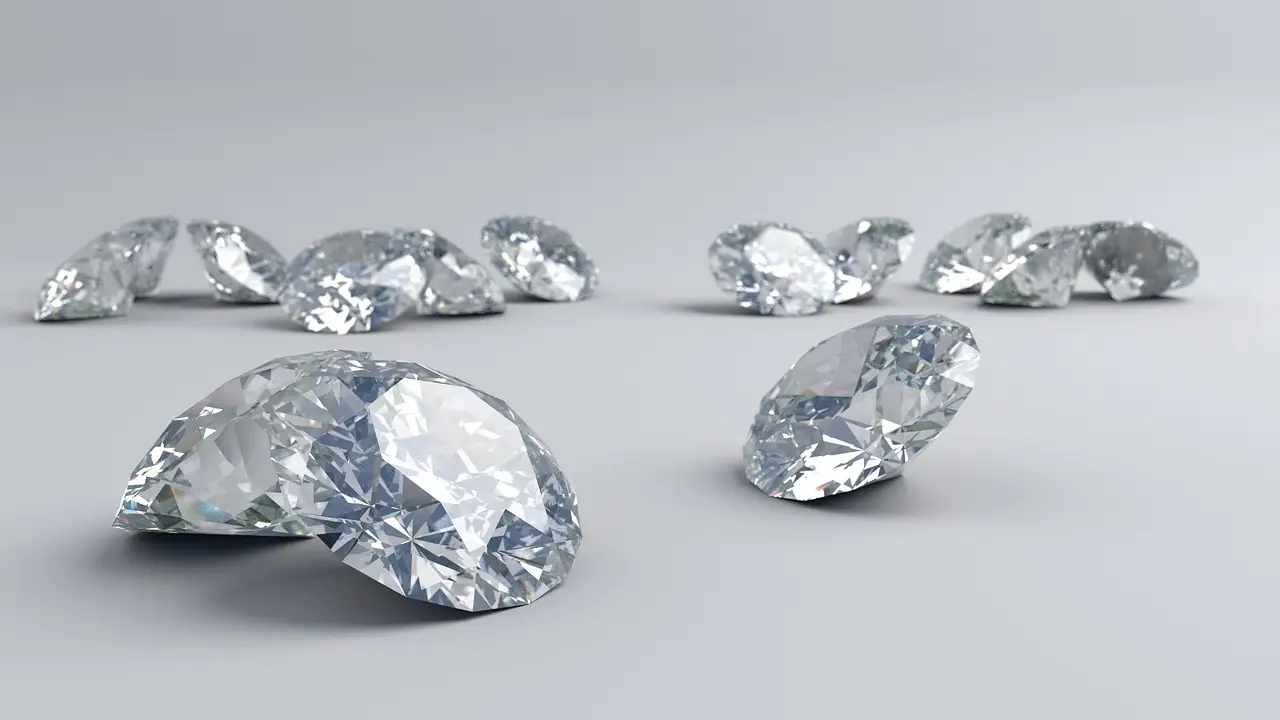
Chinese researchers have synthesized sizable amounts of lonsdaleite — a hexagonal form of diamond that simulations suggest could be more than 50 per cent harder than the gemstone on your ring — for the first time. That's the headline. The fine print is more sobering: in the lab's own tests, the material only matched or slightly surpassed ordinary diamond's hardness.
So is diamond's thousands-of-years reign as the hardest known material actually over? Not yet. Let's unpack what happened, and what it doesn't change.
What exactly did the researchers make?
Lonsdaleite, sometimes called hexagonal diamond, was first discovered in 1967 in fragments of the Canyon Diablo meteorite, which struck modern-day Arizona roughly 50,000 years ago. Like regular diamond, it's pure carbon. The difference is architecture: cubic diamond's atoms form a cubic lattice, lonsdaleite's a hexagonal one. The violent conditions of the meteorite impact likely converted carbon in the rock into tiny crystals of this rare form.
To make it on Earth, scientists at Zhengzhou University took a form of graphite with highly ordered layers, loaded it into an industrial press, and subjected it to 20 gigapascals of pressure — roughly 200,000 times atmospheric pressure — at 1,900°C (3,452°F), well beyond the melting point of steel.
Here's the caveat that matters. Oliver Tschauner, a geoscience professor at the University of Nevada, Las Vegas, who peer-reviewed one of the Chinese studies, says what was actually produced was "a mixture of diamond — cubic and hexagonal diamond — or hexagonal diamond plus graphitic materials." Not the pure material. "If you want to study this, you need the pure material," he told us.
Simulations of lonsdaleite's hardness deserve skepticism too, Tschauner says. Mechanical properties depend on defects in a material, which are difficult to model realistically in computer simulations. "I would be cautious about any theoretical predictions of hardness," he warns.
Still, there may be a silver lining in the impurity. Tschauner notes the hexagonal-diamond-graphite mix could itself be a research opportunity: "You have a graphene layer. And it's kind of supported by cubic diamond. It could be useful too, the properties are not well understood."
Why does harder-than-diamond matter anyway?
If lonsdaleite's projected hardness can be confirmed and its manufacture scaled up, potential applications include mining equipment of unparalleled hardness, ultra-wear-resistant machine parts, and superior cutting tools.
Even if you never touch a mine, synthetic diamond already touches your life daily. "Every single one of us will touch something that's been touched by industrial diamonds many, many times a day," says Daniel Twitchen, chief technologist at Element Six, one of the world's biggest synthetic-diamond developers. IKEA furniture was likely cut with diamond-tipped saws because wood glue is highly abrasive. Some iPhone cases were machined with it. Granite floor tiles too.
The synthetic diamond industry is valued at an estimated $20 billion (£15bn), and some projections suggest it could more than double within a decade.
What does this change for electronics?
Possibly a lot — but mostly through ordinary diamond, not lonsdaleite. Diamond is the best thermal conductor known, and can be doped with impurities to conduct electricity. That matters because data centres, cramming chips into layered "3D" stacks, face a heat problem. "If you can drop the temperature by one degree, you save a data centre in the region of 1.8 per cent of its operating cost," Twitchen says.
Companies like Akash Systems and Element Six are rolling out systems that mount chips on diamond to whisk heat away. Mark Newton, an experimental physics professor at the University of Warwick, calls it "tip-of-the-iceberg time, because these new wafers are coming. This is going to be transformational." He predicts diamond cooling will become standard in advanced electronics within five years.
Diamond qubits are also real: a technique called NV doping creates quantum states with "near 100 per cent fidelity" at room temperature, useful for quantum memory and sensing. One NV sensor has even been tested on the International Space Station to measure Earth's magnetic field.
And lonsdaleite? Its lower-symmetry structure could eventually offer "more degrees of freedom for doping," Tschauner says — more chemical flavours, potentially. But that's speculation until pure hexagonal diamond can be synthesized.
The Chinese teams published their work in Nature. The breakthrough is real. The "harder than diamond" crown remains unclaimed — for now.
via sciencefocus.com (Source)
More from James Calloway
Show full bio
Staff writer covering regulation, policy and their impact on general science news at SciBeat.
584 articles
Nearby plates
- Lasers Turn Ordinary Plastic Into Billions of Tiny Diamonds
- Diamonds Can Generate Electricity, Hong Kong Scientists Discover
- First Million Years of Solar System Were Fire, Not Ice, Study Finds
- 3.95-Billion-Year-Old Rocks in China Hint at Early Plate Tectonics
- Quantum Spins Push a 100-Milligram Diamond in Lab First