Plate Nº 71 · recorded November 15, 2026
Earth & ClimateReported finding
3.95-Billion-Year-Old Rocks in China Hint at Early Plate Tectonics
Rocks from Hebei, China, dated at 3.95 billion years, carry chemical signs of subduction and crust-forming processes older than 4.3 billion years, researchers report in Nature.
By Elena Vasquez3 min read600 words
In brief
- Rocks found in Hebei, China date to 3.95 billion years old, among Earth's oldest known.
- Chemical analysis and models suggest material was buried over 50 km underground, likely via subduction.
- Hafnium isotopes indicate crust formation from the mantle began more than 4.3 billion years ago.
- The study, led by Hangqiang Xie, was published in Nature in 2026.
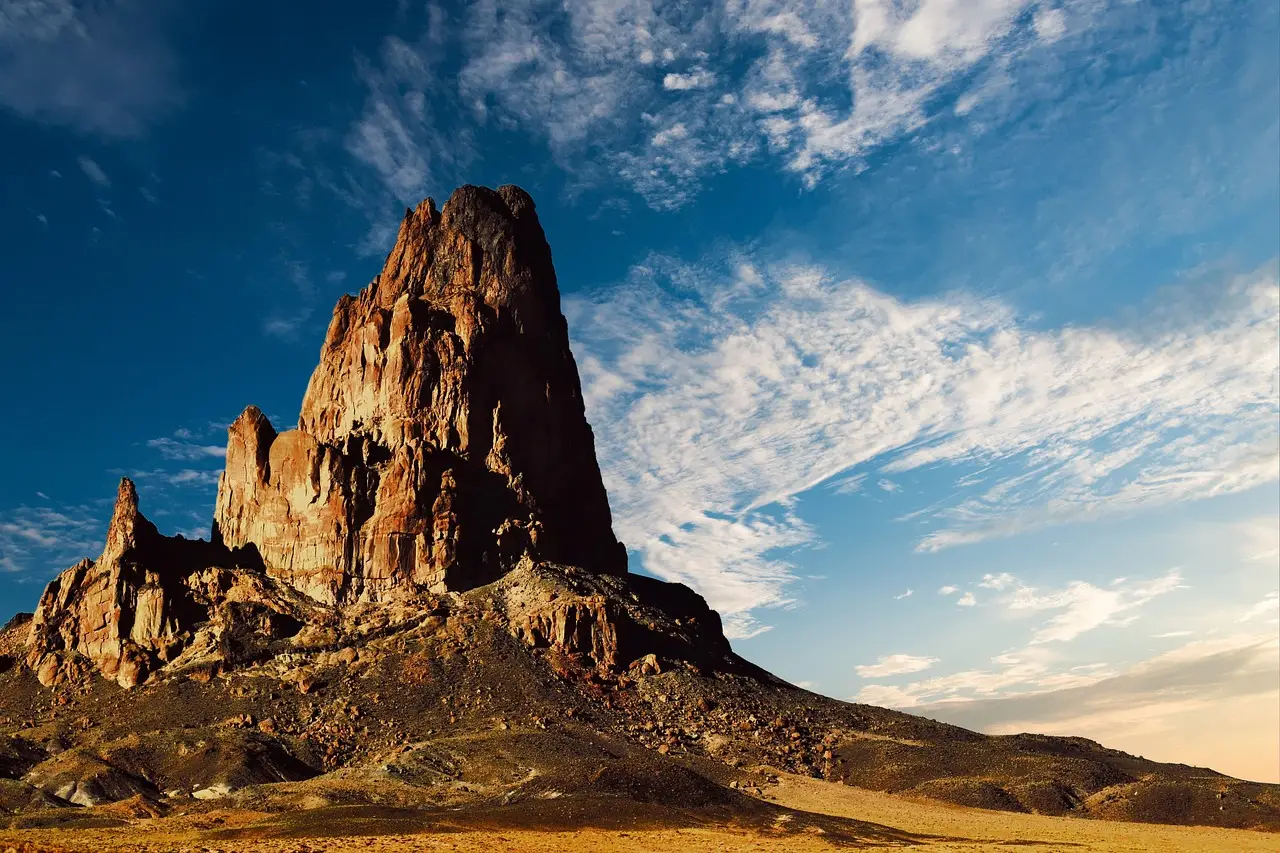
Rocks dated to 3.95 billion years old, unearthed in northern China, are giving scientists some of their clearest evidence yet that plate-tectonic-like processes were already reshaping Earth's surface almost 4 billion years ago.
A team led by Hangqiang Xie of the Chinese Academy of Geological Sciences in Beijing found the rocks in the Shimen Complex in Hebei province and collected three samples for detailed lab work. Researchers had spent decades hunting for rocks older than 3.8 billion years in China. This find ended that search.
The results appear in the journal Nature, under the title "Hadean mantle depletion and 3.95-Gyr subduction implied by North China rocks," alongside a Research Briefing offering further context.
How do you date a rock that old?
The team relied on tiny zircon crystals trapped inside the samples. Zircon holds uranium, which decays into lead at a steady, well-measured rate. Count the ratio, and you get a clock. That clock read 3.95 billion years.
But age was only the starting question. The researchers also wanted to know how the rocks formed and what they could say about geological processes operating when Earth was still young. So they analyzed the samples' chemical makeup, including different forms — isotopes — of oxygen and hafnium inside the zircon crystals. They then ran computer models to reconstruct the conditions in which the rocks formed.
What did the chemistry reveal?
Two findings stood out.
First, the rocks formed from material that had once sat at or near Earth's surface, in contact with water. Second, the models indicated that same material was later dragged more than 50 kilometers (31 miles) underground, where intense heat and pressure partially melted it.
That's a burial job, and it needs a mechanism. The researchers point to subduction — the process, central to modern plate tectonics, in which one section of Earth's crust sinks beneath another. The idea of a subduction-like process operating nearly 4 billion years ago, far earlier than textbook timelines once assumed, is what makes the discovery significant.
The hafnium isotope analysis added a second, older signal: the separation of material from Earth's mantle to build new crust had apparently begun more than 4.3 billion years ago. That's hundreds of millions of years before these particular Chinese rocks formed. In plain terms, Earth's crust was already growing and evolving very early in the planet's 4.5-billion-year history.
Why does this matter?
Earth is roughly 4.5 billion years old, yet rocks from its earliest days are vanishingly rare. Most of the primordial crust has long since been recycled, melted, or eroded away. Every surviving scrap from that era is a data point in one of geology's biggest arguments: when did plate tectonics actually start?
This study doesn't settle the debate. Three samples from one location can't describe the whole planet, and the evidence for a "transient subduction event" — the authors' own phrase — describes something that may have been local and short-lived rather than a global, ongoing system. The team itself hedged, writing: "We propose that this rapid burial was most likely achieved through a transient subduction event."
Still, the findings push plausible plate-tectonic behavior back to at least 3.95 billion years ago, in at least one place. That's a meaningful constraint on how quickly Earth developed the machinery that now drives earthquakes, volcanoes, and mountain building.
Bottom line: ancient rocks from Hebei suggest Earth's crust was forming, meeting water, and diving back underground far earlier than many scientists expected.
via phys.org/rss-feed/ (Source)
More from Elena Vasquez
Show full bio
Correspondent covering money, funding and market shifts around general science news at SciBeat.
435 articles
Nearby plates
- Ancient Rocks Mark a Shift Toward Modern Plate Tectonics
- A Lost Kilometer-High Cliff May Explain the Grand Canyon's Missing Billion Years
- Mantle Motion Explains the Grand Canyon's Missing Billion Years
- A Famous 2-Billion-Year-Old Signal From Early Earth May Be Local, Not Global
- 3.1-Billion-Year-Old Rocks Show Water Fueled Early Volcanoes