Plate Nº 39 · recorded November 15, 2026
Earth & ClimateReported finding
Lake Baikal's Water Supply Jumped 145% Above Average Since 2017
Inflow to Siberia's Lake Baikal has surged 145% above average since 2017, tree-ring data show — but researchers caution the wet spell may be short-lived and driven by natural variability.
By James Calloway4 min read712 words
In brief
- Streamflow into Lake Baikal rose 145% above the long-term average after 2017.
- Tree-ring data spanning 343 years show Selenga River flow dropped by up to 90% in the worst drought periods; about half of extreme-drought years occurred after 1900.
- Lake Baikal holds roughly 20% of the world's surface freshwater and became a UNESCO World Heritage site in 1996.
- The recovery correlates with cooler North Pacific and Arctic seas — variability the authors link to nature, not a halt to global warming.
- A comparable North Atlantic 'cold blob' of 2.5 million sq km has cooled up to 1°C over the past century.
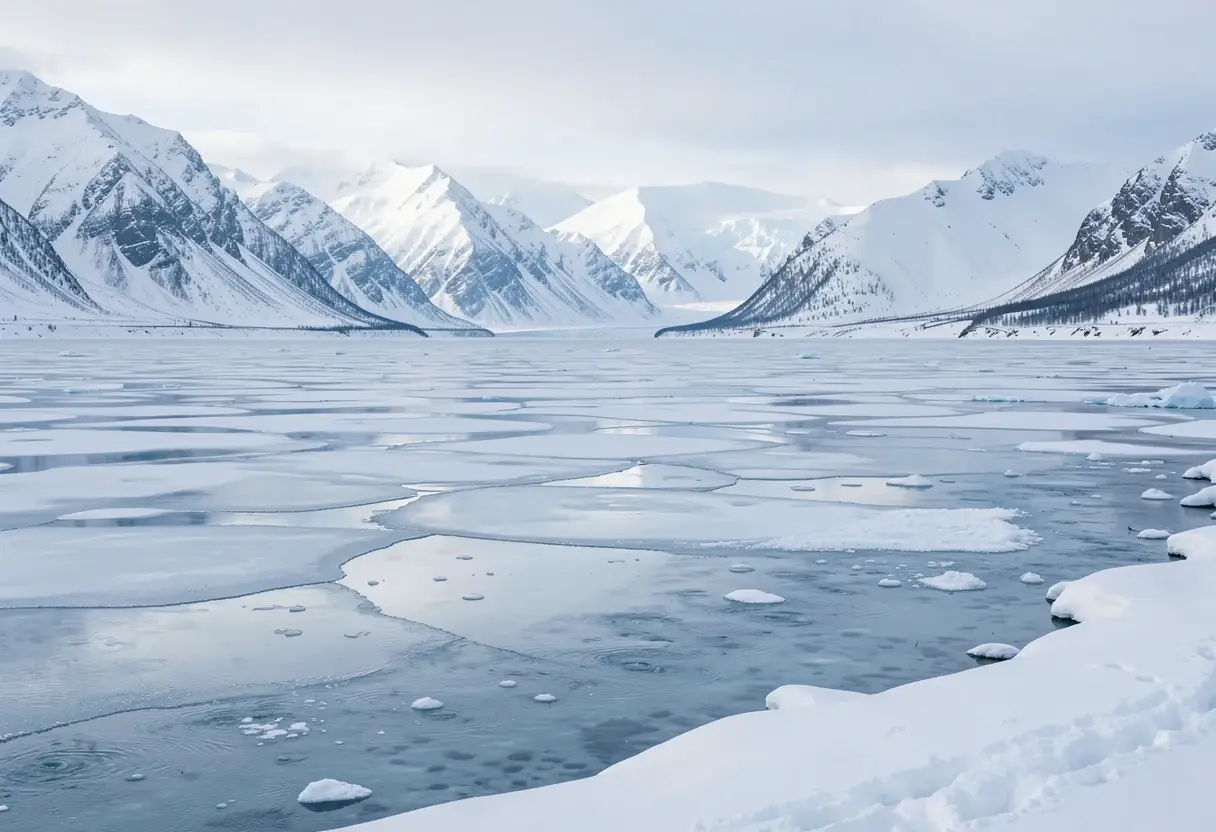
Water flowing into Lake Baikal has jumped 145% above its long-term average since 2017, reversing a century-long decline at the world's most voluminous freshwater lake. That's the headline finding of a new study in Geophysical Research Letters, led by doctoral researcher Shijie Wang of Yunnan University. A caveat before anyone pops champagne: the researchers themselves warn these wet spells tend to be abrupt and short, while the underlying drying trend is gradual and stubbornly persistent.
Why Baikal matters
Lake Baikal in Siberia holds roughly 20% of the world's surface freshwater. That makes it the most voluminous lake on Earth by water volume — Lake Superior, on the US–Canada border, beats it only in surface area. UNESCO recognized Baikal as a World Heritage site in 1996 for its biodiversity, and millions rely on it for drinking water, agriculture and hydroelectric power. Yet over the past century, as aridification spread across East Asia, the lake and its basin have steadily declined, raising real concerns about regional water security.
How do you measure 343 years of water?
You ask the trees. Wang and colleagues used dendrochronology — the science of reading tree rings, where wider rings signal wet or warm years and narrower ones point to drought, cold or stress. The team took small cores from pine trunks around the lake and combined them with records from the International Tree-Ring Data Bank.
From 343 years of rings, they reconstructed the flow of the Selenga River, Baikal's major inflow. The picture was grim: streamflow fell by up to 90% in the most severe periods, and roughly half of all extreme-drought years occurred after 1900.
Then, abruptly, the trend flipped in 2017. Alongside the 145% surge in inflow, the researchers document rising lake levels and enhanced vegetation growth across the landscape.
What's driving the turnaround?
Here's where the story gets interesting — and where the hedging matters. The researchers found streamflow changes are not linked to local land temperature or potential evaporation (the amount of water that could evaporate from plants or soil). Instead, the strong correlations are with moisture measures: precipitation, drought severity, soil wetness, snowmelt, and the water supply-demand balance in the river basin.
They also found a correlation with cooler sea surface temperatures and greater sea ice cover in the neighboring North Pacific and Arctic oceans. Their proposed mechanism: shifting weather patterns are delivering more moisture from the Nordic and Siberian shelf seas, possibly helped by a slowdown in regional Arctic warming that has reduced sea ice loss in the Bering, Chukchi and Okhotsk seas.
The team is careful to stress this Arctic warming slowdown reflects natural climate variability — not any meaningful shift in global warming. That distinction matters, and honest coverage shouldn't blur it.
Nor is this pattern unique. A similar "cold blob" has formed in the North Atlantic, where an area of 2.5 million square kilometers (965,000 square miles) south of Greenland has cooled by up to 1°C over the last century — even as Earth's oceans warm overall.
What does this change for the people who depend on Baikal?
Practically speaking, the study is less a forecast of permanent recovery than a planning tool. Its authors emphasize that hydrological shifts like these directly affect projections of lake levels and regional aridification, and dry spells are becoming more prolonged while wet events grow more intense. Their recommendations include:
- Improving water storage to supply homes and farms through dry periods
- Identifying aquifers — underground rock layers that "recharge" during rain and can be safely tapped
- Upgrading wastewater infrastructure so sewage systems aren't overloaded
- Restoring the Selenga River Delta wetlands, which store water for long periods and release it slowly in drier months
The bottom line
Baikal's recovery is real, measurable and welcome. It is also, by the researchers' own account, potentially fleeting, and it rides on natural variability rather than a reversal of human-driven warming. The wiser read: enjoy the good news, but keep building the water systems that assume it won't last.
The study appears as Shijie Wang et al., "Recent Slowing Arctic-Amplified Warming Drives an Unprecedented Water Recovery in the World's Most Voluminous Freshwater Lake," Geophysical Research Letters (2026), DOI: 10.1029/2026gl124400.
via phys.org/rss-feed/ (Source)
More from James Calloway
Show full bio
Staff writer covering regulation, policy and their impact on general science news at SciBeat.
388 articles
Nearby plates
- Asian Water Tower Loses 24 Billion Tonnes of Groundwater a Year
- Some rivers lost flow between 1951 and 2020 even as rainfall rose
- A water budget reveals Rayalaseema's groundwater inequality
- Elephant Butte Reservoir Falls to 1.4% Capacity, Its Lowest Level Since 1971
- Lake Powell Hits Record Low as Snow Drought Strains the Colorado River