Recorded November 23, 2026
Chemistry & MaterialsReported finding
Solid-State Batteries Charge in Five Minutes — But Not Yet in Your Car
QuantumScape's Osprey cell charged 10–80% in five minutes at 80°C, and a Mercedes EQS drove 1,205 km on Factorial cells. Mass production is the next hurdle.
By Elena Vasquez4 min read826 words
In brief
- QuantumScape's Osprey solid-state cell charged 10–80% in about five minutes at 80°C, unveiled 11 November 2026.
- A modified Mercedes EQS with Factorial cells drove 1,205 km on one charge in September 2025, holding ~25% more energy.
- Solid-state cells retained over 90% capacity after 5,000 cycles; lithium-ion can degrade after 1,000.
- Stanford/SLAC showed in July 2026 that mechanical compression can redirect dendrites, letting cells run thousands of cycles.
- QuantumScape targets a 100 MWh production line with a 2028 start.
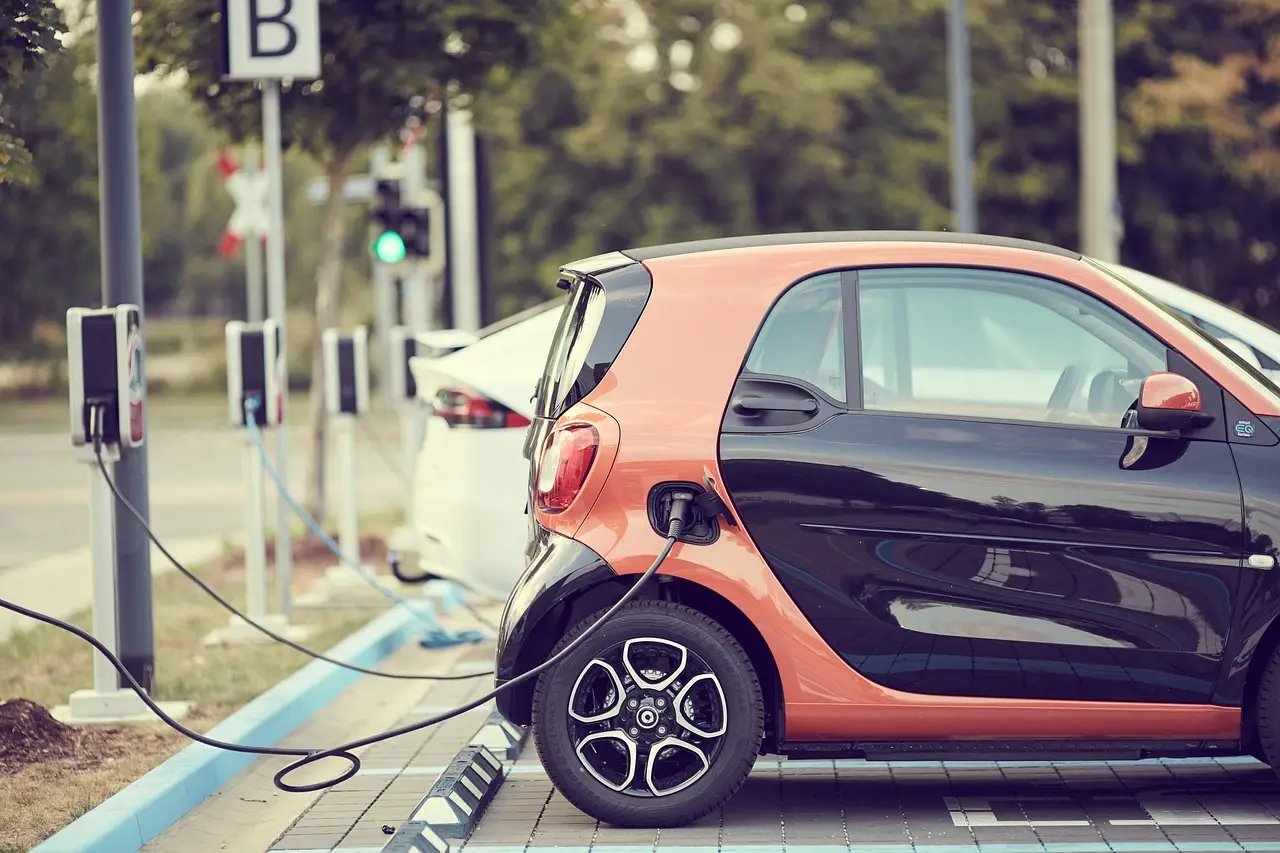
A battery that charges from 10% to 80% in roughly five minutes exists — QuantumScape demonstrated it on 11 November 2026 with its Osprey all-solid-state platform. The catch: the test ran at 80°C, not room temperature, and on a small cell, not a production car. That gap between headline numbers and real-world hardware defines where solid-state batteries stand today.
The field has momentum. In September 2025, a modified Mercedes-Benz EQS running Factorial Energy cells drove 1,205 kilometers (749 miles) across Europe without recharging, carrying about 25% more usable energy than a conventional EQS pack of similar size and weight. In June 2026, Stellantis put Factorial cells into a Dodge Charger Daytona development vehicle and began road testing. A comprehensive 2025 review by University of California, Riverside researchers, published in Nano Energy, maps both the progress and the pitfalls.
How do solid-state batteries differ from lithium-ion?
They work on the same principle — lithium ions shuttle between two electrodes — but a solid material replaces the flammable liquid electrolyte that ferries the ions. Ceramics, polymers or sulfide compounds can serve as that solid layer. The swap cuts fire risk and unlocks a bigger prize: pure lithium metal anodes, which store more energy per gram than the graphite used today.
The durability numbers stand out. Conventional lithium-ion batteries can degrade after about 1,000 charge cycles, while solid-state cells have maintained over 90% of capacity after 5,000 cycles. That could mean 15–20 years of battery life, roughly double the current norm for electric vehicles.
"Solid-state batteries are moving closer to reality every day," said Cengiz S. Ozkan, a mechanical engineering professor and co-lead author of the review. "Our review shows how far the science has come and what steps are needed next to make these batteries available for everyday use."
Can they really charge that fast?
Sometimes, under specific conditions. The Riverside review highlights experimental designs reaching 80% charge in 12 minutes — or as little as three minutes under particular test conditions. Sulfide-based solid electrolytes now achieve ionic conductivity approaching that of liquids; the compound LGPS reaches 12 mS/cm, a figure once thought impossible for solids.
But chemistry alone doesn't guarantee speed. In March 2026, BYD unveiled its second-generation Blade Battery — a conventional lithium iron phosphate design — that charges from 10% to 97% in nine minutes on dedicated ultra-fast equipment. Comparable performance from an older chemistry.
A key physical limit is critical current density, the threshold at which charging current triggers lithium deposition and short circuits. Solid designs still struggle with resistance where solid layers meet.
What about planes and spacecraft?
Specialized applications may adopt the technology before cars do. Factorial Energy reported in November 2026 that its cells powered a lightweight drone on a flight lasting more than 8.5 hours, plus its first commercial aerospace-cell revenue. Ozkan says the batteries' thermal and chemical stability suits them for extreme temperatures and radiation in space, and their compactness matters "for missions where every cubic centimeter counts."
New diagnostic tools are also reshaping the science. "These imaging tools are like an MRI for batteries," Ozkan said. "They let us watch the battery's vital signs and make smarter design choices." Neutron imaging, X-ray tomography and electron microscopy reveal dendrites — needle-like lithium filaments that short-circuit batteries — forming at grain boundaries inside solid electrolytes.
A July 2026 Nature study from Stanford and SLAC found dendrites can originate inside tiny defects in the electrolyte, not just at surfaces. Applying mechanical compression redirected the lithium-filled cracks sideways, and cells ran for thousands of cycles despite numerous internal dendrites. Engineers might not need to eliminate dendrites — just steer them.
What's still in the way?
Plenty:
- Manufacturing: materials need extreme purity, pressure processing and protection from oxygen and moisture, all expensive at scale.
- Interfaces: poor contact and chemical reactions between layers lower conductivity and shorten life; buffer layers, doped materials and tailored sintering are among the fixes being tested.
- Safety and environment: some sulfide electrolytes release toxic hydrogen sulfide gas when exposed to moisture, and many chemistries lack recycling solutions.
- Combined performance: a cell might charge fast under one set of conditions and survive thousands of cycles under another — proving both at once, at room temperature, in a vehicle, for years, remains unproven.
QuantumScape plans a 100-megawatt-hour production line starting in 2028, and acknowledges the technology must still scale beyond small test cells. Toyota, Samsung and Solid Power are investing heavily too.
"Traditional lithium-ion batteries, while revolutionary, are reaching their performance and safety limits," Ozkan said. "SSBs offer a pathway to meet the growing demands of our electrified future."
The question is no longer whether a solid-state battery can charge in minutes — that's demonstrated. It's whether one can charge quickly, last years, stay safe and be built by the millions. That breakthrough is still in progress.
via zmescience.com (Source)
More from Elena Vasquez
Show full bio
Correspondent covering money, funding and market shifts around general science news at SciBeat.
612 articles
Nearby plates
- Four Electrons Instead of Two: UCL Chemistry Boosts Water Battery Hopes
- NASA's Solid-State Batteries Survive Minus 274°F in Lunar Cold Tests
- Cobalt-Free Battery Design Survives 350 Cycles and Minus-20 Cold
- Neutrons Expose Ion Traffic Jams Inside Solid-State Battery Materials
- Evidence Links Chlorine to Charging in a Solid-State Cathode