Recorded November 23, 2026
Chemistry & MaterialsReported finding
Predictive model reveals how crystals incorporate nanoscale particles
Researchers built and tested what they call the first predictive model for nanoparticle uptake in crystals. Calcite experiments identified interfacial water and amines as major controls.
By Nathan Brooks4 min read831 words
In brief
- A 2026 Science Advances paper presents what the team calls the first predictive model for nanoparticle incorporation into crystals.
- Calcite tests used fluorescent silica Cornell dots and three-dimensional microscopy to quantify uptake.
- The model combines diffusion, binding energy and crystal-growth rate with a newly identified water-layer energy barrier.
- Amines outperformed carboxylic acids in reaching calcite through interfacial water.
- Estroff and Wiesner have collaborated for more than 12 years; Nakouzi joined three years ago.
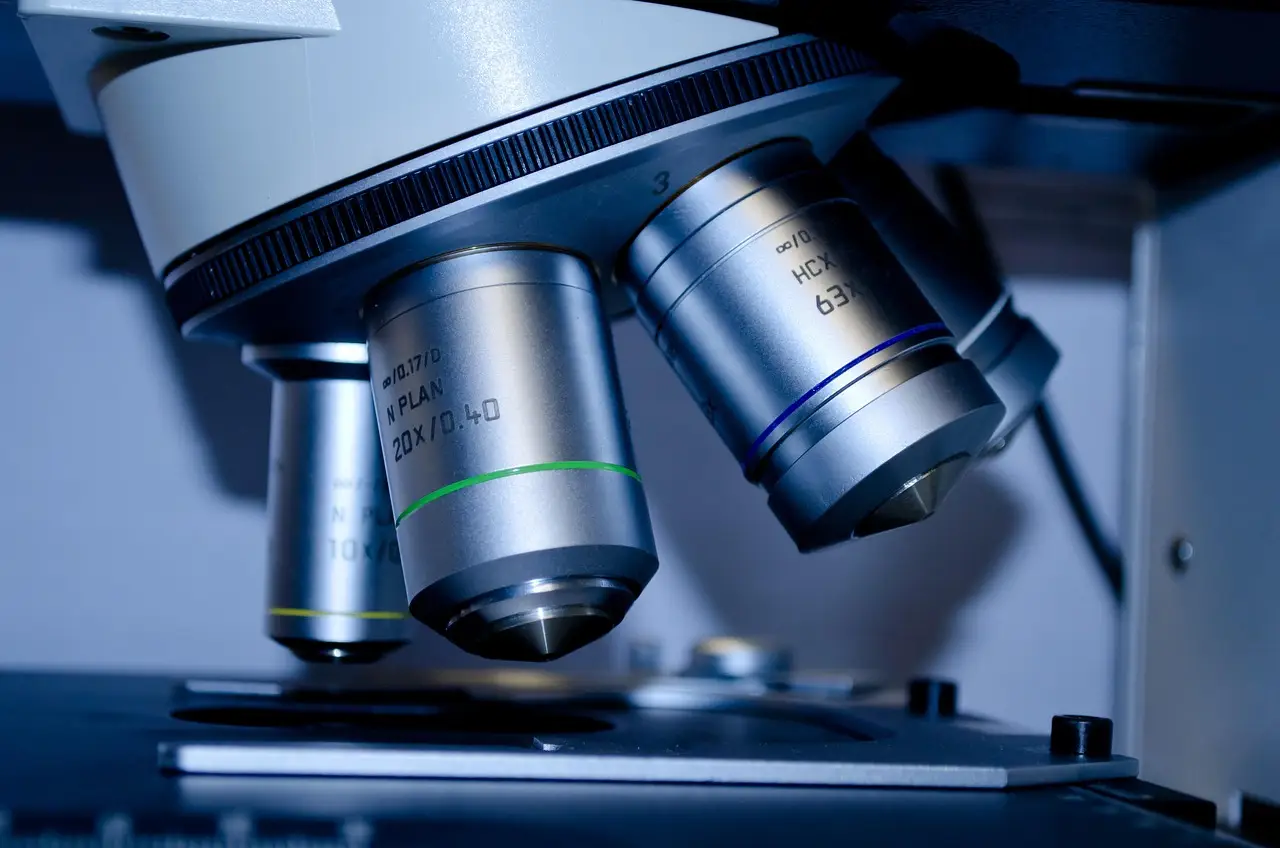
A 2026 Science Advances paper reports what its authors call the first predictive model for how crystals incorporate nanoscale particles. Calcite tests identify the energy needed to cross interfacial water and amines’ advantage over carboxylic acids.
For a mollusk to build a shell, the animal combines brittle, chalklike crystalline calcite with other materials that strengthen it. That incorporation has long puzzled Professor Lara Estroff, who has investigated it throughout her career. “How is it that biology is able to use these relatively cheap but fragile building blocks and turn them into structural materials?” she asked. She also wanted to reconcile the crystal’s ordered regularity with particles that disrupt it.
What did the model predict?
Researchers from Cornell University and the Pacific Northwest National Laboratory, or PNNL, built the model to predict how different nanoparticles enter a crystal’s surface and alter its properties. They used fluorescent silica particles known as “Cornell dots,” or “C dots.” Surface chemistry, meaning the chemical properties of a particle’s outer layer, can give the dots different functions.
The team tested the model as calcite incorporated the C dots. Fluorescence made the particles visible, allowing three-dimensional microscopy to quantify the uptake. This approach examines the crystal surface closely enough to measure how the particles enter.
The paper, “Predictive model for nanoparticle incorporation into crystals reveals essential role of interfacial solution structure,” appeared in Science Advances in 2026. Its DOI is 10.1126/sciadv.aei1245. The team says its model provides the first known example with quantifiable variables that researchers can test directly through fluorescence-based imaging and quantification.
- Mingyi Zhang, the first author, is a former PNNL postdoctoral researcher and now an assistant professor at the University of Oklahoma.
- Lara Estroff, the Herbert Fisk Johnson Professor of Industrial Chemistry in Cornell’s Duffield College of Engineering, supplied crystal-formation expertise through her lab.
- Uli Wiesner, the Spencer T. Olin Professor of Engineering at Duffield and a professor of design technology in Cornell’s College of Architecture, Art and Planning, supplied nanoparticle and surface-chemistry expertise.
- Elias Nakouzi, a materials scientist at PNNL, created the model. His lab performed surface-characterization studies, including three-dimensional atomic force microscopy to map surface structure.
How do nanoparticles reach a crystal?
Nakouzi’s earlier nanoparticle studies showed that two particles approaching each other through a solution begin to orient toward one another. The layers of fluid they cross play a significant role. The team applied that principle to particles approaching a crystal and quantified three established factors:
- Diffusion: how particles move through the solution.
- Binding energy: how strongly a particle attaches, based on its surface chemistry.
- Crystal growth rate: how quickly the crystal grows.
The model added a fourth factor for the first time: the work required for a particle to move through water layers and reach the crystal surface. Earlier studies concentrated on optimizing attachment, leaving this barrier largely overlooked.
Estroff said previous studies focused almost entirely on optimizing binding. Accurate predictions also require the work of moving a particle from solution onto the crystal surface, she said. She described this barrier as a new design concept that can matter greatly.
Before the model, Estroff’s laboratory relied on trial and error: researchers tried a formulation and checked whether it worked. The model should let them make more accurate predictions, then verify them experimentally.
Why did amines change the result?
Researchers also overturned the field’s assumption that carboxylic acids were the strongest binding agents in calcite. Carboxylic acids had drawn the most attention, but the team found that amines performed better in the calcite system.
“Amines were better at getting through the water layer,” Estroff said. She called the result a major realization and said the community had fixated on carboxylic acids. Viewing the problem from another angle uncovered a chemistry that researchers still do not fully understand.
The finding offers a new view of biomineralization, the process by which organisms use calcite to form shells. Future work will examine this chemistry and how the simultaneous incorporation of different nanoparticles changes a material’s properties. A particularly relevant application may involve new composites and adhesives.
What could researchers build next?
Estroff said understanding the model’s design principles could help researchers generate better functional materials. She also said the project answered fundamental questions and opened new applications while allowing direct tests of measurable variables through fluorescence imaging.
The work could accelerate the search for materials with novel, useful properties. It also has implications for catalysis, the process that speeds chemical reactions. Wiesner described the project as fantastic, praised Cornell’s ability to unite interdisciplinary groups, and credited his nanoparticle expertise with helping solve the problem. He also said it was a pleasure to contribute.
Estroff and Wiesner have collaborated on biohybrid nanomaterials for more than 12 years, with Nakouzi joining three years ago. Estroff said no one group could have solved the longstanding problem alone, but together they could tackle it. She called the collaboration satisfying.
via phys.org/rss-feed/ (Source)
More from Nathan Brooks
Show full bio
Market editor covering companies, deals and strategy in general science news at SciBeat.
580 articles
Nearby plates
- Flexible molecular links create new nanoparticle crystals
- MIT AI Model Learns to See Crystals in 3D — and Finds Better Materials
- MIT Team Flips Nanoparticle Dogma: Flexibility, Not Rigidity, Builds New Materials
- A Million-Crystal Chip Reveals Semiconductors With Cores and Shells
- Oxford Team Watches Virus-Like Particles Build Themselves in Real Time