Plate Nº 71 · recorded November 17, 2026
Biology & EvolutionReported finding
Florida Mushroom First Known to Pack Both Psychedelics and Deadly Toxins
A 0.2-inch Florida swamp mushroom is the first fungus known to make both psilocybin and deadly amatoxins — a chemical pairing never documented in any species.
By James Calloway4 min read704 words
In brief
- Galerina indica is the first known mushroom to produce both psilocybin and amatoxins simultaneously.
- The findings were published Nov. 11 in Current Biology by University of Florida researchers.
- The largest specimens measured about 0.2 inches (0.5 cm) tall with caps up to 0.1 inches (0.25 cm) wide.
- DNA analysis suggests the psilocybin genes arrived via horizontal gene transfer roughly 15.5 million years ago, possibly in two events as recent as 6 million years ago.
- One amatoxin found in the mushroom had never been documented in fungi before.
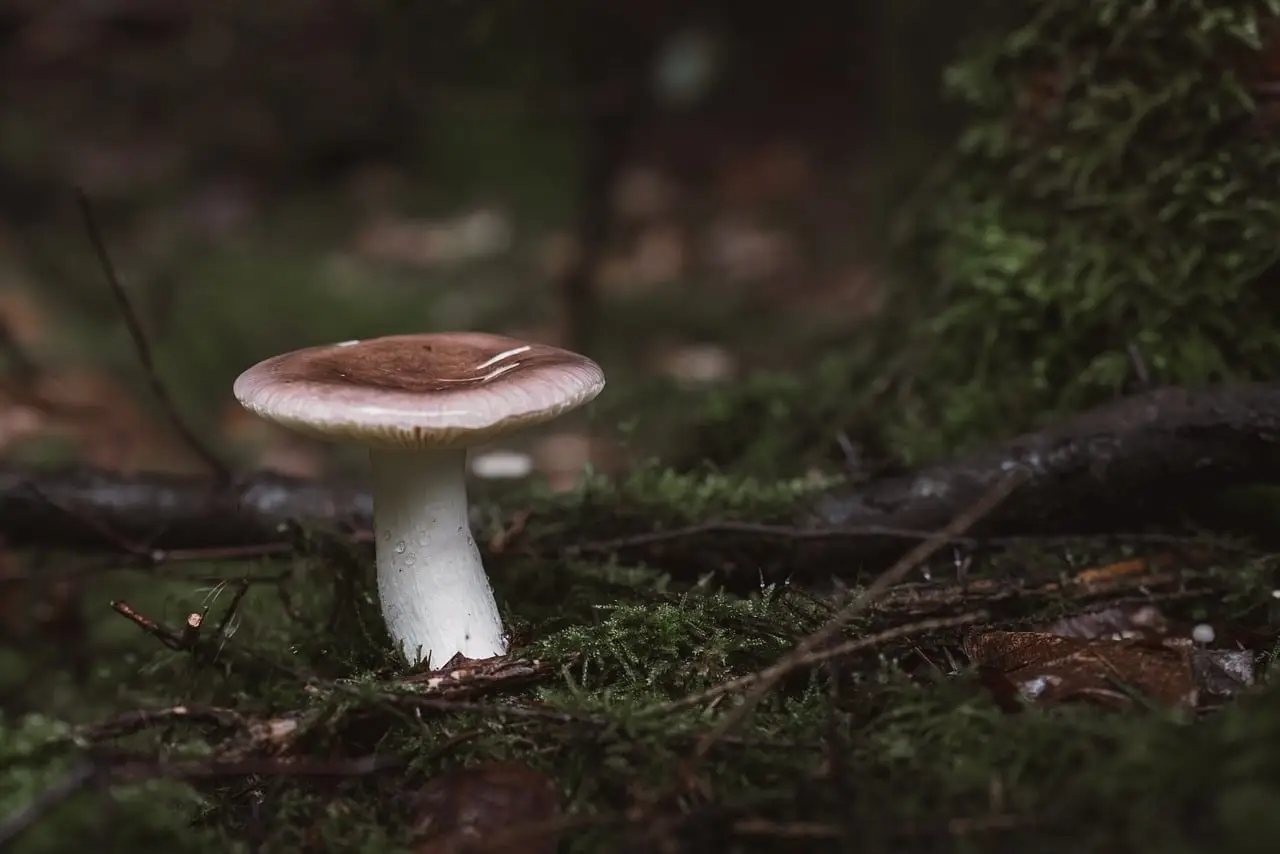
A mushroom smaller than a pencil eraser has done something no fungus on record has done before. Scientists reported on Nov. 11 in the journal Current Biology that Galerina indica, a tiny brown species from Florida's swamps, produces both psilocybin — the hallucinogen found in psychedelic mushrooms — and amatoxins, the poisons behind the world's deadliest mushroom fatalities. It is the first known species, in any group of fungi, to make both at the same time.
Researchers at the University of Florida are calling it the "dark magic mushroom." That nickname earns its keep.
"There is no species of mushroom anywhere, in any group, that has been known to produce both at the same time," study first author Andrew Kunik, a fungal biology researcher at the University of Florida, told Live Science. "So it's quite remarkable."
What did the researchers actually find?
Kunik's team wasn't hunting for anything specific. They collected five Galerina specimens from Florida swamps, simply because not every Galerina mushroom in the state had been chemically characterized. Galerina is a genus of over 300 species worldwide, many of them poisonous.
The G. indica samples grew on moss-covered palm trunks. They were tiny: the largest stood about 0.2 inches (0.5 centimeters) tall, with caps up to 0.1 inches (0.25 cm) wide.
Chemical analysis turned up psilocybin, amatoxins — and one amatoxin never before documented in mushrooms. The new poison wasn't a shocker; related Galerina species make close chemical cousins of it. The psilocybin was the surprise.
"To find them both together in one mushroom, I never expected to find that," study co-author Matthew E. Smith, a plant pathologist at the University of Florida, told Live Science. "We were shocked."
How does a mushroom acquire such a toolkit?
The likely answer is horizontal gene transfer — an organism handing genetic material to another organism directly, rather than passing it parent-to-offspring. The process is common in fungi, and in bacteria it drives antibiotic resistance. It can stitch together genetic combinations that ordinary inheritance never would.
Past research showed that deadly Amanita mushrooms — which shut down protein production in cells and can kill through liver failure — shared their amatoxin-making ability with the unrelated Galerina and Lepiota genera via gene transfer. Some fungi picked up psilocybin production the same way.
When the team compared G. indica's genes with those of other psilocybin producers, they found a shared evolutionary origin despite distant relatedness. The psilocybin genes also sit in a different order than in other fungi, hinting the cluster was rearranged somewhere in the species' history — a fingerprint of gene transfer.
DNA-based reconstructions put the psilocybin genes' arrival at roughly 15.5 million years ago. Kunik noted a second possibility: two separate transfer events, possibly as recent as 6 million years ago. More collected and sequenced specimens would help sort out which story holds.
What does this change for the rest of us?
For mushroom hunters: a reminder that small and brown can still be lethal, and that Florida's Galerina species deserve caution. For scientists: a demonstration that tropical and subtropical fungi remain badly understudied, and that more surprises are, in Smith's words, likely right under our feet.
Independent experts found the work genuinely novel. "What was exciting about this paper was seeing both of these [compounds] present, seeing that this gene cluster jumped in, got rearranged, maybe came in twice — it's very cool," Hannah Reynolds, a fungal ecologist at Western Connecticut State University who was not involved in the study, told Live Science.
The hypothesis that comes with a caveat
Why would one mushroom make two incapacitating chemicals? Kunik speculates the pairing is a defense: animals that normally eat fungi would struggle to evolve resistance to both toxins at once. Plausible. But it remains speculation.
Testing it would take more work — perhaps editing the mushroom's genes to remove one compound and watching how that shifts its place in the food web, as Kunik suggested. Until someone runs those experiments, the "powerful defense" idea stays exactly where it started. Unproven.
The paper is Kunik et al. (2026), "The 'dark magic mushroom' co-produces amatoxins and psilocybin," published in Current Biology.
via livescience.com/feeds/news (Source)
More from James Calloway
Show full bio
Staff writer covering regulation, policy and their impact on general science news at SciBeat.
474 articles
Nearby plates
- First 'Dark Magic Mushroom' Makes Psilocybin and Deadly Toisons
- Florida mushroom contains both psilocybin and toxic amatoxins
- First 'Dark Magic Mushroom' Found in Florida Packs Both Trip and Toxin
- D. rex: The 2.2 kg Fungus That Rose After the Dinosaurs Fell
- Museum Frogs Solve a 50-Year Mystery of Brazil's Vanishing Amphibians