Plate Nº 89 · recorded November 13, 2026
Biology & EvolutionReported finding
Florida mushroom contains both psilocybin and toxic amatoxins
University of Florida researchers confirmed psilocybin and amatoxins in Galerina indica, the first mushroom reported to contain both psychedelic and toxic compounds.
By James Calloway4 min read879 words
In brief
- Nov. 11, 2026: The study reported the first mushroom containing both psilocybin and amatoxins.
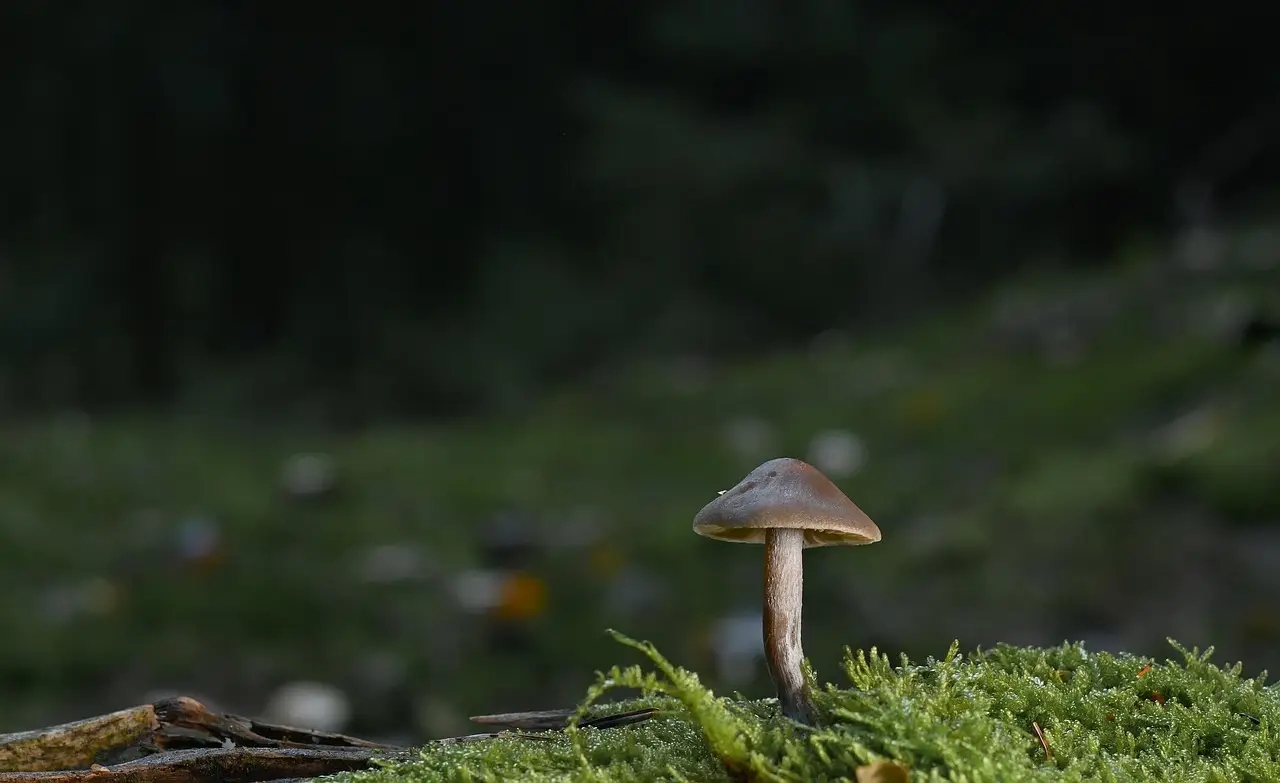
- *Galerina indica*: A small brown Florida species nicknamed the “dark magic mushroom.”
- At least two horizontal gene-transfer events likely brought the compound-making genes into *Galerina*.
- Only a handful of worldwide records: The study specimens now belong to the Natural History Museum of Utah.
By James Calloway
A small brown Florida mushroom is the first documented species to contain both psilocybin, which can produce psychedelic experiences, and amatoxins, a toxin group responsible for some fatal mushroom poisonings.
The species, Galerina indica, has been dubbed the “dark magic mushroom.” A University of Florida Institute of Food and Agricultural Sciences team reported the discovery in Current Biology on Nov. 11, 2026. The paper lists Andrew R. Kunik et al., and its DOI is 10.1016/j.cub.2026.10.041.
What did the team find?
The team began by checking Florida members of Galerina for amatoxins. Some species in that group already carried the deadly compounds, but the toxins had not been documented in Florida. Kunik, then an undergraduate in Matthew E. Smith's laboratory, found an unusual brown specimen while documenting fungi at UF/IFAS's Ordway-Swisher Biological Station.
Psilocybin is a naturally occurring Schedule I controlled substance that can produce psychedelic experiences. Amatoxins are mushroom toxins, and some cause fatal poisonings. Chemical analysis and the genetic and bioinformatics work pointed to an unusual pairing: the apparently ordinary mushroom contained both psilocybin and amatoxins.
Kunik said: “I did the bioinformatics and genome work, and Michael did the chemical analysis. We matched up our findings and confirmed that we saw both compounds.” He described his disbelief, adding that the team tried not to get too excited until a more rigorous analysis was complete.
The study also points to an unusual evolutionary history. Co-author Bryn Dentinger, a mycologist at the University of Utah and curator of mycology at the Natural History Museum of Utah, said: “Two independent horizontal gene transfer events for these specialized metabolites in one mushroom genus are unheard of.” Here, “metabolites” means the chemical compounds organisms produce.
Matthew E. Smith, a professor in UF/IFAS's Department of Plant Pathology and Florida's state mycologist, described identifying poisonous or potentially poisonous species as part of his job. He regularly consults Florida Poison Control, emergency-room doctors and veterinarians when people or dogs may have consumed mushrooms, because knowing the species helps assess potential harm.
The collaboration included Ben Lemmond from Smith's laboratory; Michael Christopher and Timothy Garrett from UF Chemistry; Dentinger from Utah; and Jason Slot from Ohio State. Kunik, Smith and those colleagues found that a mushroom looking much like other small brown species contained both compounds, an unusual chemical combination.
How could one fungus gain both chemical traits?
Horizontal gene transfer allows genetic material to move between organisms that are not close relatives, rather than only passing from one generation to the next. The genes responsible for producing psilocybin and amatoxins likely entered Galerina through at least two separate transfers. That explanation fits the team's analysis, but it remains an inference from genetic evidence, not a directly observed evolutionary history.
Dentinger compared the process to a handshake in which some of one person's DNA becomes incorporated into another person's genome. The metaphor makes a distant transfer easier to picture, although it does not identify the organisms involved or the original source of either compound's genes.
What might the compounds do? Kunik said scientists still do not fully understand why mushrooms produce psilocybin. Amatoxins may help protect fungi from animals that eat them, but their precise ecological role remains unclear. Why one mushroom makes both substances, and what advantage that might confer, are open questions rather than demonstrated benefits.
Future experiments could “knock out,” or disable, genes for producing either compound and then observe how the mushroom changes. Such tests might reveal whether one chemical protects the fungus, whether psilocybin serves some other function, or whether making both offers an advantage. The current study sets up those tests; it does not answer them.
What does this change for mushroom gatherers?
For anyone tempted to forage wild mushrooms, the practical answer is blunt: this discovery supplies no reliable field test. Smith said the mushrooms are hard to find, small and brown like hundreds of others, and difficult to distinguish even for trained experts. The finding gives no basis for treating blue staining alone as a safety signal.
That is an inference from the documented identification difficulty, not a new finding about poisoning. The report gives no compound concentrations, does not say whether every specimen shares the same chemical profile, and includes no account of human or animal poisoning caused by G. indica.
For suspected ingestions, Smith's own practice points to expert identification and consultation with Florida Poison Control, emergency doctors or veterinarians.
The species has been documented only a handful of times worldwide. Specimens used in the research now form part of the Natural History Museum of Utah's collection and remain available for future study. Kunik, now a postbaccalaureate researcher at Harvard, continues his fungal research. He sees small, seemingly uninteresting fungi as capable of concealing extraordinary chemistry that scientists are only beginning to understand.
What is still unknown?
The clearest result is chemical: the team detected both psilocybin and amatoxins in G. indica. The explanations remain open. The research does not establish the compounds' amounts, ecological functions, clinical effects in this species, or the advantages of producing both.
A remarkable pairing, in other words, is not the same as a solved biological mechanism.
via phys.org/rss-feed/ (Source)
More from James Calloway
Show full bio
Staff writer covering regulation, policy and their impact on general science news at SciBeat.
362 articles
Nearby plates
- Single Magic Mushroom Dose Can Anatomically Change the Brain
- Every Plant-Based Product Tested in the UK Carried Fungal Toxins
- Toad Venom Psychedemic Nasal Spray Eases Depression for Eight Weeks
- McGill Launches Largest-Ever Psychedelics Study for Mental Health
- Five Labs, One Psychedelic: Psilocybin's Lasting Effects Fail Replication