Plate Nº 68 · recorded November 2, 2026
Neuroscience & MindReported finding
Five Labs, One Psychedelic: Psilocybin's Lasting Effects Fail Replication
Five Bay Area labs ran identical mouse experiments on psilocybin and found no lasting behavioral effects 24 hours after a single dose — only acute, replicable ones.
By Nathan Brooks4 min read733 words
In brief
- Pooled data from five labs showed no lasting behavioral changes 24 hours after a single 2 mg/kg psilocybin dose.
- Acute effects — increased anxiety, avoidance, reduced fear expression and head twitching — replicated across all five labs.
- The study was published November 2, 2026, in Nature Neuroscience after a four-year, donor-funded project.
- Experiments began in 2022 after a year of federal approval to use psilocybin.
- Three institutions took part: UC Berkeley, UCSF and Stanford.
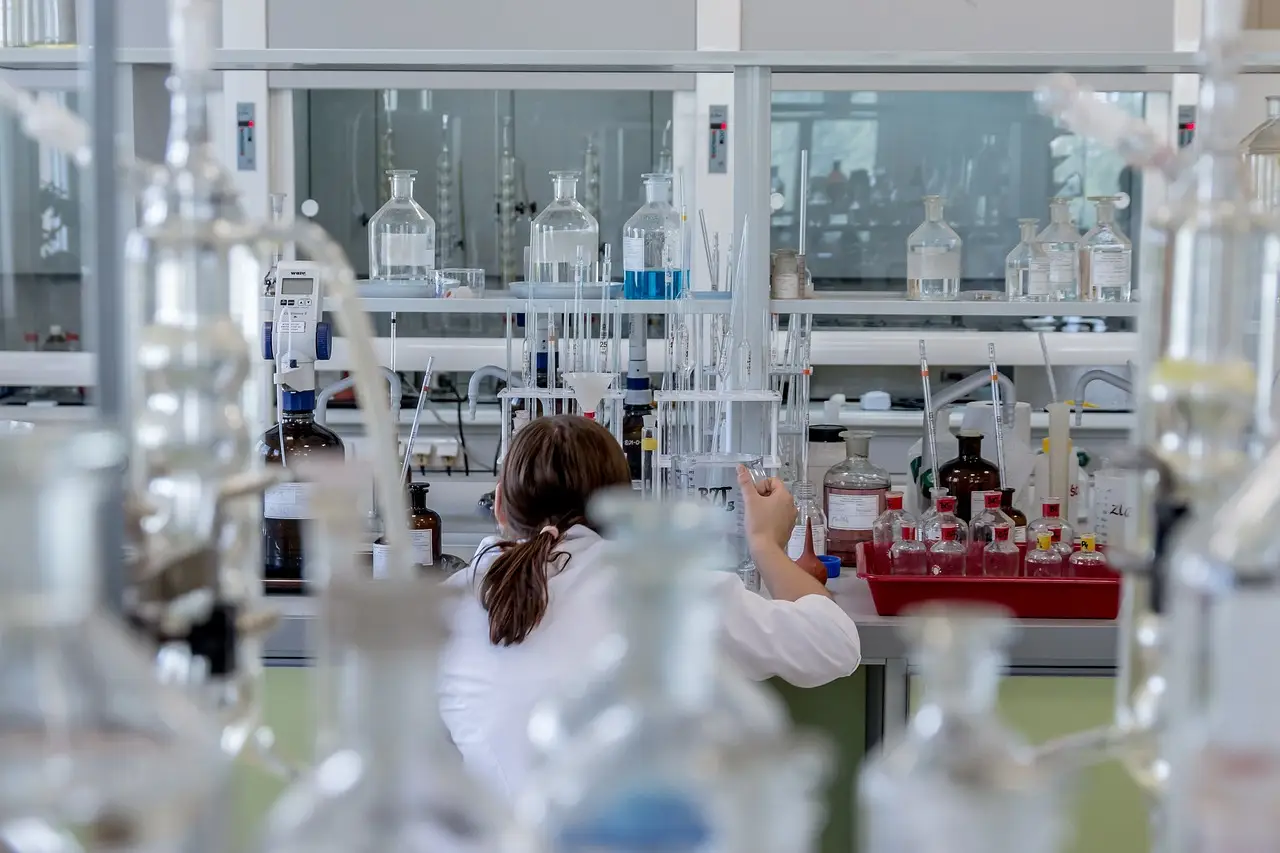
Five laboratories dosed mice with psilocybin using identical protocols, and 24 hours later found no lasting behavioral changes at all. The pooled results, published November 2, 2026, in Nature Neuroscience, showed no replicable reduction in anxiety or depression-like behavior, no impact on fear responses, and no change in social interaction.
The study is one of the most unusual replication efforts in neuroscience. Neuroscientists at UC Berkeley, UCSF and Stanford University ran parallel, identical experiments — three institutions, five labs, one protocol — to find out which behavioral effects of the psychedelic drug actually reproduce across different lab settings. The dose was 2 milligrams per kilogram of body weight.
What did replicate?
A few acute effects held up across all five labs. Ten minutes after injection, every lab reported increased anxiety and avoidance behavior in the mice, along with a decrease in the expression of fear. Head twitching was the one universal behavior — a classic marker researchers use in psilocybin mouse studies.
The researchers also tested whether psilocybin reopens a critical period for social reward learning in adult mice, as earlier studies had reported. They found no evidence for it.
"One of our main findings is that, at least with our experiments and doses used, the persistent effects of psilocybin across these behaviors was modest, if anything," said Odilia Lu, a Berkeley doctoral student and co-first author of the paper. She said the work highlights the value of multi-lab collaborations for estimating true effect sizes and reducing publication bias — the tendency of small, single-lab positive results to distort the literature.
Why run five copies of the same experiment?
The idea came from Stanford neuroscientist Robert Malenka, who enlisted Stephan Lammel and Andrea Gomez at Berkeley, Vikaas Sohal and Mazen Kheirbek at UCSF, and Boris Heifets at Stanford. An anonymous donor funded the four-year project, the labs spent a year getting federal approval to use psilocybin, and experiments began in 2022.
The motivation was a field drowning in conflicting results. Small clinical trials have suggested psilocybin might help treat depression and PTSD, but "we know very, very little about what it actually does to the brain," Lammel said. Individual studies vary in protocol, dosage and assays, which makes comparison difficult — and failed replications rarely get published, because journals favor positive results and negative ones don't earn tenure.
Even with identical protocols, the five labs' results often diverged in statistical significance. On depression, for example, two of the five labs saw a significant effect in one of two standard assays — tests where a "depressed" mouse is one that gives up swimming in a pool of water. "A lot of the behavioral tasks that we use in mice to assay depression just can't capture the really complicated human," Lu said, adding that depression research shouldn't be abandoned since psilocybin still looks most promising for that disorder.
What explains the variability?
A statistical analysis traced the differing outcomes to unavoidable lab-to-lab variations:
- the sex of the handler
- how long mice had been acclimated to handling
- the companies the mice came from
- the size of the experimental enclosures
- the time of day the drug was given
None of these variables, taken across all five labs, ultimately proved to drive psilocybin's measured effects — but the differences they produced were enough to shift individual labs' statistical results.
Gomez, a member of the Laguna Pueblo tribe, said the variability didn't surprise her. In traditional medicinal use, she noted, the healing is tied to community integration after the trip — context that's nearly impossible to reproduce in a lab. "What is the mouse equivalent of wearing a tie-dye t-shirt?" she jokes with her lab.
What comes next?
The researchers say the robust acute effects, like fear suppression, are a real starting point for studying how psilocybin changes neuronal circuits — something hard to examine in humans. Gomez plans to study physiological responses in the brain's prefrontal cortex; Lammel wants to test repeated dosing.
The timing matters beyond psychedelics. NIH director Jay Bhattacharya recently wrote an editorial in Science stressing the importance of funding independent replication of prominent findings.
"It's an urgent call to the field," Lammel said of parallel studies. Sohal put it more bluntly: "There's a real risk that if the hype around psychedelics outruns the science, there will be adverse outcomes that set the whole field back."
via Google News: Neuroscience (Source)
More from Nathan Brooks
Show full bio
Market editor covering companies, deals and strategy in general science news at SciBeat.
267 articles
Nearby plates
- Single Magic Mushroom Dose Can Anatomically Change the Brain
- McGill Launches Largest-Ever Psychedelics Study for Mental Health
- Short-Acting Psychedelic Tested Against Major Depression in Phase IIa Trial
- Northwestern scientists pinpoint brain cells behind cannabis anxiety
- Quitting Alcohol May Prime the Brain for Relapse, Mouse Study Finds