Plate Nº 16 · recorded November 2, 2026
Neuroscience & MindReported finding
Monkey Models of Autism Face an Uncertain Future in U.S. Labs
The first CHD8 macaque was born in September 2025, but researchers warn that U.S. funding cuts and shifting attitudes could end primate autism research prematurely.
By Priya Raman5 min read951 words
In brief
- A macaque carrying the autism-linked CHD8 gene variant was born in September 2025 after five years of work.
- More than half a dozen monkey models of autism now exist, based on social variation, maternal infection and genetic modification.
- China's 5 billion yuan ($750 million) Brain Project, launched in 2022, places nonhuman primate studies at its core.
- The latest SHANK3 monkey study required 15 animals and eight full-time technicians and engineers.
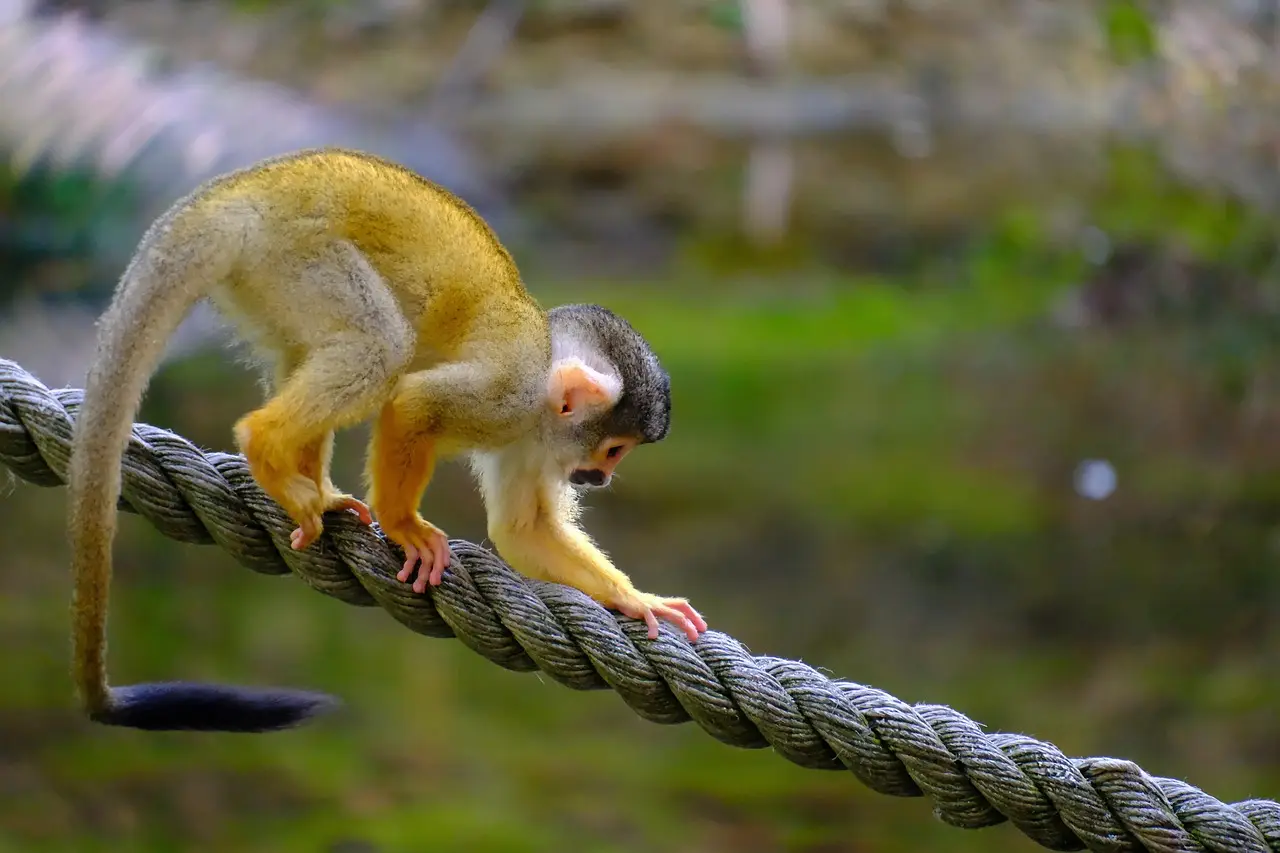
In September 2025, David Amaral's team celebrated the birth of their first macaque carrying a variant in CHD8, a gene linked to autism, intellectual disability and macrocephaly (an abnormally enlarged head). The animal arrived after five years of work, and Amaral says he now worries the project may not survive long enough to deliver its promise.
Amaral, professor of psychiatry and behavioral sciences at the University of California, Davis, began the effort in 2020 with collaborators at the Oregon National Primate Research Center. A monkey model, he says, could explain the condition's neurobiology better than existing CHD8 mice — for instance, by revealing which cell types drive the overgrowth of the brain. His team has genotyped and phenotyped the first animal in depth, logging behavioral records and longitudinal MRI scans, and is creating a second. He estimates the work requires 10 genetically modified monkeys in total to adequately explore the causes of megalencephaly (abnormal brain enlargement).
Why is the project at risk?
After negotiations earlier this year about converting the Oregon primate center into an animal sanctuary, the facility plans to downsize and pivot toward nonanimal models. Which monkey research will continue remains unclear. The center houses an artificial reproductive technology core — a facility for creating genetically modified animals — that exists nowhere else among U.S. primate centers. "A lot of what we're doing in terms of genetically modified monkeys is being done at the Oregon National Primate Research Center," Amaral says. If the team loses access, the project could end prematurely.
There are now more than half a dozen monkey models of autism and related conditions, built on natural social variation, maternal infection and genetic modification, with more in progress. Yet researchers describe a field under strain amid U.S. cuts to primate research funding and a broader push away from animal models. One researcher, speaking anonymously out of concern for ongoing funding, has put work on nonhuman primate autism models on hold.
Funding gaps can cause lasting damage, says Michael Platt, professor of neuroscience at the University of Pennsylvania, who studies social behavior in monkeys. Running out of cash could mean losing people with specialized expertise or even depopulating a colony — and rebuilding would be "extremely difficult." "It's hard to be optimistic," Amaral says, noting that recruiting young investigators into the field would be a very hard sell when grants are scarce and long-term funding looks doubtful.
What can monkeys show that mice cannot?
A growing body of evidence suggests monkey models address real limitations of other animals, says Guoping Feng, professor of brain and cognitive sciences at MIT. Mice lack some autism-linked brain regions, such as the dorsolateral prefrontal cortex, and do not reliably model social deficits.
More than 10 years ago, Feng and his MIT colleague Robert Desimone began a collaboration with the Shenzhen Institutes of Advanced Technology to create macaques with variants in SHANK3, a gene strongly linked to autism. The results were striking: unlike mice with the same mutation, heterozygous SHANK3 monkeys (carrying one altered copy of the gene) show sleep disturbances, abnormal social interactions, cognitive impairment, repetitive behaviors and altered brain connectivity — traits that parallel those seen in people with SHANK3 variants.
The macaques remain in China, because MIT lacks the space and facilities to house the large numbers needed. "Macaque transgenic work is very difficult in the U.S.," Desimone says. He and Feng instead established a SHANK3 model in marmosets, smaller monkeys that are easier to handle and breed. Desimone now uses marmosets to study how SHANK3 variants affect face-processing areas of the brain, which mice do not possess.
Feng has used both models to test a novel therapy: injecting a functional SHANK3 "minigene" directly into the central nervous system. Although he developed the treatment in mice, the monkeys provided critical data on safety and efficacy. "We're not saying that a monkey model is required for clinical trials, but these studies do give us confidence that these treatments are safe and effective," Feng says. The therapy has been licensed to Jaguar Gene Therapy, which is testing it in a clinical trial.
Is the rest of the world moving ahead?
Nonhuman primate neuroscience remains active in China and Japan. The China Brain Project, a 5 billion yuan (about $750 million) initiative launched in 2022, placed nonhuman primate studies at its core. Chinese scientists have engineered monkeys with MECP2 and CHD8 variants in addition to SHANK3.
Japan's national brain project focused on mapping the marmoset brain and modeling neurodevelopmental and neurodegenerative diseases. "Nonhuman primate research is still quite active," says Noritaka Ichinohe of Japan's National Center of Neurology and Psychiatry, whose group developed a marmoset model of autism based on valproic acid exposure and uses the animals to study neurobiology, biomarkers and interventions.
Yongchang Chen of Kunming University of Science and Technology, who developed macaque models of MECP2 (the Rett syndrome gene, also linked to autism), says primate neuroscience looks more active in China than elsewhere. Even so, the field is small and demanding. The latest SHANK3 study collected behavioral and neuroimaging data on 15 animals and required eight full-time technicians and engineers, according to Zhonghua Lu of the Shenzhen institutes, and even in China funds are tightening as the government favors brain-computer interface research.
Many autism researchers are turning to organoids (lab-grown clusters of human cells) and intraoperative recordings in people. But testing novel gene therapies still requires living animals, at least for now. "Each model, whether it is a single cell, yeast, rodents, primates or humans, is a good model for certain questions," Feng says. "No model is perfect. Not even a human is a perfect model for another human."
via Google News: Neuroscience (Source)
More from Priya Raman
Show full bio
Senior reporter covering people, launches and day-to-day practice in general science news at SciBeat.
280 articles