Plate Nº 53 · recorded October 9, 2026
Science Policy & FundingReported finding
U.S. National Primate Research Centers Face an Uncertain Future
The seven U.S. national primate research centers, long a pillar of neuroscience and biomedical research, now confront funding uncertainty that scientists fear could be irreversible.
By James Calloway4 min read747 words
In brief
- Seven U.S. national primate research centers face an uncertain future, per The Transmitter.
- The National Institutes of Health funds the network; universities host the centers.
- The centers have supported primate neuroscience research for more than half a century.
- Researchers warn that losing primate colonies and expertise would be effectively permanent.
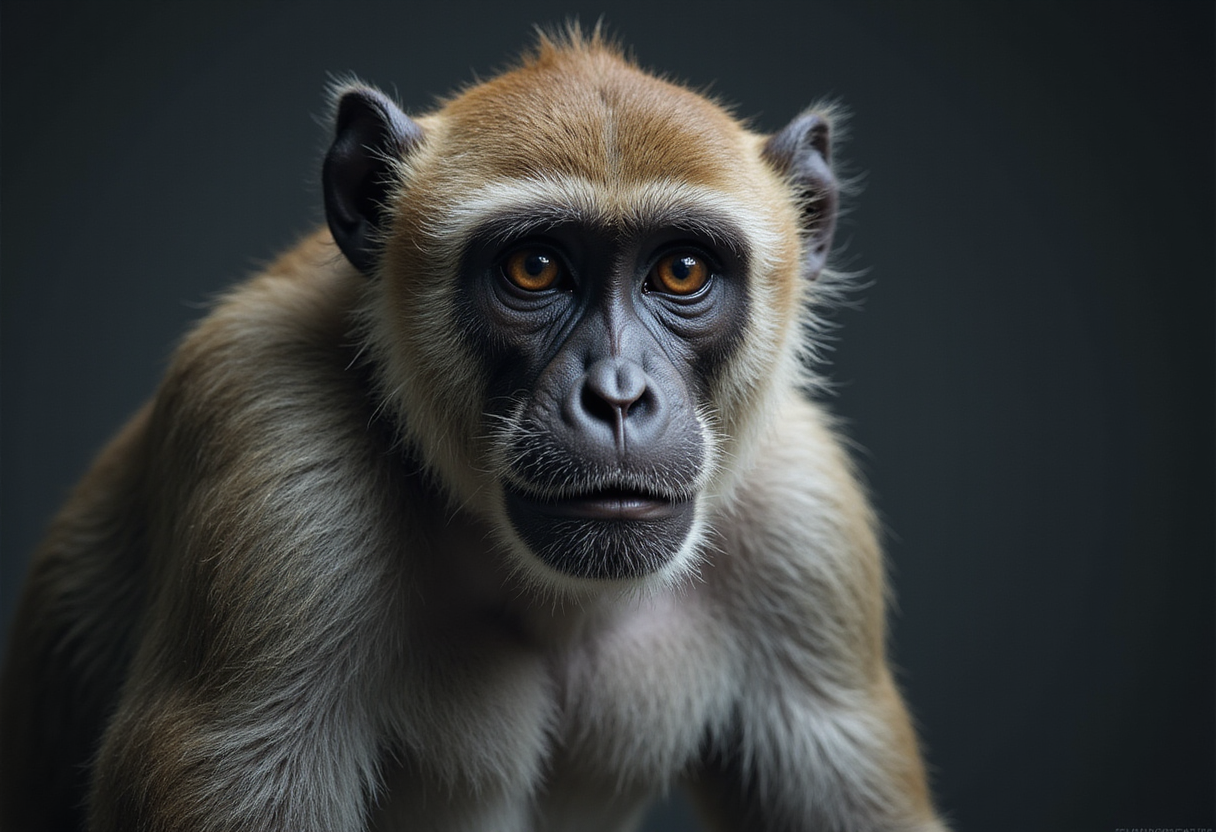
The seven U.S. national primate research centers, a network that has supported decades of biomedical and neuroscience work, now face an uncertain future, according to a report from The Transmitter: Neuroscience News and Perspectives.
The centers form a critical layer of American research infrastructure. Scientists have used them to study the brain, infectious diseases, reproductive biology, and aging in animals whose physiology closely resembles our own. Much of what we know about how neurons behave in living brains — and how candidate drugs act before human trials — rests on studies carried out at these facilities.
Now that foundation looks shaky. The Transmitter's reporting describes a set of pressures converging on the centers at once, leaving researchers unsure whether the network can continue operating as it has for more than half a century.
What are the national primate research centers?
The national primate research centers are a group of federally supported institutions, each housing large colonies of research primates such as rhesus macaques. The National Institutes of Health funds the network, and universities host the individual centers.
Their purpose is straightforward: primates share far more biological similarity with humans than mice or rats do. That similarity makes them scientifically valuable — and ethically weighty. Studies involving primates face strict oversight, and researchers generally reserve such work for questions that cannot be answered any other way.
Neuroscience has been one of the biggest beneficiaries. Primate studies have helped scientists map brain circuits, test treatments for Parkinson's disease, and understand how the visual system processes information. Without access to these animals, many of those experiments would be impossible.
Why does their future look uncertain?
The Transmitter's report points to a combination of financial and structural strains rather than a single decisive blow. Together, these pressures raise questions about whether all seven centers can keep operating at their current scale.
Among the concerns the report highlights:
- Sustained uncertainty over federal funding for the centers
- Rising costs of maintaining and caring for large primate colonies
- Changing priorities within the agencies that support the network
- Difficulties in sustaining specialized staff and infrastructure over the long term
Each factor alone would be manageable, researchers suggest. Combined, they create an environment in which long-term planning becomes difficult — a serious problem for facilities whose work depends on stable animal colonies that take years, sometimes decades, to establish.
What would the loss of the centers mean for science?
Primate research is not something a laboratory can simply wind down and restart. Breeding colonies require years of careful management. Behavioral training of animals for cognitive experiments takes months. Expertise in primate handling, veterinary care, and welfare standards takes even longer to build.
If centers shrink or close, scientists warn, the losses would be effectively permanent on the timescale of a research career. A graduate student who loses access to primate models today may never have another opportunity to work with them.
The immediate scientific impact would fall hardest on fields that depend directly on primates. In neuroscience, that includes work on the primate visual system, motor control, and the brain circuits underlying decision-making. In broader medicine, primate studies play a role in testing vaccines and therapies before they reach human clinical trials.
Researchers quoted in coverage of the situation describe the atmosphere in the field as anxious, with labs unsure whether to begin new long-term projects that depend on continued access to the animals.
What happens next?
The situation remains unresolved. Much depends on decisions that funding agencies and host institutions have yet to make, and on how the broader political and budgetary environment for biomedical research evolves.
Scientists who follow the issue urge caution against treating the centers' difficulties as a foregone conclusion. The network has survived funding turbulence before, and its supporters argue that the scientific case for maintaining it remains strong.
At the same time, the uncertainty itself carries costs. Faculty may steer trainees away from primate research. International collaborators may hesitate to build projects around U.S. facilities. Institutional partners may hesitate before investing in infrastructure whose future is unclear.
For now, the researchers who depend on the centers are watching budget announcements and agency signals closely — and hoping that a network built over generations of scientific investment is not dismantled by a few difficult years.
The Transmitter's reporting underscores a broader point about how science infrastructure fails: rarely through a single dramatic event, and more often through accumulated uncertainty that quietly pushes talent, money, and ambition elsewhere.
via Google News: Neuroscience (Source)