Plate Nº 64 · recorded October 30, 2026
Neuroscience & MindReported finding
Brain's 'Blue Place' Sends Targeted Messages, Not One Broadcast
Allen Institute scientists mapped a precise, postal-style messaging network in the brain's locus coeruleus — and found a record 70.32 cm mouse neuron. Mouse work, but with real clinical promise.
By James Calloway4 min read787 words
In brief
- A Nature study published October 23, 2026 found the locus coeruleus sends targeted, pathway-specific norepinephrine signals rather than one brain-wide broadcast.
- Researchers imaged nearly 35,000 neurons and profiled almost 400,000 cells in mice.
- One reconstructed LC axon measured 70.32 centimeters — part of the longest single neuron ever measured in a mouse.
- Dorsal LC neurons drive learning; ventral LC neurons govern whether animals engage with their environment.
- The work was funded by the NIH BRAIN Initiative; all findings are from mice, with no clinical applications yet.
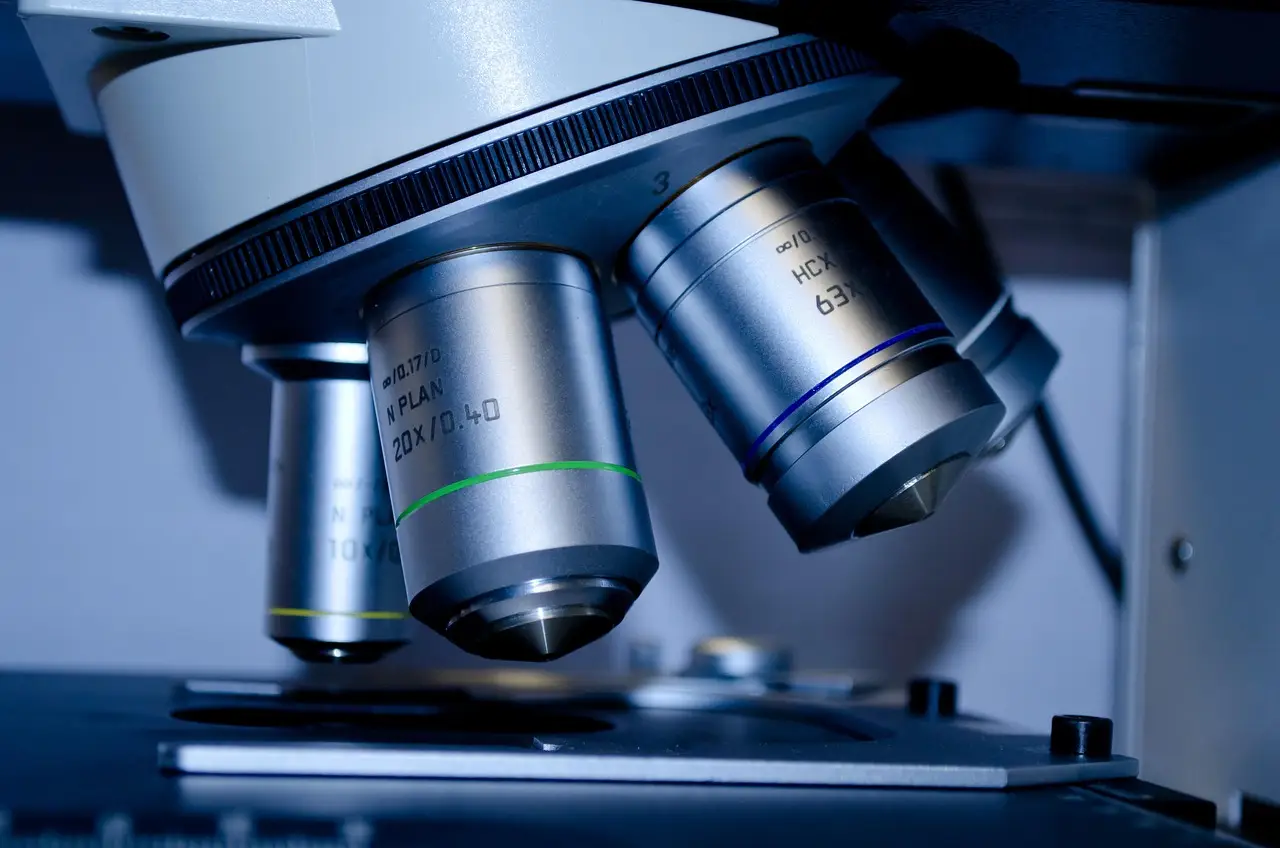
A single mouse neuron stretching 70.32 centimeters — the longest single neuron ever measured in a mouse — is just one surprise in a new Allen Institute study that upends how scientists think about a tiny blue spot deep in the brain.
The study, published in Nature on October 23, 2026, examines the locus coeruleus, or LC, a small cluster of nerve cells in the brainstem. The name is Latin for "blue place." Despite holding only a small fraction of the brain's neurons, the LC produces norepinephrine, a chemical messenger that regulates attention, learning, heart rate, and the body's response to stress and excitement.
For decades, the textbook view held that the LC works like a loudspeaker. It broadcasts one general norepinephrine signal across the whole brain, the thinking went. The new research says that picture is wrong.
What did the researchers actually find?
Using brain imaging, neural activity recordings, genetic techniques, and behavioral experiments in mice, the Allen Institute team found that the LC communicates through several distinct pathways. Different groups of LC neurons send signals to specific destinations, and different groups respond to different experiences.
The geography matters:
- Neurons in the upper, or dorsal, portion of the LC connect mainly to the cerebral cortex and forebrain.
- Cells in the lower, or ventral, portion send signals primarily to the brainstem and spinal cord.
- These anatomical differences are mirrored by distinct patterns of gene activity, meaning the two groups differ at the molecular level, not just in wiring.
"The findings suggest the brain's norepinephrine system is far more like a targeted postal network than a foghorn," said Karel Svoboda, director of Neural Dynamics at the Allen Institute and a co-author of the study.
Which brain cells drive learning?
The behavioral experiments split the LC's jobs cleanly. Dorsal neurons connecting to the cortex became particularly active when mice performed decision-making tasks and adjusted their choices after a bad outcome. That's learning in action.
Ventral neurons behaved differently. Their activity rose just before mice ignored signals that a reward might be available. Those cells appear to govern whether animals engage with their environment at all.
"What emerged was a clear map: neurons in the dorsal LC that send signals upward to the cortex are involved in learning, whereas neurons in the ventral region projecting downward to the brainstem and spinal cord govern whether animals engage with their environment at all," Svoboda said.
The team also spotted similarities between the norepinephrine system and dopamine, another chemical messenger that signals to the basal ganglia, a region involved in habit formation. Scientists suspect the two systems work together, potentially letting the brain learn several complex, abstract concepts simultaneously. That idea remains a hypothesis, not a settled conclusion.
How big was this study?
Big, by neuroscience standards. The researchers used whole-brain imaging to study nearly 35,000 neurons, analyzed the genetic profiles of almost 400,000 cells, and reconstructed the complete structures of several exceptionally complex nerve cells.
That's where the 70-centimeter axon turned up. Axons are the long projections that carry signals from one nerve cell to others. LC axons averaged about 35 centimeters. One stood out at 70.32 centimeters.
"This neuron, like many others that we studied, supplies NE to a very large volume of the cerebral cortex. For the brain, this is highly unusual. Most neurons are more specific in their targets," said Jeremiah Cohen, a scientist at the Allen Institute and study co-author. "But this neuron doesn't release NE everywhere. It ignores the cerebellum, brainstem, and spinal cord."
Even the record-breaker stays selective. That detail reinforces the study's central claim: the LC runs an organized network, not a sloppy spray.
What does this change for medicine?
Not yet anything, honestly. But the long-term potential is real.
Norepinephrine is a target for drugs treating depression, anxiety, and ADHD, and LC neurons are among the earliest brain cells to deteriorate in Alzheimer's disease. Current norepinephrine drugs hit multiple brain circuits at once, sometimes helping one region while causing unwanted effects elsewhere. A precise map of the LC's pathways could, in time, let researchers design therapies that act selectively on the circuits behind specific symptoms.
The National Institutes of Health's BRAIN Initiative funded the work.
One caveat, and it's a big one: everything here comes from mice. Human brains share the LC, but the researchers' own framing is cautious — the findings "could eventually" help scientists understand human brain function. Emphasis on eventually. No clinical application exists today, and any treatment built on this map would need years of validation. For now, this is a discovery about wiring, not a breakthrough at the pharmacy.
via dx.doi.org (Original)
More from James Calloway
Show full bio
Staff writer covering regulation, policy and their impact on general science news at SciBeat.
267 articles
Nearby plates
- Brain Cells Vote: How Conflicting Visual Signals Fade in a Fraction of a Second
- Brain Wiring Starts Precise, Not Random, Mouse Study Finds
- Stimulating the Vagus Nerve After Practice Helps Skills Stick in Mice
- Mouse Study Maps a Brain Circuit That Tunes Stress Responses
- Scientists reconstruct 10-second videos from mouse brain signals