Plate Nº 91 · recorded November 15, 2026
Space & AstronomyReported finding
Comets Probably Did Not Deliver Life's Ingredients to Earth, Study Finds
Cambridge simulations show most fragile molecules on comets would be destroyed on impact, casting doubt on a popular theory of how life's ingredients reached Earth.
By Priya Raman3 min read555 words
In brief
- Cambridge-led simulations published in Scientific Reports show comet impacts would destroy most delicate organic molecules
- Comet impacts became far less common during Earth's first 500 million years, limiting delivery opportunities
- Mars's smaller size and thinner atmosphere may have made comet deliveries somewhat more plausible there
- Researchers tested hydrogen cyanide, a comet compound that can help form life's basic building blocks
- Asteroid impacts and local chemical reactions remain alternative explanations for life's ingredients
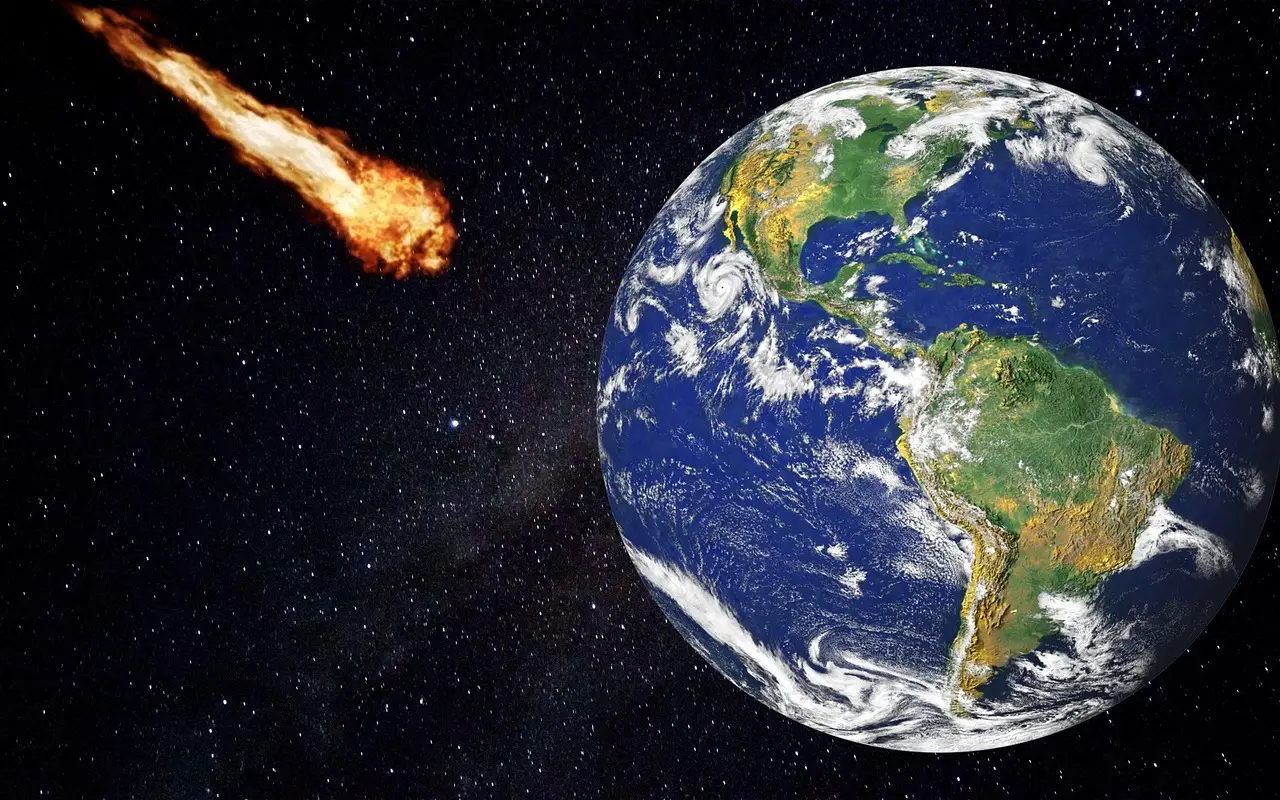
Comets are far less likely to have delivered the ingredients of life to Earth than scientists once believed, according to new computer simulations from researchers led by the University of Cambridge, published in Scientific Reports. The models show that most delicate molecules carried by comets would be destroyed in the heat of impact.
For decades, a popular idea in origin-of-life research held that icy visitors from space brought key chemicals to the young Earth. Comets do contain carbon-rich and nitrogen-rich compounds, some of which can help form more complex molecules associated with life. Carrying those chemicals across space, however, is only part of the challenge. They must also survive a violent arrival through the atmosphere and then remain in one place long enough for useful chemical reactions to occur.
What did the simulations test?
The Cambridge team built computer models of comet paths, impacts and atmospheric conditions to test whether those two hurdles could realistically be overcome. Their subject chemical was hydrogen cyanide, a simple compound found in comets that can participate in reactions producing some of life's basic building blocks (the molecules from which biological structures are assembled). Despite its alarming name, hydrogen cyanide plays a central role in research on how early chemistry might have developed.
The results were unkind to the comet hypothesis. The simulations showed that comets generally approached Earth too quickly or at unsuitable angles, and their impacts generated enough heat to destroy much of the fragile material on board. Even in cases where some hydrogen cyanide survived, delivering a useful amount of it to a single location would have been extraordinarily rare. The chemical could also disperse before further reactions took place.
Did Earth run out of time?
Timing posed a third problem. Comet impacts became much less common during Earth's first 500 million years, leaving only a small number of possible opportunities for a successful delivery. The window, in other words, narrowed just as the need for a reliable supply of raw materials grew.
The researchers do not rule comets out entirely. They do not claim a comet could never have contributed useful chemicals. Instead, they argue that a steady, dependable supply of life's ingredients from comets is an unlikely explanation for how life began on this planet.
Could Mars have fared better?
The study points to a more promising candidate next door. Mars, with its smaller size and thinner atmosphere, may have offered somewhat better conditions for such deliveries, because comet material would have faced a gentler descent to the surface. Even there, the researchers caution, successful delivery would remain uncertain.
Other explanations remain open. Asteroid impacts may have helped produce or deliver important compounds, and chemical reactions on early Earth could have created some ingredients locally, without any need for cosmic courier service.
What are the study's limits?
The findings come with clear caveats. The study does not explain how life started, and it relies on simulations rather than direct observations of ancient impacts. Its value lies in testing a familiar, appealing idea against the physical difficulties of bringing fragile molecules safely to the ground — a test the comet hypothesis largely fails.
The origin of life remains one of science's biggest puzzles. These findings suggest researchers may need to look beyond comets for much of the answer.
via knowridge.com (Source)
More from Priya Raman
Show full bio
Senior reporter covering people, launches and day-to-day practice in general science news at SciBeat.
403 articles
Nearby plates
- Cambridge Study: Comets Were Poor Couriers for Life's Ingredients
- 100,000 Simulations Test the Comet Theory of Life’s Origins
- Comets Probably Didn't Seed Life on Earth, Cambridge Study Says
- Interstellar Comet 3I/ATLAS Carries Methane Up to 10 Billion Years Old
- Bennu and Murchison: Twin Asteroid Chemistry From Distant Corners of the Solar System