Plate Nº 16 · recorded November 18, 2026
Health & Medicine ResearchReported finding
Common Chemicals Pose $1 Trillion-a-Year Health Threat, UN Warns
A UN-WHO report conservatively estimates the annual health cost of endocrine-disrupting chemicals at over $1 trillion, calling the threat "global and growing" and current rules "uneven."
By Priya Raman5 min read935 words
In brief
- UNEP-WHO report estimates EDC exposure costs at over $1 trillion annually, conservatively.
- First comprehensive EDC assessment in 14 years; examined thousands of studies on bisphenols, phthalates and parabens.
- Around 1,000 chemicals identified as EDCs; 2024 wristband study found Thai and Kenyan recycling workers exposed to 20+ hazardous chemicals.
- Strongest evidence links EDCs to neurological conditions and reproductive problems including sperm decline.
- Report co-author Tracey Woodruff of Stanford: "We need to stop the expansion of plastic production."
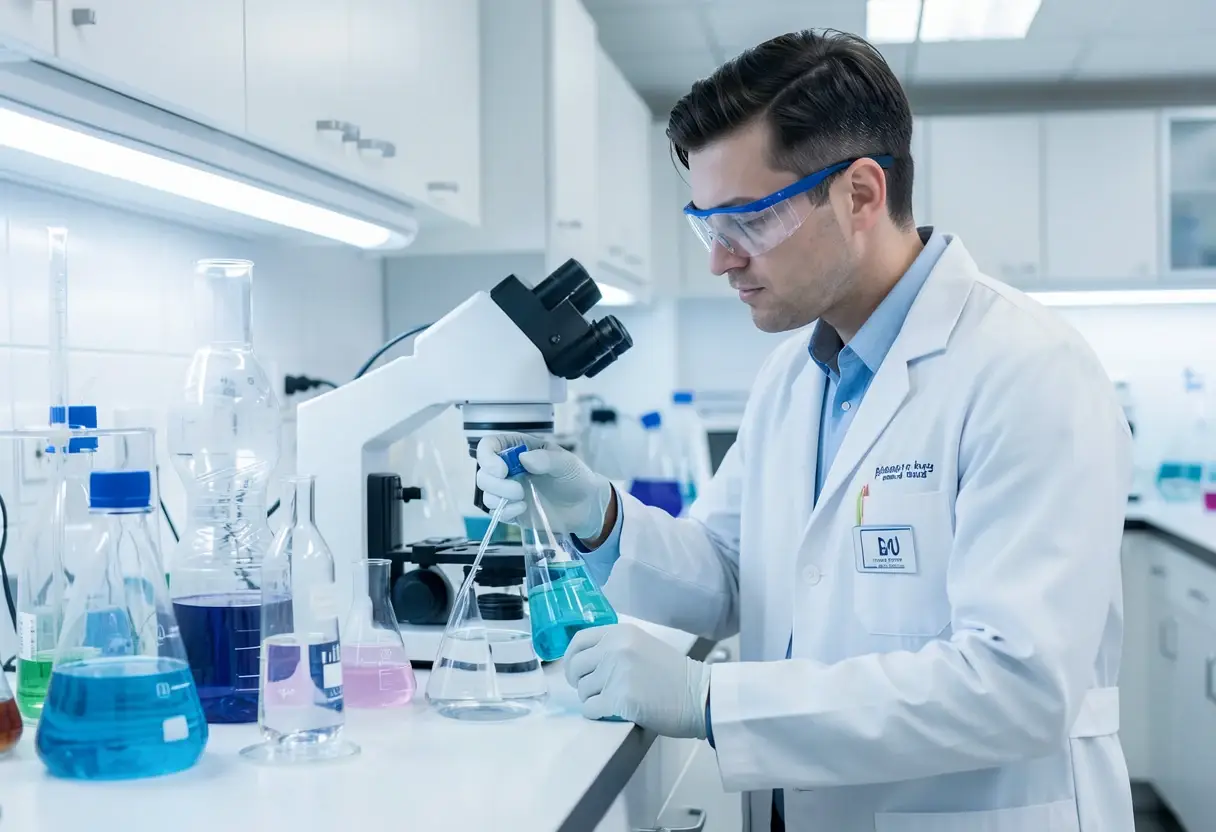
Exposure to endocrine-disrupting chemicals costs human health and the environment more than $1 trillion every year, according to a landmark report released late Tuesday by the United Nations Environment Programme and the World Health Organization.
The report — the first comprehensive assessment of these chemicals in 14 years — examined thousands of studies and concludes that the threat they pose is "global and growing." Its authors describe current regulations as "uneven and insufficient."
"The scientific evidence is clear: EDCs are a global and growing threat to human and environmental health," the report states.
What are endocrine-disrupting chemicals?
Endocrine-disrupting chemicals, or EDCs, are substances that interfere with, mimic or block the hormones that regulate the development and behavior of our organs. They are not exotic industrial byproducts confined to factory fences. They sit in everyday items: toys, cosmetics, building materials and clothing.
The report focused on families of chemicals including bisphenols (used in hard plastics and can linings), phthalates (used to soften plastics) and parabens (used as preservatives in personal care products). Around 1,000 chemicals have been identified as EDCs, but experts say many more have simply never been tested properly, and their impacts remain unknown.
Laura Vandenberg, a report co-author and professor of environmental health sciences at the University of Massachusetts Amherst, did not mince words about the strength of the accumulated evidence.
"The evidence is so strong that it's irrefutable at this point," she said.
Which diseases show the strongest links?
The report examined both associations between exposure and disease, and the biological mechanisms by which the chemicals could cause harm. The picture varies by condition:
- Strongest evidence: neurological conditions and reproductive problems, including declining sperm counts.
- Growing confidence: links to type 2 diabetes and asthma, diseases that have spiked globally in recent decades.
- Strong evidence of developmental and neurobehavioral effects in children.
- Emerging but less certain links to cardiovascular disease.
The speed of these disease trends points away from genetics as the primary explanation. "Because these changes are occurring rapidly, they are unlikely to be explained primarily by genetic change," the report says.
Vandenberg cautioned that the overall risk is high even where evidence for a single disease is still emerging, for two reasons: EDCs are so ubiquitous in modern life, and they appear capable of affecting health at extremely small concentrations. Scientists also worry about "synergistic" effects — the possibility that exposure to multiple chemicals at once amplifies harm in ways that studies of single compounds cannot capture.
Who faces the greatest exposure?
Workers in the chemicals and recycling industries bear the heaviest burden, particularly in countries with weak regulations. A 2024 study by the NGO International Pollutants Elimination Network offered a striking measure of just how inescapable these substances are.
Researchers fitted participants with silicone wristbands that absorb chemicals from their surroundings, then analyzed the wristbands in laboratories. Plastic waste and recycling workers in Thailand and Kenya carried traces of more than 20 hazardous chemicals. Even office workers in the control group, far from any industrial setting, showed exposure to at least 11.
The gap between 11 and 20 chemicals is a measure of occupational risk; the presence of 11 in an office worker's wristband is a measure of how thoroughly these substances have spread through daily life.
Why has regulation lagged behind the science?
Many countries have regulated certain EDCs, most often bisphenol A, particularly in children's products. But regulators have struggled to determine which chemicals should be restricted and what a safe exposure level might be.
"It scares politicians, to some extent, because it's such a complicated area," said Ake Bergman, a retired professor of environmental chemistry who worked on the previous editions of the report in 2002 and 2012. He warned that for most EDCs, no safe exposure level is known. "We have some that are really acting at extremely low concentrations."
Frederic Leusch, a professor of environmental toxicology at Australia's Griffith University who was not involved in the report, called the question of thresholds the "proverbial million-dollar question": scientists still cannot say precisely what level of exposure triggers any given health effect.
Even without that answer, Leusch believes "the hazard is sufficiently worrisome that we need to take action to reduce our, and our environment's, exposure."
The chemical industry, for its part, urged a balanced approach. In a statement, the International Council of Chemical Associations called for "science-based" regulation that protects health and the environment "while enabling society to benefit from the products, technologies and innovations that are essential to modern life and sustainable development."
What do the authors want to happen next?
Many EDCs are embedded in plastics, and experts note that oil companies are increasing plastic production as demand for fossil fuel energy falls — putting more of these chemicals into circulation.
Tracey Woodruff, a report co-author and professor at Stanford University, argued that the evidence is already sufficient to justify stronger measures rather than further delay.
"We need to stop the expansion of plastic production ... reduce exposures to EDCs and ban the worst actors," she said. "While more science is always needed, we don't need more science to act."
The report's headline estimate — more than $1 trillion in annual health and environmental costs — is described by its authors as conservative. The figure is preliminary, and the report is a synthesis of observational and mechanistic studies rather than a single controlled trial, so individual links remain a matter of degrees of confidence. But the direction of the evidence, in the view of the international scientists who wrote it, is no longer in doubt.
via phys.org/rss-feed/ (Source)
More from Priya Raman
Show full bio
Senior reporter covering people, launches and day-to-day practice in general science news at SciBeat.
477 articles
Nearby plates
- Why the Same Chemical Harms One Species and Spares Another
- Polyethylene plastic linked to fatty liver disease in new study
- Pharmaceuticals Found at 90% of River Sites Take UN Stage
- 180 Million Water Tests Show Pollutants Hit Even Protected Rivers
- A Federal Crackdown on 7-OH Kratom Products Could Land as Soon as November 13