Recorded November 23, 2026
Earth & ClimateReported finding
COP31 Ends With No Climate Deal as Fossil Fuel Dispute Blocks Accord
UN climate talks in Antalya collapsed without an overarching deal after Russia and Saudi Arabia blocked any mention of fossil fuels, as October 2026 set a 1.8 C heat record.
By Marcus Bennett5 min read932 words
In brief
- COP31 in Antalya, Turkey ended Sunday without a cover decision after running more than 50 hours overtime.
- Russia and Saudi Arabia pushed to keep fossil fuels out of the final text, which the EU and others refused to accept.
- The world is on track for 2.7–3 C of warming by 2100; October 2026 hit 1.8 C above preindustrial levels, a record.
- Nearly 100 nations signed a separate pledge to raise electricity's share of final energy use from 21% to 35% by 2035.
- Unresolved issues, including adaptation finance, were deferred to next year's talks in Ethiopia.
By Marcus Bennett
United Nations climate talks collapsed Sunday without a main agreement, after disputes over whether to mention fossil fuels — the primary driver of global warming — proved irreconcilable in Antalya, Turkey.
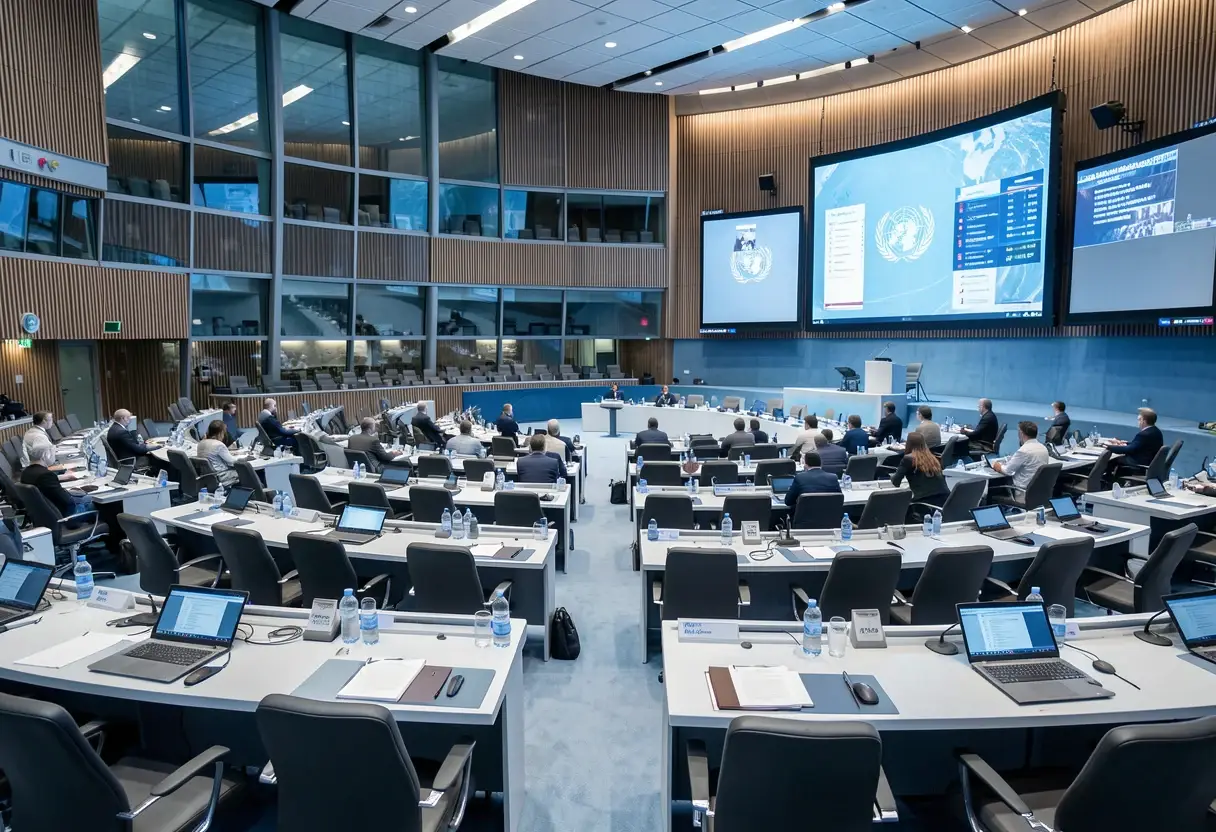
The two-week session, called COP31, ran more than 50 hours overtime at the resort town before negotiators abandoned the overarching deal, known as a cover decision. Expectations had already been low going in. Negotiators, activists and even the organizers themselves reached for the same word: "disappointing."
The failure landed against a backdrop of accelerating warming. The U.N. says the world will inevitably pass the 1.5-degree-Celsius threshold set by the 2015 Paris climate agreement. October 2026 recorded the largest temperature jump above preindustrial levels of any month on record — 1.8 C (3.2 F) — according to Berkeley Earth, which puts the odds at 97% that 2026 becomes the warmest year ever measured. On Friday, the European climate monitor Copernicus logged the most above-normal temperature on record.
What broke the talks?
Any pact at these negotiations requires near-unanimous consensus. The joint Turkish-Australian leadership distributed its final proposal after 3 a.m., leaving negotiators little time to object — and it did not mention fossil fuels.
Several countries and the 27-nation European Union refused to accept it. Russia and Saudi Arabia had pushed to keep fossil fuels out of the document. A larger group of nations accepted the text, often reluctantly, arguing that consensus on something beat nothing. In the end, neither side prevailed.
"It's unconscionable that we would have a climate act that makes no reference to fossil fuels," Ireland's climate minister Darragh O'Brien said, speaking for the EU.
The sticking point carries history. Fossil fuels went unmentioned in COP final decisions for more than 25 years, according to Alden Meyer of the think tank E3G. Three years ago in Dubai, in the oil-rich United Arab Emirates, a groundbreaking agreement called for "transitioning away from fossil fuels." The Turkish-Australian proposal recalled that Dubai language in full, but many nations and environmental groups wanted more, and the petrostate resistance killed even that.
Another friction point: the draft included explicit language and a goal for carbon capture and storage — technology that traps carbon dioxide from industrial polluters — which critics said would undermine efforts to cut overall emissions.
What did the leaders say?
U.N. Secretary-General Antonio Guterres did not mince words. "I am deeply disappointed that COP31 has ended without consensus on an overarching outcome," he said. "Temperatures keep shattering records. Climate extremes keep intensifying. Emissions remain far too high. And every delay makes our task harder and more costly."
Guterres added: "Fossil fuels are driving the climate crisis... We can't put out the fire while pouring fuel on it."
Former U.S. Vice President Al Gore called the failure "an outrage," saying it was "outrageous that a handful of petrostates have veto power over any mention of fossil fuels."
Australia's Chris Bowen, COP31's president of negotiations, announced the collapse alongside Elchin Allahverdiyev of Azerbaijan after Turkish Environment Minister Murat Kurum, the summit president, stayed away from the plenary. "Unfortunately, we were unable to reach agreement on a cover decision. And that's disappointing, very disappointing," Bowen said. He stressed that the Dubai call to move off coal, oil and gas still stands: "Transition away from fossil fuels in the real world is happening... It's happening at speed, and it's irreversible."
Youth representative Oumnia Anfer told negotiators bluntly: "You have let us down."
What progress survived?
The meeting did advance smaller items. Meyer of E3G noted gains on global adaptation goals and on a program helping countries cut emissions fairly.
Turkey also pushed global electrification as its signature issue. A separate pledge calls for raising electricity's share of total final energy consumption from about 21% today to 35% by 2035 — requiring a switch of cars, trucks and planes from fossil fuels to electricity, and electricity instead of coal in heavy industry. Nearly 100 nations signed on.
Many unresolved questions — fossil fuel transition details, financial help for poorer nations adapting to warming, and gender and climate action — now move to next year's talks in Ethiopia.
How messy did it get?
The final hours turned chaotic. Antwi-Boasiako Amoah, chair of the African Group of Negotiators, told the presidency from the floor: "With all due respect, Mr. President, you have not shown respect to a group of 54 countries (from Africa) and my country (Ghana) for that matter." Kurum later publicly apologized. A hot mic caught Kurum telling U.N. climate chief Simon Stiell "to sit down" as Stiell tried to advise him onstage.
Panamanian Environment Minister Juan Carlos Navarro had said earlier in the week that a "petroleum mafia" held the talks hostage and demanded reform. Manuel Pulgar-Vidal, president of COP20 and now climate and energy lead at the World Wildlife Fund, summed up: "COP31 left too much undone... The climate will not wait for governments to find their courage."
Scientists estimate the world is heading for between 2.7 C and 3 C (4.9 F to 5.4 F) of warming by 2100. The U.N.'s revised goal: limit how far the world overshoots 1.5 C, then claw back using systems that pull carbon out of the air.
University of Pennsylvania climate scientist Michael Mann put it on X: "Mother Nature decided to comment on the collapse of #COP31 climate negotiations in failure by setting a new record."
The record heat kept score while the negotiators went home.
via wbrz.com (Source)
More from Marcus Bennett
Show full bio
News editor covering regulation, policy and their impact on general science news at SciBeat.
597 articles