Plate Nº 87 · recorded October 10, 2026
Science Policy & FundingReported finding
Court Blocks White House Bid to Control Science Grants—For Now
A federal court has temporarily blocked a White House attempt to control federal science grants, Health Policy Watch reported. The preliminary ruling pauses—at least for now—executive-branch efforts to influence research funding.
By Priya Raman2 min read471 words
In brief
- A federal court has temporarily blocked the White House's attempt to control science grants, Health Policy Watch reported.
- The ruling is preliminary—phrased 'for now'—suggesting the legal fight is not over.
- NIH's annual budget has hovered near $47 billion in recent fiscal years; NSF's around $8–9 billion.
- Traditional federal grant review relies on external peer reviewers, not political offices.
- The available headline did not name the court, the plaintiffs, or the specific grant programs affected.
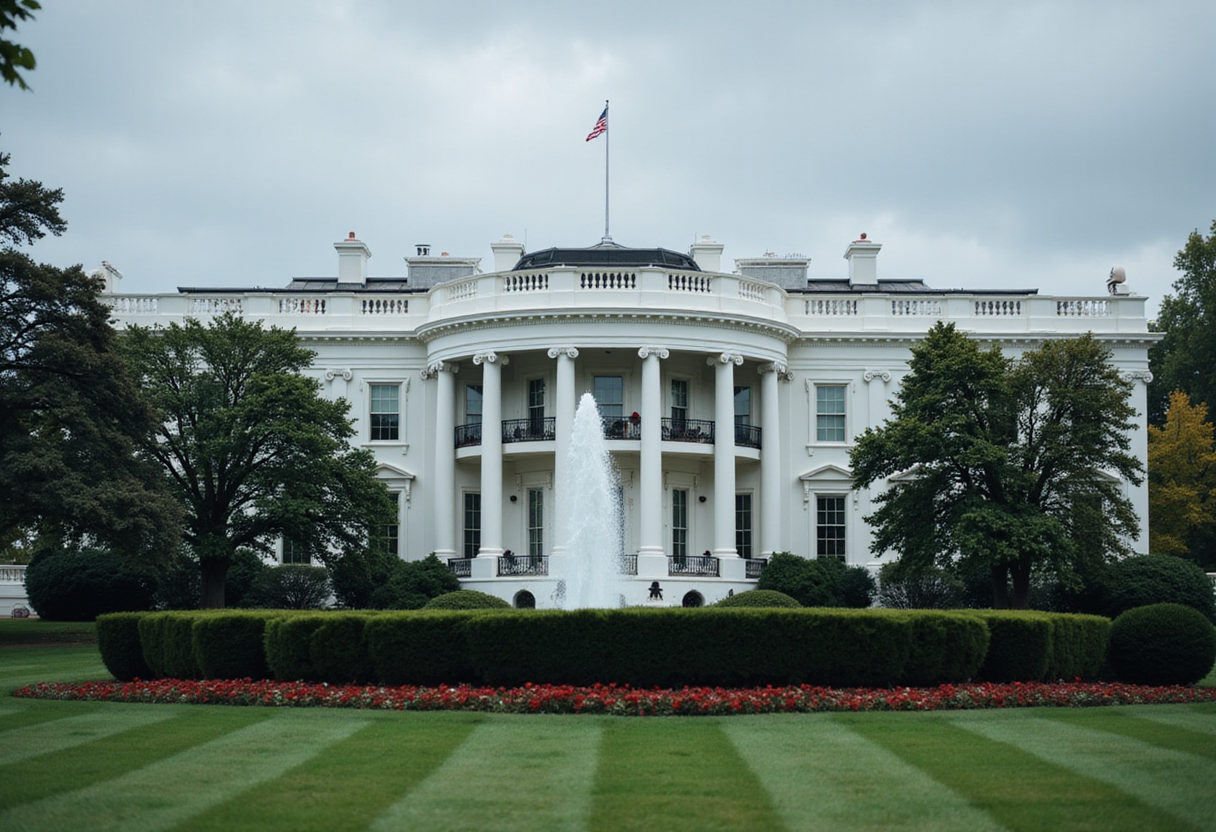
A federal court has temporarily blocked a White House attempt to control the awarding of federal science grants, Health Policy Watch reported this week. The order pauses—at least for now—an executive-branch effort to influence how research funding flows to U.S. universities and laboratories.
The outlet's headline, "White House Attempt To Control Science Grants Is Blocked - For Now," frames the outcome as preliminary, signaling that the legal fight is not over.
What did the White House try to do?
Health Policy Watch's headline indicates the administration sought to influence the distribution of science research grants. The outlet, which covers global health policy, did not specify in its headline whether the mechanism involved new agency rules, an executive order, or grant conditions.
The lack of detail in the available headline means the precise scope of the blocked policy remains unclear from this source alone. Health Policy Watch's full article would carry those specifics.
Why does this dispute matter to scientists?
Federal science grants, awarded largely through the National Institutes of Health (NIH) and the National Science Foundation (NSF), fund laboratory research, clinical trials, infectious-disease surveillance, and graduate training across U.S. universities. NIH's annual budget has hovered near $47 billion in recent fiscal years; NSF's around $8–9 billion.
The traditional review process rests on peer reviewers—external scientists who score applications—and on agency program officers who assemble study sections. Any shift toward political control of that pipeline has, across multiple administrations, drawn objections from researchers and university leaders. Their argument is consistent: political criteria can displace scientific merit.
What does "blocked—for now" mean in legal terms?
The phrasing suggests the court issued a temporary order, not a final merits ruling. Under U.S. federal procedure, judges can pause a government policy through:
- Temporary restraining orders, which can last up to about 90 days
- Preliminary injunctions, which last until the court reaches a final judgment
Both can be modified, extended, or dissolved. The administration can also file an appeal or revise the policy itself to address the court's concerns.
Because the underlying case continues, the practical effect is a pause, not a permanent end. Universities and grant offices typically need stable rules to plan multi-year studies, salaries, and student pipelines—so even a temporary halt has operational consequences.
What remains unknown
The available headline does not identify:
- The court that issued the order
- The plaintiffs who brought the challenge
- The specific grant programs or mechanisms affected
- The administration's next planned step
Those details will likely emerge in court filings and follow-up coverage. For now, the takeaway is narrow but concrete: a court has stepped between the White House and a planned intervention in science grant-making. Researchers awaiting clarity on upcoming grant cycles will be watching closely.
via Google News: Science Funding (Source)
More from Priya Raman
Show full bio
Senior reporter covering industry trends and analytics at SciBeat.
207 articles