Recorded November 23, 2026
Earth & ClimateReported finding
Croatia and Costa Rica lead new sustainable development index
A new equity-based Sustainable Development Index puts Croatia and Costa Rica on top, Norway near the bottom, and Spain 50th overall but 23rd when counting only current emissions.
By Elena Vasquez4 min read713 words
In brief
- Croatia and Costa Rica lead the new Sustainable Development Index 2.0, with Uruguay joining them under one historical baseline.
- Norway is among the world's worst performers, Dr. Kaan Onder said.
- Spain ranks 50th on the main index but rises to 23rd when only current emissions count.
- The study appears in Ecological Economics (2027) under DOI 10.1016/j.ecolecon.2026.109275.
- Country-level data and time series cover 1990 to 2023 at sustainabledevelopmentindex.org.
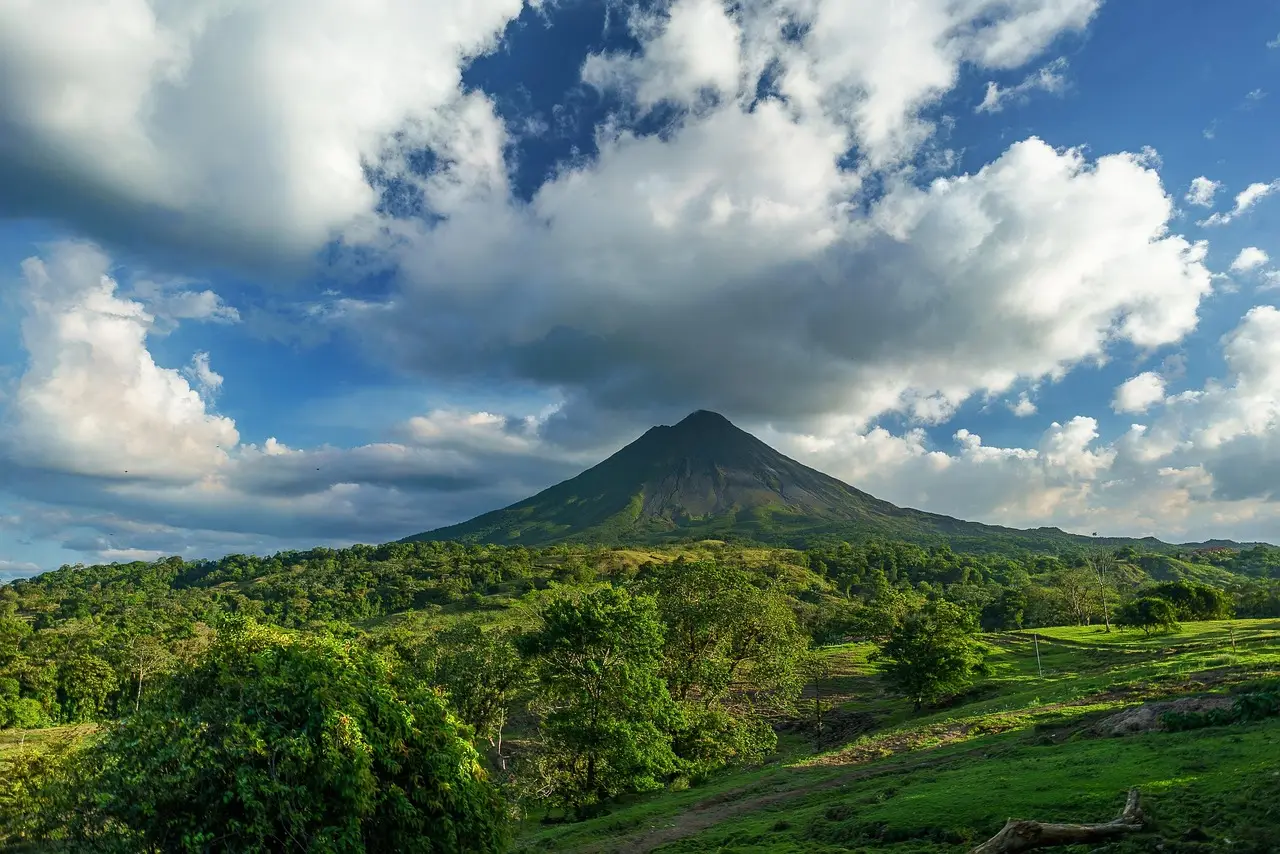
Croatia and Costa Rica sit at the top of a new Sustainable Development Index (SDI) developed by researchers at ICTA-UAB, the Autonomous University of Barcelona, while Norway falls near the bottom of the same table.
The SDI 2.0, published in the journal Ecological Economics, measures how efficiently a country turns resource consumption into human well-being while staying inside ecological limits. No country has yet reached the index's target zone: high human development within planetary boundaries.
What does the index measure that the U.N. HDI does not?
The new index revises the United Nations Human Development Index, which for decades has ranked countries by health, education and income. The research team argues that every top HDI performer also carries extremely high carbon emissions and material use that overshoot planetary boundaries.
SDI 2.0 applies a penalty when ecological pressure exceeds sustainable limits, so strong human development counts only if emissions and material use stay contained. It also folds in environmental equity and historical responsibility, two features previous metrics ignored.
The SDI keeps the HDI's social goals but charges countries for pushing past Earth's limits.
Who comes out on top?
The order at the top depends on the historical baseline applied: Croatia and Costa Rica lead, and Uruguay joins them under one version of the calculation. Six countries sit close behind them:
- Chile
- Albania
- Peru
- Sri Lanka
- Colombia
- Cuba
Croatia, Costa Rica and Uruguay lead a ranking that puts less wealthy countries ahead of richer ones.
Why does Norway rank near the bottom?
Norway's longstanding ecological overshoot drives its score down, and the United States falls for the same reason, even though both dominate conventional development rankings.
Dr. Kaan Onder, one of the study's authors, said: "Our finding on Norway was particularly striking. Norway casts itself as environmentally friendly, but we found it is one of the world's worst performers."
The mechanism is distributive justice. Under SDI 2.0, every nation may use its full fair share of the planet's safe ecological space, so developing economies no longer carry the weight of pollution caused historically by the Global North.
On this index, rich countries pay for the ecological damage they accumulated first.
Why does Spain rank 50th?
Spain places 50th on the main index because of its high historical emissions. Among advanced economies, though, it stands out as a top performer, surpassed only by Portugal and ahead of the United States, United Kingdom, Germany and Norway.
Counting current emissions alone, Spain climbs to 23rd, a rise the authors credit largely to recent government decarbonization efforts.
ICTA-UAB researcher Jason Hickel said: "While we can celebrate these advances, there is still a long way to go. We know that Spain can improve social outcomes while simultaneously reducing emissions and material use. This is an achievable goal, and Spain is well-positioned to accomplish it."
Spain's future rank depends on the emissions still to come, not only on those already released.
Why is the target zone still empty?
The leading countries share one feature: strong public provisioning systems that deliver health, education and social well-being without extreme resource consumption. The authors read that as evidence that strong social outcomes and ecological sustainability can coexist.
None has fully arrived. Every top performer still shows some degree of social shortfall and ecological overshoot, leaving the index's designated best zone unoccupied.
Hickel called the gap a structural problem with the international economic model: "It's an important reminder that we still have a long way to go. The current economic system tends to be highly inefficient; if countries want to accelerate progress on sustainable development, they need to organize production more directly around human needs and ecological improvement rather than just profit maximization."
The benchmark remains empty because no country has yet combined high living standards with ecological restraint.
Where can readers check the numbers?
The paper, "Sustainable Development Index 2.0: An equity-based approach," appears in Ecological Economics (2027), with the DOI 10.1016/j.ecolecon.2026.109275. Full results, including country-level data and time series from 1990 to 2023, are free at www.sustainabledevelopmentindex.org.
Detailed country data going back to 1990 is publicly available, so readers can test the rankings themselves.
via phys.org/rss-feed/ (Source)
More from Elena Vasquez
Show full bio
Correspondent covering money, funding and market shifts around general science news at SciBeat.
612 articles
Nearby plates
- Climate pressure tracks higher inequality in 23 emerging economies
- Climate finance reached $28.2 billion, far below $305 billion needed
- Net-Zero Plans Can Raise Water Use in Nearly Every Scenario
- WHO: Six climate measures could save 1.6 million lives a year
- 11 countries plan fossil-fuel roadmaps after COP30 deadlock