Plate Nº 63 · recorded November 11, 2026
Earth & ClimateReported finding
Deep Reefs Lost Their Shield: 75% of Tropical Corals Hit by Heat
A 30-year simulation shows heat waves now reach reefs 150 meters down, lasting 15+ days at 2°C above normal and striking 75% of tropical reef areas at peak.
By Marcus Bennett4 min read827 words
In brief
- At peak in 2020–2023, marine heat waves affected over 75% of global tropical coral reef areas at all depths.
- After 2010, heat waves hit over half of tropical reefs in 8 of 13 years — roughly four times more often than 1993–2010.
- Deep-reef heat waves below 90 meters typically lasted 15+ days at around 2°C above normal.
- Study analyzed simulated daily water temperatures to 150 meters, 1993–2023, published in Geophysical Research Letters (2026), DOI 10.1029/2026gl123865.
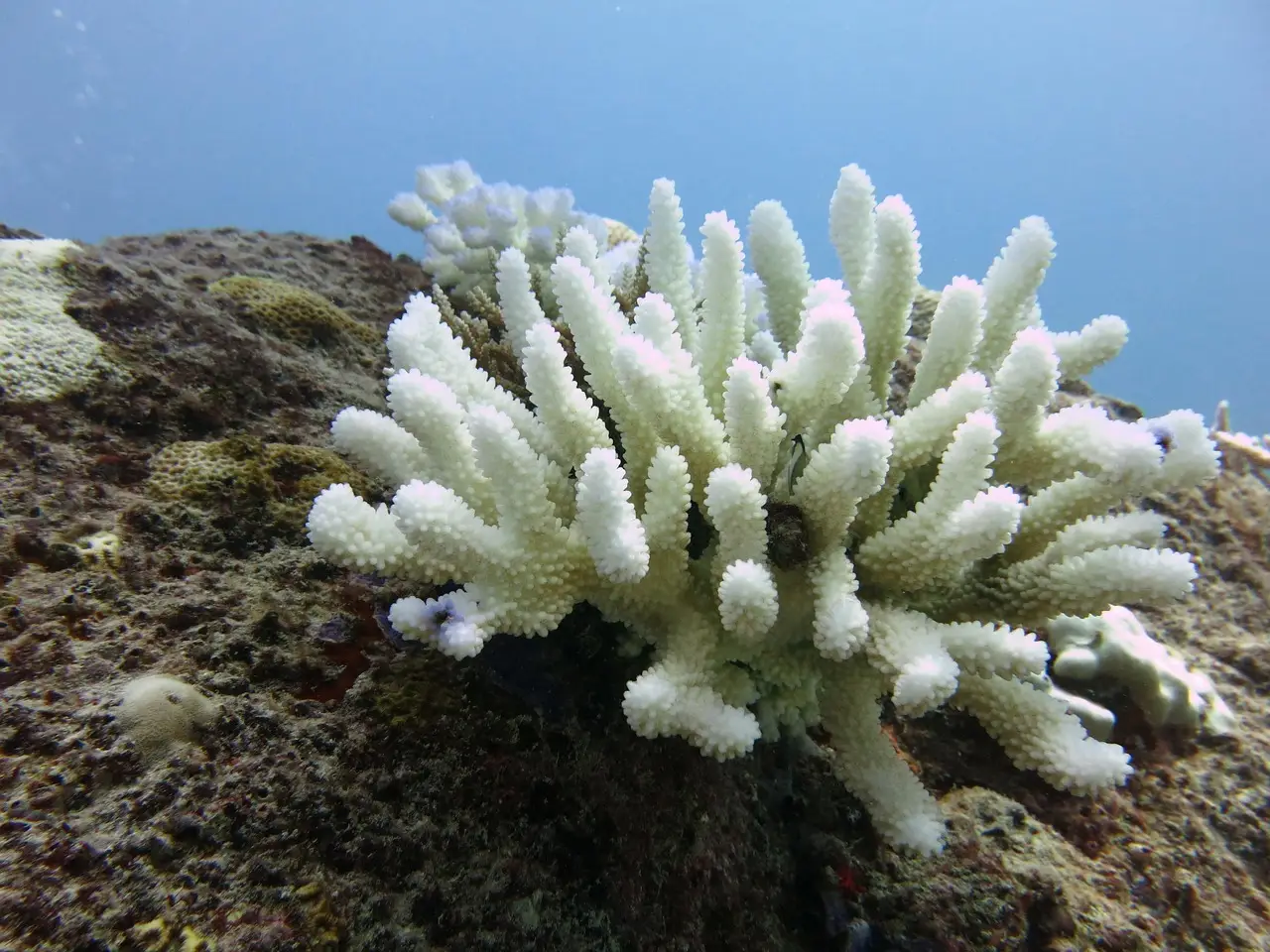
At their peak between 2020 and 2023, marine heat waves struck more than 75% of the world's tropical coral reef areas — at every depth, down to 150 meters (490 feet). That figure comes from a new study in Geophysical Research Letters that dismantles a long-held hope: that deeper reefs could serve as safe havens for corals as surface waters warm.
The analysis of daily water temperatures from 1993 to 2023 found that heat waves now hit more than half of the world's tropical reefs in most years, and that heat events below 90 meters (295 feet) have grown longer and, on average, more intense than those in shallower water.
"Ocean warming is not just a surface problem. What happens deep beneath the surface can also have serious consequences for coral reef survival," said Chunzai Wang, an oceanographer at the Chinese Academy of Sciences and co-author of the study.
What did researchers actually measure?
Marine heat waves — stretches of at least five days with seawater warmer than 90% of the historical temperatures recorded for that time of year — disrupt the tiny algae living inside coral tissue. When the algae leave or die, corals bleach and can die off in mass events. Reef regions depend on healthy corals for biodiversity, fisheries and tourism.
Scientists had proposed using deep reefs, which sit between 90 and 150 meters, as "seed banks": transplant sites for reproduction-ready corals rescued from suffering shallow reefs. The new work tests whether that strategy still holds.
The team, led by Yulong Yao, started with global maps of warm-water coral reefs, which occur worldwide within 35 degrees of the equator — roughly between the latitudes of Santa Barbara, California, and Adelaide, Australia. They then filtered ocean-wide simulations of daily water temperatures down to 150 meters through those reef maps, covering 1993 to 2023.
The simulations use ocean circulation patterns and physics to fill the gaps between real measurements. That produced a record of reef heat exposure more complete than satellite data, which can only see surface temperatures. With it, the researchers tracked the number, duration and temperature of marine heat waves at reef depths, plus a combined "intensity" metric that accounts for both heat and time.
For context on what corals can tolerate: by NOAA's benchmark, corals risk bleaching once they accumulate four "degree-weeks" of heat. That equals four weeks at 1°C above normal, two weeks at 2°C hotter, or one week at 4°C hotter.
Takeaway: physics-based simulations let the team see heat stress at depths satellites cannot reach.
When did deep reefs stop being refuges?
Before 2010, the answer might have been different. In that earlier period, marine heat waves typically affected less than 50% of global reef areas per year, largely sparing deeper reefs from sustained high temperatures. Between 1993 and 2010, the average deep-reef heat wave lasted less than 15 days, with the exception of the 1997–1998 El Niño.
After 2010, the picture darkened fast:
- Heat waves hit over half of the world's tropical reefs in eight of the 13 years studied — roughly four times more often than in the preceding 17 years.
- The average heat wave on reefs below 90 meters stretched to 15 or more days in all but two years.
- Those deep events typically brought water temperatures around 2°C above normal.
The worst stretch came from three back-to-back La Niña events. Between 2020 and 2023, strong westward winds over the Pacific piled warm water into an unusually deep-reaching pool in the western Pacific, year after year. The result: global marine heat waves beyond anything else in the 30-year record. At their peak, the 2020–2023 events affected more than 75% of global tropical coral reef areas at all depths.
Takeaway: deep reefs crossed a threshold around 2010 and have not crossed back.
What does this change for coral conservation?
Although deep heat waves occurred less frequently than surface ones throughout the study period, their longer duration after 2010 made them more intense, on average, than heat events in shallower waters. That undermines the premise of deep reefs as thermal shelter during the extreme ocean heat that human-caused climate change keeps intensifying. As Wang put it: "going deeper does not necessarily mean escaping the heat."
The findings arrive with caveats practitioners should weigh. The temperature record comes from simulations, not direct measurements at every reef, and the study covers reef areas as a whole rather than the fate of individual transplanted corals. Still, the pattern across three decades is consistent and geographically broad.
The researchers name one intervention as decisive: limiting global warming from human actions. "Local conservation measures can help reefs withstand environmental stress, but they cannot fully protect coral ecosystems from increasingly widespread ocean heat extremes," Wang said.
In plain terms: deeper water buys corals less time than conservation planners assumed, and the decisive lever sits far above the reef.
via phys.org/rss-feed/ (Source)
More from Marcus Bennett
Show full bio
News editor covering regulation, policy and their impact on general science news at SciBeat.
370 articles
Nearby plates
- Diseased Florida Keys Coral Faced Nearly 4x Death Risk in 2023 Heat Wave
- Marine Heatwaves Hide Months of Extra Ocean Warming, Study Finds
- Underwater Umbrellas Helped Florida Corals Survive Record Heat Stress
- Two-thirds of flooded coastlines could host invasive species by 2100
- Bleached anemones linked to 215% increase in clownfish aggression