Recorded November 24, 2026
Earth & ClimateReported finding
Disaster risk's three pillars evolve together, study argues
A Risk Analysis paper by an international team argues hazard, exposure and vulnerability co-evolve as one system, and the standard risk equation needs sharper assumptions.
By Nathan Brooks3 min read688 words
In brief
- The paper was published in Risk Analysis in 2026, led by Alexandre Dunant of EURAC Research (DOI: 10.1111/risa.70386).
- A 2025 workshop at IIASA brought together more than 20 participants across disaster and climate risk disciplines.
- The Netherlands' Room for the River Programme followed floods in 1993 and 1995 on the Rhine and Meuse.
- The Climate Resilience Alliance includes six NGOs, two research partners and the Zurich Foundation.
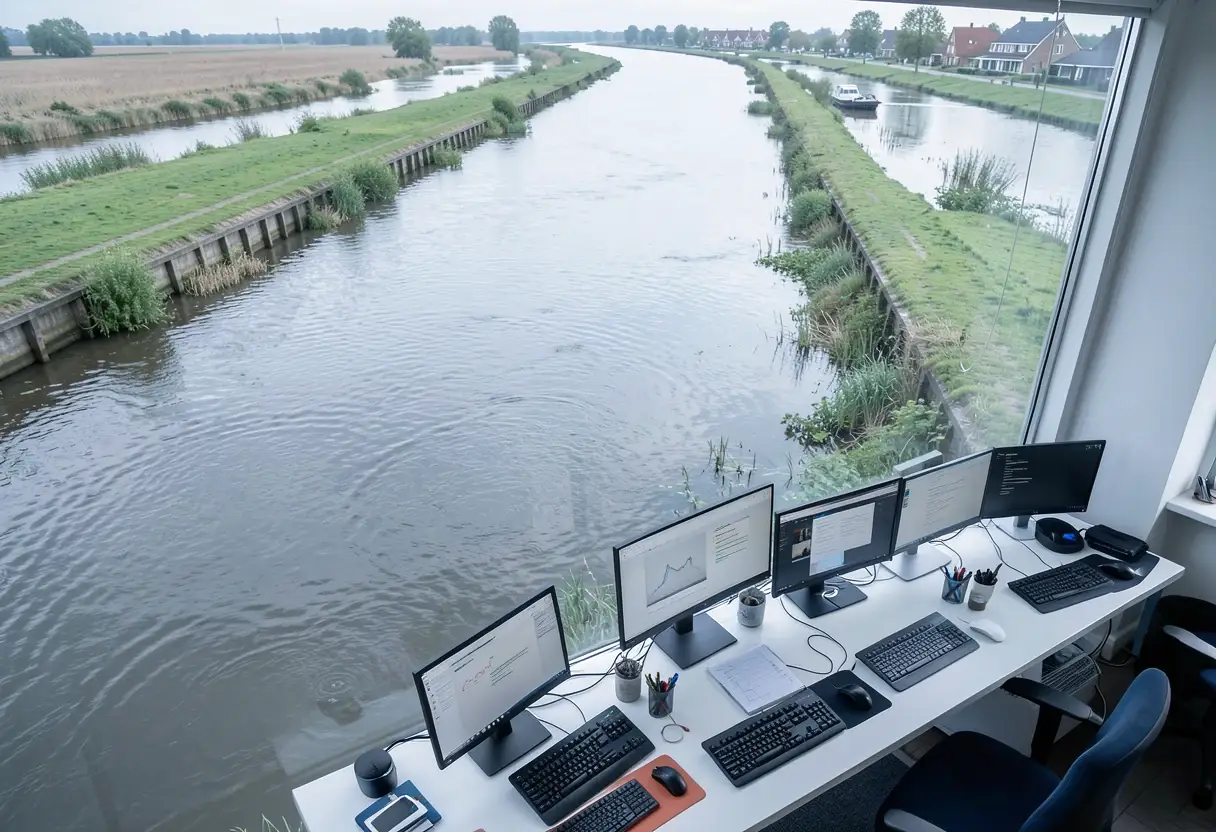
A new paper published in Risk Analysis in 2026 argues that the standard way of calculating disaster risk — multiplying hazard, exposure and vulnerability — is breaking down because those three factors no longer change independently. An international team, led by Alexandre Dunant of EURAC Research and including researchers from IIASA, NASA's Jet Propulsion Laboratory and Stanford University, says risk science needs to treat them as one co-evolving system.
The study, titled "Inseparability in Disaster Risk Science: Accounting for Coupled, Co-Evolving Systems" (DOI: 10.1111/risa.70386), grew out of a 2025 workshop at IIASA. More than 20 participants from fields spanning ecology, economics, engineering, geography and the social sciences debated the frontiers of disaster and climate risk science there.
What does 'inseparability' actually mean?
Standard assessments look at three things one at a time: the hazard itself, who or what is exposed to it, and how vulnerable they are. Then they combine the three into a single risk estimate. The authors call this approach into question.
They coin the term inseparability for the phenomenon at the heart of the paper: the idea that these factors can't always be understood on their own, because they continuously modify and transform one another. Hazards, exposure and vulnerability are, in their framing, co-evolving parts of a single system.
"Hazards, exposure and vulnerability are not fixed pieces of a puzzle. They evolve together in ways that can amplify or, ideally, also dampen risk," says co-author Stefan Hochrainer-Stigler, a principal research scholar in IIASA's Systemic Risk and Resilience Research Group.
What's the real-world evidence?
The paper points to the Netherlands as a concrete case. Major floods in 1993 and 1995 along the Rhine and Meuse rivers pushed Dutch authorities past the default response of simply raising dikes. Instead, the Room for the River Programme created more space for rivers through floodplain restoration, dike relocation and bypass channels — a recognition that hazard and exposure evolve together, not separately.
The program has since influenced river-management and climate-adaptation strategies in many countries worldwide, according to the authors.
Why can't past data predict future risk?
The paper flags a second problem, called non-ergodicity — the idea that historical patterns may not reliably predict future outcomes. A risk estimate that multiplies the three factors together, the authors argue, hides this weakness.
"A risk estimate that multiplies hazard, exposure and vulnerability together is only as reliable as its least predictable part," says lead author Dunant. "Yet the final number carries no trace of that limit."
He offers a historical illustration: a scientist in the 1970s could have sketched the broad contours of today's climate and hazards, as recent research has shown — but would have struggled to foresee how exposure and vulnerability evolved, because lives and livelihoods have become ever more strongly interconnected.
The paper also invokes autopoiesis — a system's capacity to produce and maintain itself through its own internal processes. Understanding what is "inside" and "outside" a vulnerable system, the authors argue, is a prerequisite for designing interventions that actually work.
Is the old risk equation dead?
Not quite. The authors emphasize that the established risk equation, which has underpinned IPCC reports on impacts, risk and adaptation, remains very useful. But it needs closer scrutiny. Decision-makers should be explicit about the assumptions behind it and pay more attention to how its components interact.
The paper calls for approaches that track changes across places and timescales, support adaptation as risks evolve, and connect models with the decisions people and institutions can actually make.
One example already in motion: the Climate Resilience Alliance — six NGOs, two research partners (IIASA among them) and the Zurich Foundation as funder — has shifted from single-hazard, incremental actions toward multi-hazard resilience efforts, including multi-hazard warning systems, social protection mechanisms, and investments in governance and shared infrastructure.
"Decisions about preparedness, recovery and development shape disaster risk for years to come, but they need to be systemic," says co-author Reinhard Mechler. "By looking at how risks change and interact, communities and decision-makers can focus on strengthening resilience over time."
via phys.org/rss-feed/ (Source)
More from Nathan Brooks
Show full bio
Market editor covering companies, deals and strategy in general science news at SciBeat.
592 articles
Nearby plates
- COP31 white paper links climate losses to six resilience tools
- 95 AI Doom Scenarios Sorted Into Eight Risk Families in Major Review
- Sea-Level Models Miss Up to Two-Thirds of Oʻahu's Threatened Land
- COP31 climate loss and damage rules must go beyond borders
- For Older Adults, Disaster Risk Builds Long Before the Storm