Recorded November 24, 2026
Earth & ClimateReported finding
Million-Year-Old Ice Sits Near Antarctica's Surface, Scientists Say
Blue ice areas of Antarctica may hold ice millions of years old at the surface, VUB researchers argue in PNAS — older than deep-drilled cores, at relatively low cost. Two expeditions are now searching.
By Nathan Brooks4 min read720 words
In brief
- A perspective in PNAS (2026), DOI 10.1073/pnas.2603650123, argues Antarctic blue ice areas can preserve ice hundreds of thousands to millions of years old.
- Lead author is Dr. Veronica Tollenaar; co-lead author is Dr. Etienne Legrain; both are FWO postdoctoral researchers at VUB's bglacier group.
- Two concurrent expeditions: Joachim Piret at Union Glacier with a Chilean mission; Dr. Maaike Izeboud and Zoé Bosman near the Belgian Princess Elisabeth Station.
- Researchers say some blue ice sites can yield ice older than deep-drilled cores at relatively low cost.
- The group combines ice-flow modeling and satellite imagery to locate promising sites before fieldwork.
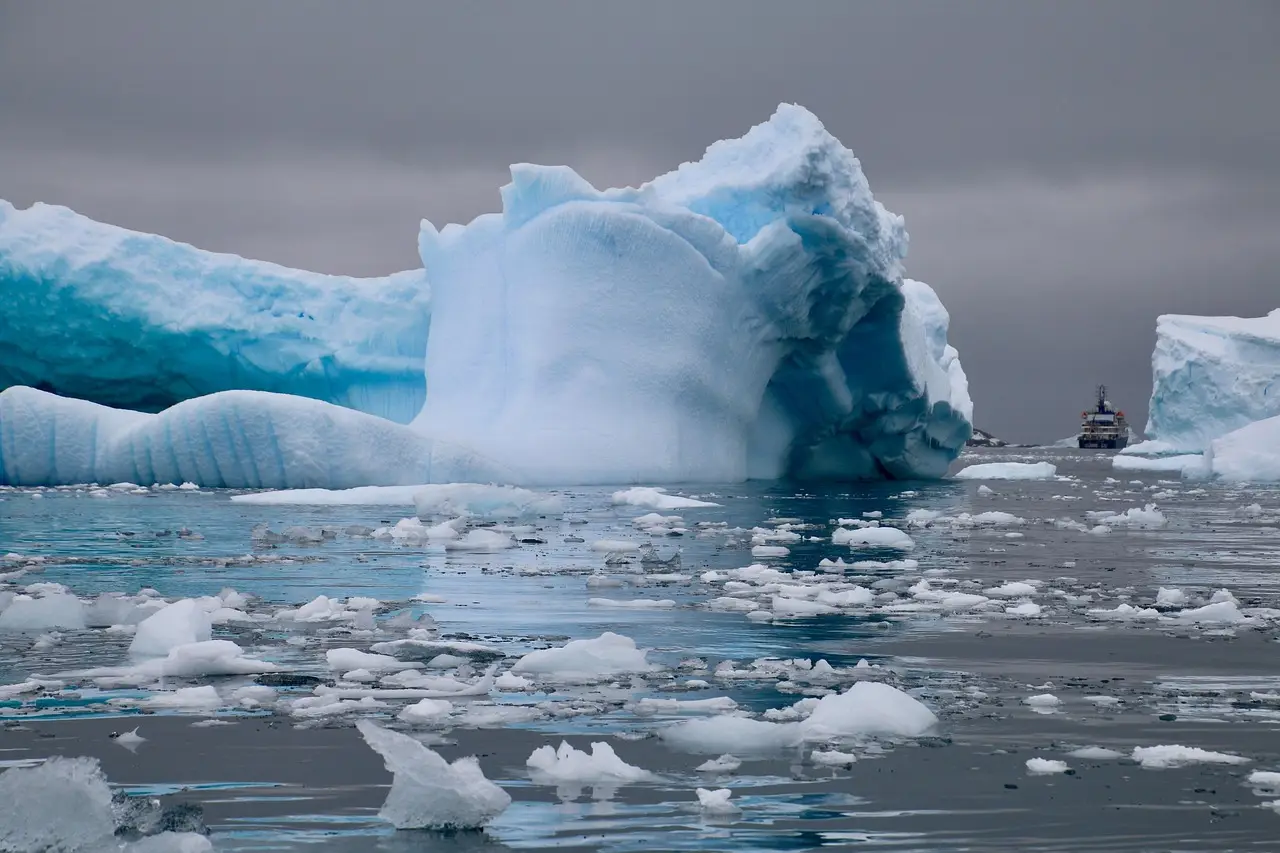
Ice up to millions of years old may lie at or near the Antarctic surface, and researchers at the Vrije Universiteit Brussel (VUB) now argue these sites could outperform traditional deep drilling as windows into Earth's climate past.
In a perspective published in the Proceedings of the National Academy of Sciences in 2026, scientists from VUB's bglacier group in the Department of Water and Climate lay out the case for so-called blue ice areas — regions of the Antarctic ice sheet where wind and ice flow bring deep, ancient ice back up to the surface. The paper carries the title "Unlocking the unparalleled paleoclimate record of Antarctic blue ice areas" (DOI: 10.1073/pnas.2603650123).
What makes blue ice special?
Blue ice areas can preserve ice that is hundreds of thousands of years old — and in some spots, potentially millions of years old, according to the researchers. That's the draw. Ice acts like a time capsule: trapped air bubbles and impurities record what the atmosphere looked like when the ice formed.
The contrast with conventional methods is stark. Climate scientists hunting for ancient ice have traditionally drilled deep into the Antarctic ice sheet, a slow and expensive undertaking. Blue ice areas, the authors argue, offer a complementary route to similarly old — or even older — material without the drilling.
"The search for ancient ice has traditionally focused on drilling deep into the Antarctic ice sheet," said lead author Dr. Veronica Tollenaar, an FWO postdoctoral researcher. "Blue ice areas offer a complementary route: in the right locations, exceptionally old ice can be found at or near the surface. The challenge is knowing where to look."
How old, and at what cost?
Co-lead author Dr. Etienne Legrain, also an FWO postdoctoral researcher, puts the stakes in plain terms. "In some locations, blue ice areas allow us to recover ice older than that retrieved through deep drilling, at a relatively low cost," he said.
The exact age of recoverable ice varies by site, and the researchers stress that finding the right locations is the hard part. Not every blue ice patch holds million-year-old material — each candidate site needs to be verified in the field.
Why it matters goes beyond the record itself. "These samples offer rare snapshots of past climates," Legrain said. "They can help us understand how the climate system responds to change and what this means for our future."
Who is in Antarctica right now?
The publication didn't arrive in a vacuum. It coincides with two Antarctic field expeditions involving three other members of the bglacier group, both aimed at identifying potentially ancient ice:
- Joachim Piret is exploring blue ice areas as part of a Chilean mission at Union Glacier.
- Dr. Maaike Izeboud and Zoé Bosman are heading to promising sites near the Belgian Princess Elisabeth Station.
The two expeditions are the field-testing arm of the group's strategy, which pairs models with satellite data before anyone sets foot on the ice.
How do you find million-year-old ice?
Professor Harry Zekollari, who leads the bglacier group, described the workflow. "We combine ice-flow modeling and satellite imagery to identify promising locations, then head into the field to investigate them," he said.
Ice-flow modeling means simulating, mathematically, how the ice sheet moves over time. Old layers buried deep in the sheet can resurface where the flow and wind conditions line up — and the modeling points to where that's likely.
"It is exciting to bring these approaches together in the search for ice that could reveal chapters of Earth's climate history we know little about," Zekollari said. "With these expeditions, we are building a long-term research effort and aim to play a leading role in Europe's exploration of these remarkable archives."
What happens next?
The expeditions now underway at Union Glacier and near Princess Elisabeth Station will determine whether the modeled targets actually hold ancient ice. If they do, the bglacier group plans a long-term research effort, with ambitions to anchor Europe's role in studying these archives.
For now, the central claims remain a perspective — an argument grounded in modeling and prior findings rather than newly drilled samples. The ice itself, some of it potentially older than anything recovered by deep drilling, will have the final word.
via phys.org/rss-feed/ (Source)
More from Nathan Brooks
Show full bio
Market editor covering companies, deals and strategy in general science news at SciBeat.
591 articles
Nearby plates
- Ground Under West Antarctica Rising 2 Inches a Year, Model Shows Why
- Seafloor Mud Shows West Antarctic Ice Collapsed in Past Warm Spells
- Arctic winter sea ice loss may exceed forecasts by 1 million
- Twenty-Nine Hidden Glaciers With 209-Meter Cliffs Found on Mars
- Slow waves deep inside Earth helped Antarctica freeze first