Plate Nº 58 · recorded September 30, 2026
Health & Medicine ResearchReported finding
Engineered Honeybee Silk Could Enable Smarter Wound Dressings
Lab-made honeybee silk films broke down safely in wounds without slowing healing, paving the way for dressings that could sense infection and release drugs.
By Elena Vasquez4 min read708 words
In brief
- Recombinant honeybee silk films were safe, well tolerated, and gradually broke down in wounds during healing, according to a study in the Journal of Biomedical Materials Research Part B: Applied Biomaterials.
- The silk's protein sequence can be modified without breaking its structure, potentially allowing features such as infection sensing or targeted drug release.
- Chronic wounds affect an estimated 450,000 Australians annually and cost the health system over $6 billion per year.
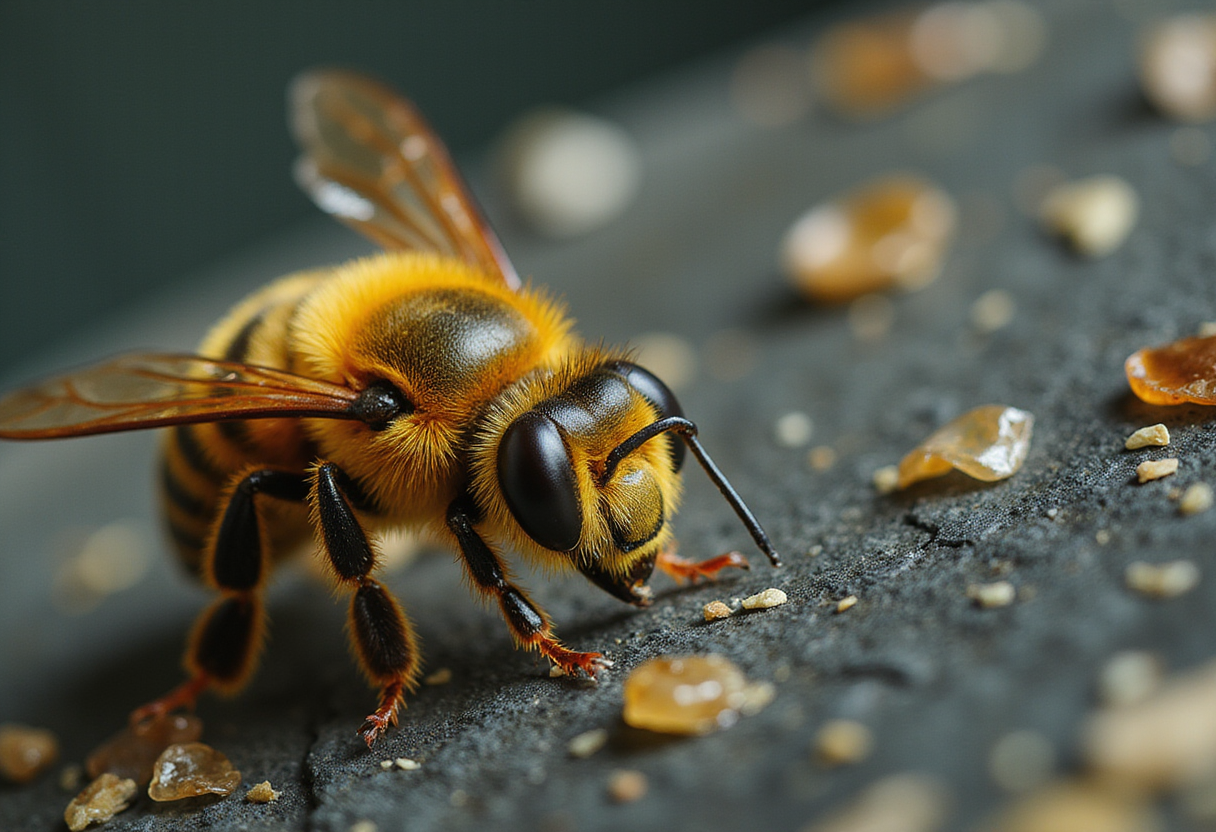
Biodegradable films made from engineered honeybee silk could form the basis of a new generation of "smart" wound dressings, according to researchers at CSIRO, Australia's national science agency, and the University of Adelaide.
The study, published in the Journal of Biomedical Materials Research Part B: Applied Biomaterials, found that the silk film was safe and well tolerated during wound healing. Much of the material gradually broke down inside the wound instead of persisting as a permanent implant. That behavior matters: a dressing that dissolves on its own could spare patients the painful removal process, which often disturbs delicate new tissue as a wound heals.
What makes honeybee silk different
Honeybee silk is not the same as the material spun by spiders or silkworms. It is a naturally occurring protein material that bee larvae use to build protective structures inside the hive. The proteins that make it up are strong, flexible, and lightweight.
The material has one property that sets it apart for medical engineering: researchers can modify its protein sequence without destroying the material's structure. Because recombinant honeybee silk — silk produced by bioengineering the proteins in a lab rather than harvesting it from bees — can be redesigned at the molecular level, scientists can potentially program new functions into it. These could include infection-sensing signals or targeted drug release, turning a passive barrier into an active therapeutic tool.
"Think of the film as a building material that we can redesign at the molecular level," said Dr. Caitlin Johnston, lead researcher at CSIRO. "We can potentially build specific instructions into the silk so that, in the future, a dressing could respond to the conditions in a wound rather than act as a passive barrier."
A decade of groundwork
The new findings build on more than a decade of CSIRO work developing honeybee silk as a biomaterial platform. Earlier studies established that the material is strong, flexible, biodegradable, and safe for biological applications. The current research takes that foundation into wound healing specifically.
For this project, CSIRO developed and produced the recombinant honeybee silk film, while the University of Adelaide provided wound-healing expertise and carried out the laboratory tests.
Dr. Anna Antipov of the Future Industries Institute at the University of Adelaide emphasized the careful, stepwise approach the team took. "Wound healing is a very complicated process, and we need to understand how a new material behaves in that environment before we can start adding more sophisticated functions to it," she said.
"What we've shown is that this honeybee silk material is biodegradable and well tolerated by the body, and importantly, it does not stop the wound from healing."
Why chronic wounds are the next target
Following these results, the team plans to develop and test several "smart" dressings aimed at preventing infections in chronic wounds — wounds that fail to heal in the expected timeframe.
The stakes are significant. Chronic wounds affect an estimated 450,000 people in Australia each year and cost the country's health system more than $6 billion annually. Infections can delay healing, raise the risk of hospitalization and amputation, and often demand repeated clinical intervention.
"Now we know the material doesn't impact the overall healing process, we're excited to move to the next stage and start building materials that help prevent infections," Johnston said.
The researchers point to another potential benefit. People living in rural and remote communities are expected to be among the main beneficiaries, since smart dressings could reduce the need for frequent dressing changes and specialist appointments in capital cities.
A cautious path forward
The results so far come from laboratory tests, and the researchers themselves frame them as a foundation rather than a finished product. The dressing concepts with infection-sensing or drug-release functions still need to be developed and tested before any reach patients. Still, the study establishes the essential prerequisite for that work: a material the body tolerates, that breaks down safely, and that does not interfere with healing.
As Antipov put it, the findings open the door to "creating materials that actively sense changes in the wound environment and respond to these changes" — a fundamentally different way of thinking about wound care, if the next stages of research confirm its promise.
via Phys.org Biology (Source)
More from Elena Vasquez
Nearby plates
- Why a Food Poisoning Bacterium Can Also Cause Severe Wound Infections
- Cells That Cheat Death May Explain Healing and Cancer Relapse
- Light-Activated Crystals Destroy DNA in Water, Could Curb Resistance
- Insects Keep Vertebrates Alive as Food, Medicine and Home Builders
- AI Searches Millions of Enzymes to Find Pollution Fighters