Recorded November 25, 2026
Space & AstronomyReported finding
Euclid Spots Most Distant Quasar Ever: A 360-Million-Solar-Mass Puzzle
Euclid's record quasar, Dún Aonghasa, packs 360 million solar masses just 630 million years after the Big Bang — and it's feeding slowly, deepening the mystery of early black hole growth.
By Elena Vasquez3 min read604 words
In brief
- The quasar's black hole weighs 360 million solar masses and is seen 630 million years after the Big Bang — 40 million years earlier than the previous record.
- Euclid found it among millions of objects in 18 months of data; the JWST confirmed the black hole's mass.
- Theory predicted black holes need about 1 billion years to reach supermassive size.
- The research was published Nov. 24 in Astronomy & Astrophysics.
- Euclid has also found at least 12 objects dating back around 13 billion years.
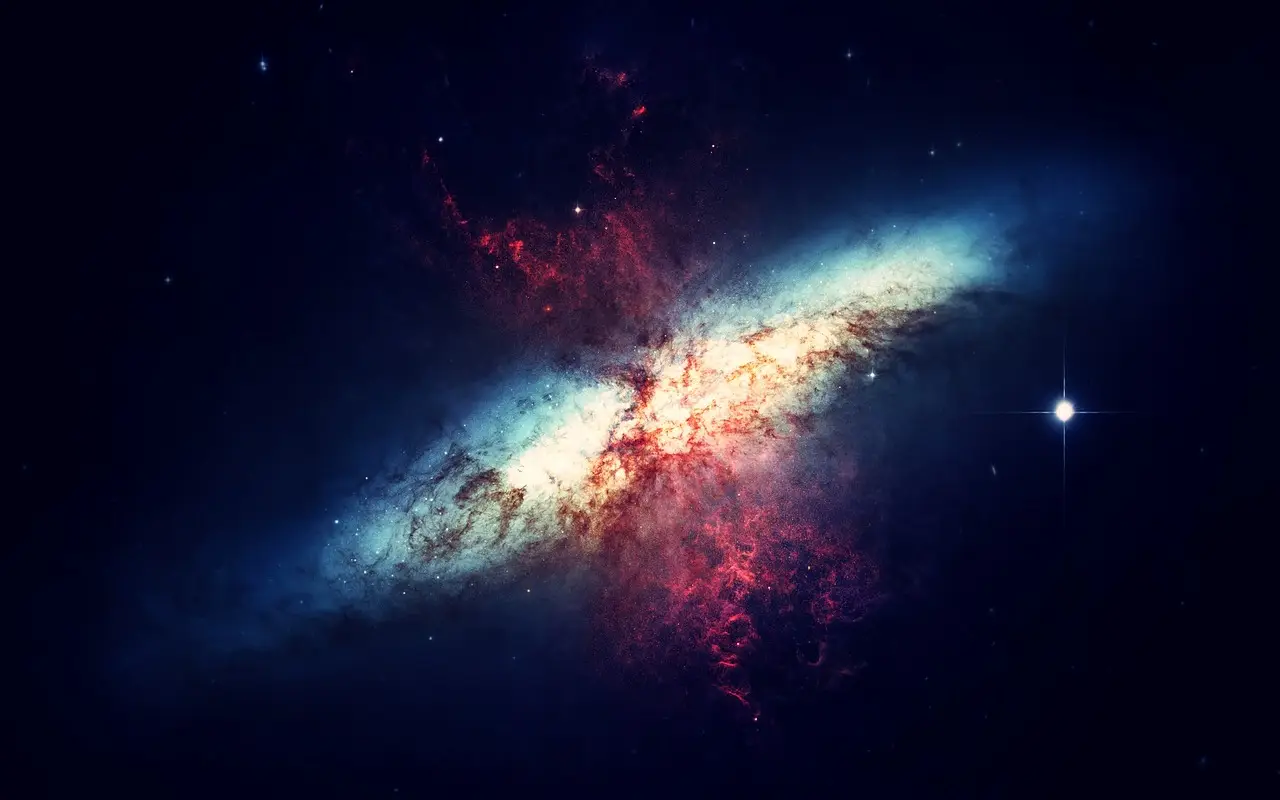
The most distant and ancient supermassive black hole-powered quasar ever seen is 360 million times the mass of the sun, and it appeared just 630 million years after the Big Bang. That's 40 million years earlier than the previous record holder for the most ancient quasar. The discovery, published Tuesday (Nov. 24) in the journal Astronomy & Astrophysics, was made by the Euclid space telescope.
Astronomers designated the object J1504+6252 and nicknamed it Dún Aonghasa. They found it among millions of objects in 18 months of Euclid data. The finding sharpens one of cosmology's biggest open questions: how black holes got so big so fast.
Why does this black hole break the rules?
Theory says it shouldn't exist at this size — not yet. Scientists had calculated that a black hole needs around 1 billion years of feeding and merging to reach supermassive status, meaning millions or billions of solar masses. Dún Aonghasa shows up at 360 million solar masses at less than two-thirds of that timeline.
The mechanism behind quasars is well understood. A supermassive black hole pulls in vast amounts of gas and dust. That material forms a spinning structure called an accretion disk, which glows intensely under the black hole's gravity and blasts out bright jets of plasma — electrically charged gas. The result can outshine every star in the surrounding galaxy combined, but only for a brief period. These bright galactic centers are known as active galactic nuclei, or AGNs.
Dún Aonghasa sits in that brief phase right now. That's the point.
What makes this quasar strange?
The black hole is feeding relatively slowly. Other supermassive black holes seen from the same early cosmic epoch appear to be gorging on material. If Dún Aonghasa grew through rapid feeding, that period of intense consumption has either ended or paused.
Slow feeding makes the mass harder to explain, not easier. It complicates the current picture of how supermassive black holes grew in the early universe. Takeaway: a heavyweight that has already stopped eating is harder to account for than one still feasting.
How did astronomers confirm it?
Euclid's initial observation triggered a chain of follow-ups. The team turned to an array of ground-based and space-based telescopes:
- The W.M. Keck Observatory
- The Large Binocular Telescope Observatory
- The Hubble Space Telescope
- The James Webb Space Telescope (JWST)
The JWST, the most powerful of the group, pinned down the mass of the supermassive black hole. The multi-telescope confirmation is what separates a candidate from a record.
What is Euclid actually for?
Euclid's main mission isn't black holes at all. The telescope, launched in 2023, targets dark energy — the mysterious force accelerating the universe's expansion — and dark matter, the unseen material shaping cosmic structure. Together they make up about 95% of the universe's matter-energy budget, a combination scientists call the dark universe. That mission has earned Euclid its nickname: the "dark universe detective."
The black hole find shows the instrument can contribute well beyond its brief. By looking 13.1 billion years back in time at Dún Aonghasa, Euclid is observing a crucial era when the first stars and galaxies were forming, and when clearing cosmic gas ended the universe's dark ages, letting light travel freely.
Alongside this quasar, Euclid has now found at least 12 more objects dating back roughly 13 billion years. That haul suggests the 2023-launched telescope could significantly advance our understanding of black holes and how they grow.
One object, one telescope, and the timeline for black hole growth just got harder to defend.
via space.com (Source)
More from Elena Vasquez
Show full bio
Correspondent covering money, funding and market shifts around general science news at SciBeat.
625 articles