Recorded November 25, 2026
Space & AstronomyReported finding
Europa Clipper to slingshot past Earth on Dec. 3 en route to Jupiter
NASA's largest deep-space spacecraft passes within about 2,000 miles of Earth on Dec. 3, gaining a gravity boost and testing every science instrument before reaching Jupiter in 2030.
By James Calloway5 min read901 words
In brief
- Europa Clipper passes Earth within 1,950–2,133 miles on Dec. 3, closest approach 3:14 p.m. EST.
- The gravity assist sends the 12,800-pound spacecraft to Jupiter, arriving in April 2030.
- All nine science instruments will be on and collecting data during the flyby.
- A March 2025 Mars flyby at 550 miles altitude already reshaped the spacecraft's orbit.
- The magnetometer calibration aims to help confirm an ocean beneath Europa's icy shell.
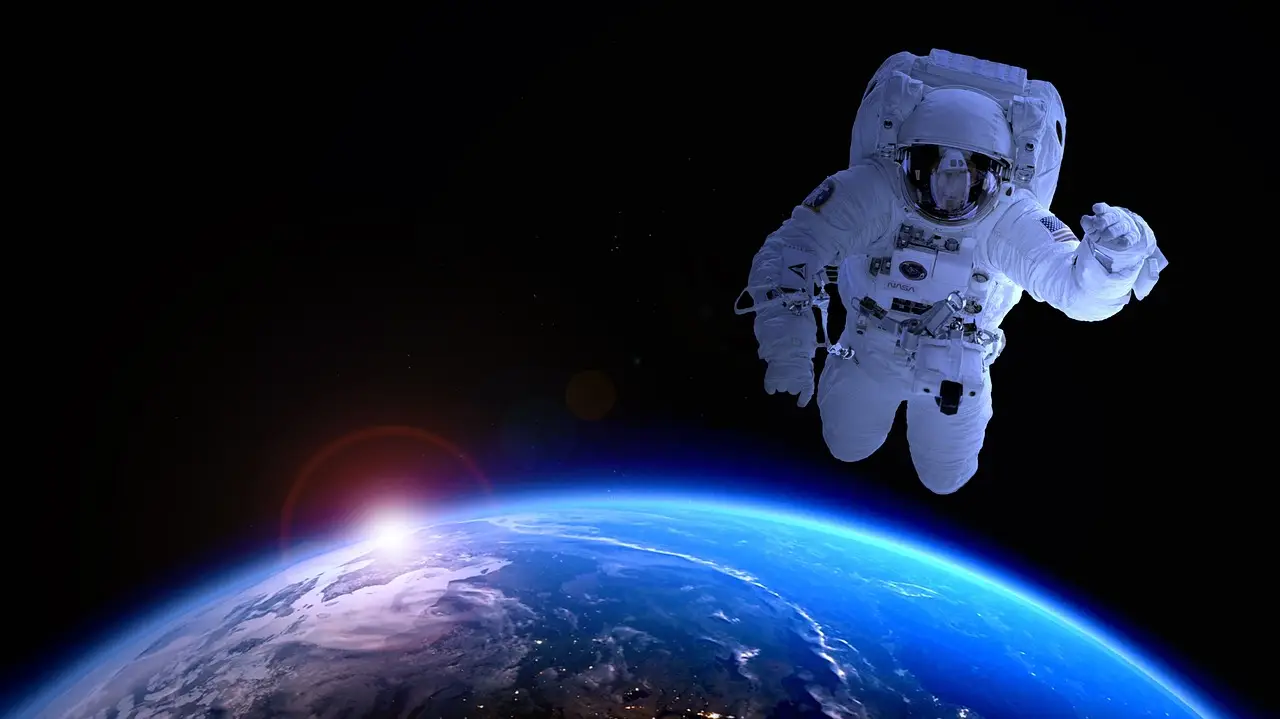
NASA's Europa Clipper will pass within roughly 1,950 to 2,133 miles (3,140 to 3,450 km) of Earth on Thursday, Dec. 3, using our planet's gravity to slingshot itself toward Jupiter. The closest approach comes at 3:14 p.m. EST, west of Africa, and the 12,800-pound (6,000-kg) spacecraft will then begin the long haul to the gas giant, where it enters orbit in April 2030.
It's the largest spacecraft NASA has ever launched into deep space. And this flyby is doing double duty: navigators save propellant while scientists get a full dress rehearsal for the mission ahead.
How does a planet 'slingshot' a spacecraft?
The maneuver is called a gravity assist. A spacecraft flying past a planet borrows a sliver of that planet's orbital momentum, changing both its speed and its trajectory without burning fuel. Europa Clipper already performed one in March 2025, sailing 550 miles (884 km) above the surface of Mars — that one pumped the brakes and reshaped its orbit around the sun. Earth's assist will do the opposite: add speed and nudge the trajectory toward Jupiter.
"We're coming down into the gravity well of Earth, following its curve, and shooting out again," said Robert Pappalardo, Europa Clipper's project scientist at NASA's Jet Propulsion Laboratory in Southern California. "The spacecraft is able to get pulled by the gravity of the planet and continue on its way—now with a slightly changed trajectory and moving faster than it was before."
One caveat worth stating plainly: the savings come at the cost of years. Clipper launched in October 2024 and won't arrive at Jupiter until 2030. Gravity is cheap but slow.
What happens to the instruments during the flyby?
All nine of Europa Clipper's science instruments will be switched on and collecting data — another crucial mission milestone, according to NASA. Teams will compare the flyby data against existing measurements of Earth, then fine-tune the instruments as needed. In plain terms, they're pointing instruments at a target they already understand extremely well, so any weird readings point to the hardware rather than the planet.
"We're practicing the intricacies of the operation, but we're also practicing how to work together to produce the best science," said JPL's Erin Leonard, Europa Clipper project staff scientist. "The things we practice now will set us up for success at Europa."
The calibration matters most for one instrument in particular:
- The magnetometer. At Jupiter it will measure how the giant planet's magnetic field interacts with Europa, aiming to confirm the vast ocean believed to sit beneath the moon's icy shell. But raw magnetic readings need an anchor. "We need to pin these observations to something we know to understand the actual value that it's measuring," Pappalardo said. The flyby lets the team calibrate the instrument absolutely against Earth's well-mapped field.
- E-THEMIS (Europa Clipper Thermal Emission Imaging System). It will scan Earth every eight hours during the approach. The instrument already imaged Mars in infrared during the March flyby; at Europa it will track warm regions to find where water lies closest to — or may have erupted onto — the surface.
- Europa-UVS (Europa-Ultraviolet Spectrograph). It will study Europa's atmosphere and surface, so its Earth observations will be checked against those from another NASA spacecraft, the Lunar Reconnaissance Orbiter.
A second mission joins in
The Lunar Reconnaissance Orbiter, normally focused on the moon, will train its LAMP (Lyman-Alpha Mapping Project) instrument on Earth during the flyby. It will study our planet's geocorona — the outermost, wispy part of the atmosphere — to better understand how atoms escape from it.
Why bother? Because Europa has a corona of its own, built from escaping hydrogen and other atoms. "These Earth observations made at multiple vantage points by different spacecraft are a good test run for how we aim to do the same at Jupiter," said Kurt Retherford of the Southwest Research Institute, principal investigator for LAMP, for Europa-UVS, and for the UVS instrument on ESA's Juice (Jupiter Icy Moons Explorer) mission.
The team is eager to share what the instruments see. "It's super-exciting when we actually do get to collect data that's really meaningful to the instruments, and get to share it with other people," Leonard said. "This is Earth, and everyone understands what that data means. Imagine what it's going to be able to show you about Europa."
What does this change for the mission?
Not the science — not yet. No Europa data exists until 2030, and every habitability claim stays firmly in the "believed" and "potential" column until then. What the flyby changes is readiness: propellant saved, instruments calibrated, and operations teams rehearsed.
When Clipper finally arrives, it will use the gravity of another Jovian moon, Ganymede, to slow down and be captured by Jupiter. During its subsequent flybys of Europa, the spacecraft will measure the thickness of the icy shell, investigate the moon's composition and characterize its geology. The findings will help scientists judge whether habitable worlds exist beyond our own — a big promise, and one that starts with a quiet swing past Earth.
One more thing, for skywatchers: near the closest-approach track, notably in southern Europe and Africa, the spacecraft should be visible through relatively large hobby telescopes.
via phys.org/rss-feed/ (Source)
More from James Calloway
Show full bio
Staff writer covering regulation, policy and their impact on general science news at SciBeat.
607 articles
Nearby plates
- ESA's Juice Spacecraft Swings Past Earth on 28 September
- ESA's Juice Spacecraft Used Earth as a Slingshot Toward Jupiter
- Juice spacecraft swings past Earth to bend its path to Jupiter
- Two Spacecraft Enter Mercury Orbit, First Visitors in a Decade
- Twin NASA probes complete unprecedented powered Earth flybys to Mars