Plate Nº 20 · recorded November 13, 2026
Space & AstronomyReported finding
Europe's Hera Spacecraft Arrives at Asteroid Pair Hit by NASA
ESA's Hera spacecraft reached the Didymos-Dimorphos pair on November 4, opening the first close study of a binary asteroid and NASA's DART crash site.
By Elena Vasquez5 min read938 words
In brief
- Hera arrived within 30 kilometers of Didymos and Dimorphos on November 4 after a two-plus-year journey.
- NASA's 2022 DART impact shortened Dimorphos's 12-hour orbit by more than half an hour.
- Binary asteroids are estimated to make up about 15 percent of all asteroids.
- Hera will release two cubesats in January; the breadbox-sized Juventas carries a first-of-its-kind radar to see inside Dimorphos.
- Only seven other asteroids have ever been visited by spacecraft — all of them single objects.
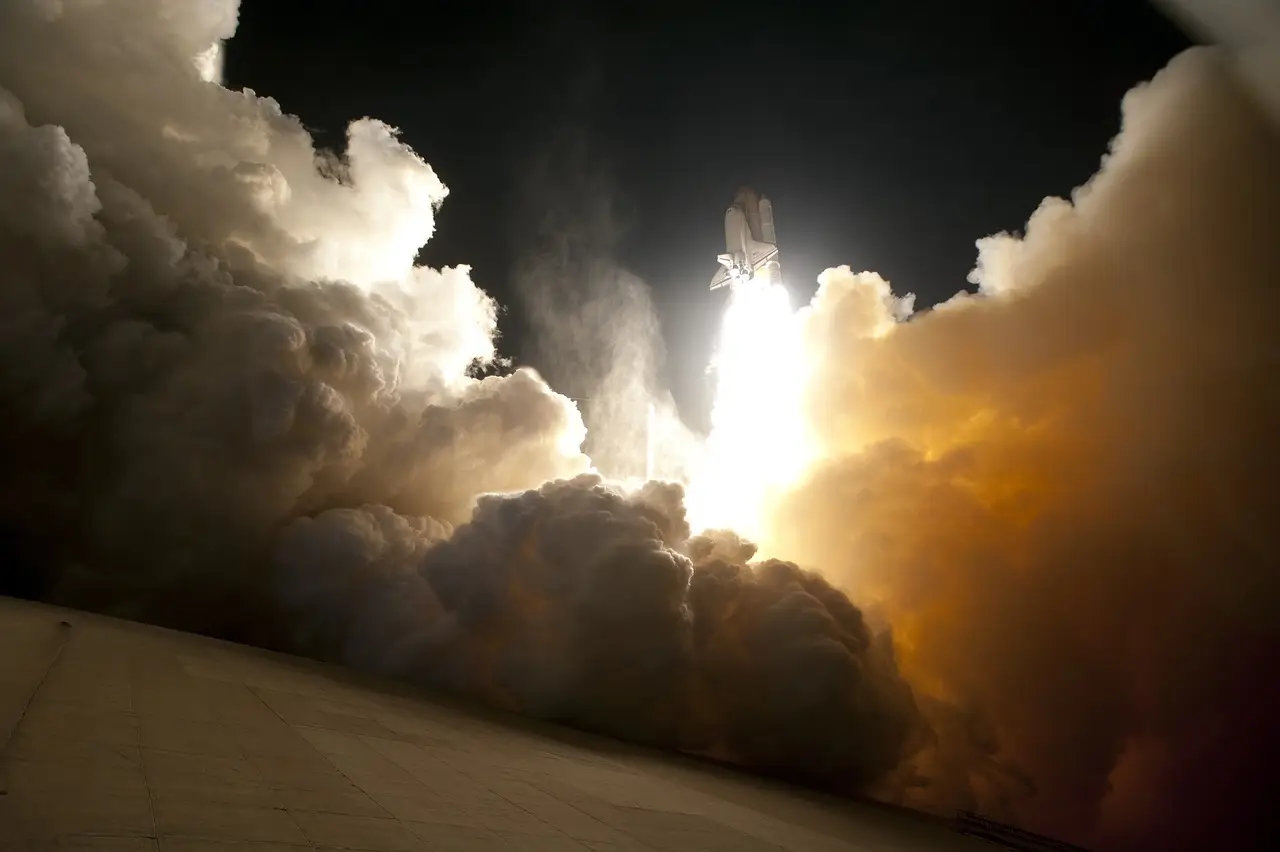
On November 4, after more than two years traveling through space, the European Space Agency's Hera spacecraft came within 30 kilometers of two asteroids named Didymos and Dimorphos. The encounter opens the first scientific visit ever to a binary asteroid — two rocks orbiting the sun together — and kicks off a detailed investigation of the crater NASA left behind in 2022.
Only seven other asteroids have received spacecraft visits before. Every one of those was a single, solitary object. Hera's target is different: a pair.
Didymos, the larger of the two, is a mass of rocks roughly twice as wide as the Empire State Building is tall. Its moonlet Dimorphos circles it on a 12-hour orbit. In September 2022, NASA deliberately slammed its Double Asteroid Redirection Test spacecraft, DART, into Dimorphos at speed. The impact blasted a plume of debris into space and shortened Dimorphos's orbit around Didymos by more than half an hour.
Why crash a spacecraft into an asteroid?
The crash wasn't a stunt. An impact like DART's is one of the few ways scientists can practice planetary defense — the field devoted to spotting dangerous asteroids and working out how to stop one before humans go the way of the dinosaurs.
DART and Hera were designed as a coordinated pair. DART did the hitting. Hera's top priority is examining the aftermath: the size and shape of the crater, how the impact changed the asteroid, and what that teaches engineers about defending Earth in the future.
"Planetary defense and science are sort of two sides of the same coin," said planetary scientist Jessica Sunshine of the University of Maryland, who worked on the DART team but is not involved with Hera. On the science side, she said, "we're trying to figure out not so much how did we break the thing, but how was it put together in the first place."
Why a pair, not a single rock?
NASA aimed at a binary system on purpose. Measuring an orbit change is far easier against Dimorphos's short 12-hour lap around Didymos than against an asteroid's months- or years-long circuit of the sun. Even so, the impact was powerful enough that scientists calculated DART shortened the entire Didymos system's more-than-two-year orbit around the sun — by a fraction of a second.
Binary asteroids matter beyond the test, though. Astronomers estimate they make up about 15 percent of all asteroids. Scientists believe most inner-solar-system binaries, including Didymos, likely built their moonlets from debris that shed off the larger body and then clumped together in orbit.
That process may still be running. Didymos spins so fast its weak gravity may struggle to hold all its rock in place. As it rotates, it may fling boulders into space, some of which could land on Dimorphos. Researchers will comb through Hera's imagery for rocks moving across each surface — and hopping between the two objects.
What's inside Dimorphos?
Scientists expect Dimorphos is a rubble pile: a loose collection of boulders and rocky debris, structurally similar to recent spacecraft targets Ryugu and Bennu, though both of those are significantly larger. The boulder-strewn landscape DART saw in its final images fits the theory. But nobody knows how deep the rubbly layer goes.
"We've never seen the interior of an asteroid before," said planetary scientist Angela Stickle of the Johns Hopkins University Applied Physics Laboratory.
That changes in January. Hera will then release two small companion spacecraft for a closer look. One, a cubesat called Juventas, is about the size of a breadbox. It carries a first-of-its-kind radar instrument built to probe Dimorphos's internal structure directly.
Juventas will also attempt to land on Dimorphos. The stakes for that touchdown are higher than they might sound. When NASA's OSIRIS-REx spacecraft touched Bennu to grab a sample, the surface looked solid — yet the probe sank roughly half a meter into the rubble as the asteroid gave way beneath it.
"Even though we had amazing images, the reaction was not what we expected," said planetary scientist Patrick Michel of the French National Centre for Scientific Research (CNRS), recalling the Bennu surprise. "There is still sort of a mismatch between what we see and what we feel." He hopes the Juventas landing will help scientists connect how an asteroid looks with how it actually behaves.
What else can Hera answer?
Beyond the crash scene, Hera offers fresh angles on old puzzles. One is tidal locking. Before DART's impact, Dimorphos always showed the same face to Didymos, just as our moon does to Earth. The collision probably sent the moonlet tumbling. Scientists have never watched this resetting process unfold.
"Eventually, the system might stabilize, but we don't know how long it takes," said planetary scientist Eva Lilly of the Planetary Science Institute, who is involved in neither mission.
Another puzzle is space weathering. Scientists know a rain of charged particles darkens a thin outer layer of rock on asteroid surfaces, but the details remain fuzzy. At Dimorphos, they can study fresh rock uncovered by a known, dated event — potentially clarifying a process that shapes every airless body in the solar system.
There's a caveat. Because DART altered this system, researchers will have to separate its effects from natural behavior when comparing Didymos and Dimorphos with untouched binary asteroids.
Still, the pull is irresistible: two different rocks, one mission, close-up views nobody has ever had.
In short: Hera turns a planetary defense test into the deepest look yet at how paired asteroids work.
via sciencenews.org (Source)
More from Elena Vasquez
Show full bio
Correspondent covering money, funding and market shifts around general science news at SciBeat.
402 articles
Nearby plates
- Europe's Hera Spacecraft Begins Close Investigation of NASA-Impacted Asteroid
- Hera spacecraft will fire 3 thrusters for 93 minutes to brake toward asteroid
- Hera’s first close look reveals Didymos after DART impact
- Hera Sees Two Asteroids for the First Time — and a Puzzle Worth Billions
- Webb Telescope Spots Mars-Sized Worlds Smashing Together