Plate Nº 53 · recorded November 12, 2026
Space & AstronomyReported finding
Europe's Hera Spacecraft Begins Close Investigation of NASA-Impacted Asteroid
Europe's Hera spacecraft has begun close inspections of Dimorphos, the asteroid moonlet NASA's Dart struck in 2022, from just 15 to 18 miles away, ESA said Wednesday.
By Priya Raman3 min read660 words
In brief
- ESA's Hera spacecraft is now studying Didymos and Dimorphos from 15 to 18 miles (25-30 km) away
- NASA's Dart spacecraft deliberately struck Dimorphos in 2022, shortening its orbit and altering its path around the sun
- Next month Hera will approach to just 12 miles (20 km), carrying 25 science instruments and two Cubesats
- Dimorphos is about 500 feet (151 m) across; Didymos is roughly 2,560 feet (780 m)
- The Dart impact produced a debris trail extending more than 10,000 kilometers into space for months
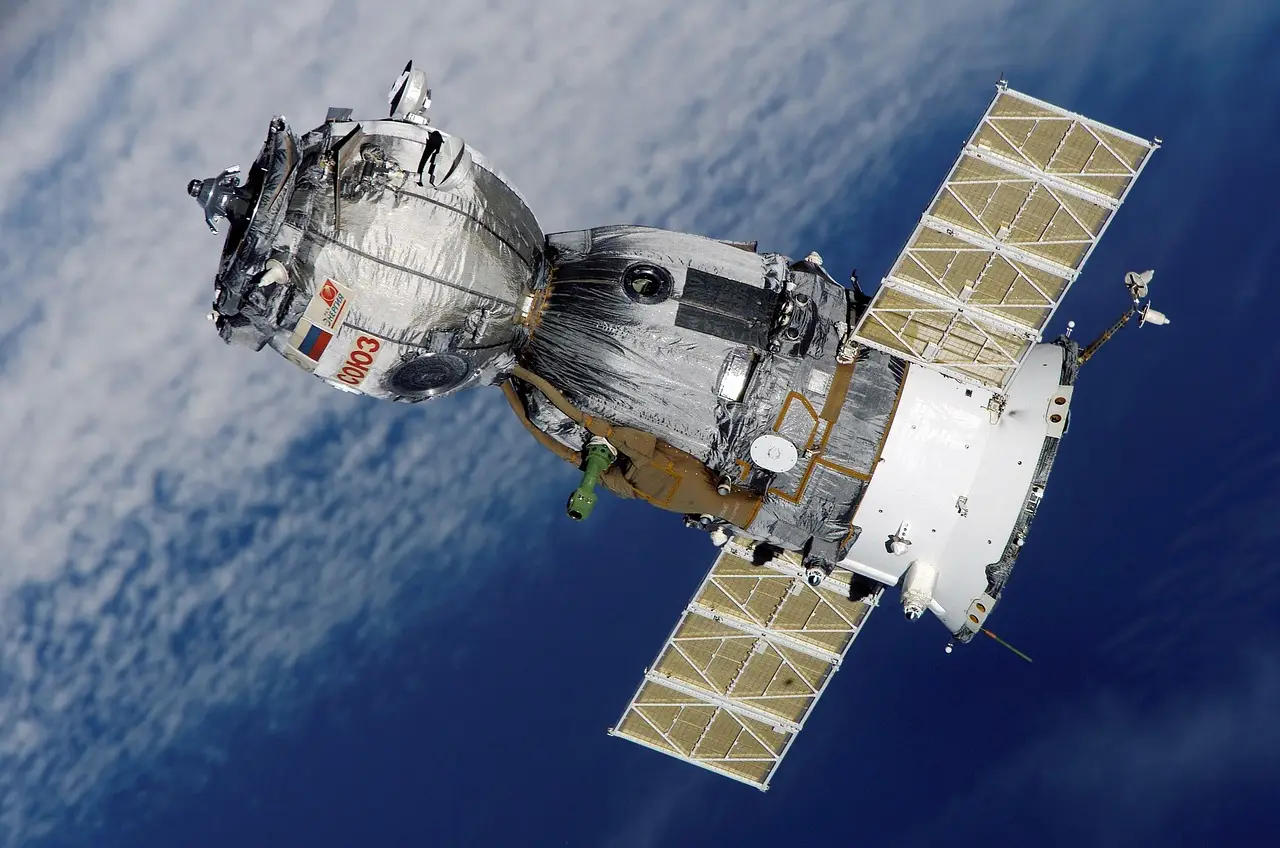
Europe's Hera spacecraft is now inspecting the asteroid that NASA deliberately rammed in 2022, closing to within 15 to 18 miles (25 to 30 kilometers) of its target to conduct what the European Space Agency calls a "crash site investigation."
The announcement came Wednesday from ESA, marking the start of the mission's most intensive phase. Hera, a spacecraft roughly the size of a small car, launched in 2024 with a single assignment: return to the scene of humanity's first full-scale test of planetary defense and work out, in detail, what the collision actually achieved.
What did NASA's Dart test accomplish?
The scene Hera is examining lies some 11 million kilometers from Earth, at a paired asteroid system. Didymos, the larger body, measures roughly 2,560 feet (780 meters) across. Its moonlet, Dimorphos, spans an estimated 500 feet (151 meters) — small enough that a direct hit demanded precision, large enough to matter.
In 2022, NASA's Dart spacecraft — the name is short for Double Asteroid Redirection Test — deliberately slammed into Dimorphos. The question was straightforward: could such a defensive move one day save Earth from a killer space rock?
The answer, on two counts, was yes. The impact shortened the moonlet's orbit around Didymos. It also nudged Dimorphos onto a slightly different path around the sun — the deeper kind of course change that planetary defense specialists care about most, because shifting an object's solar orbit is what would eventually move a threatening asteroid off an Earth-intersecting trajectory.
The collision was anything but tidy. Dart sent rubble and even boulders flying off the moonlet's surface, and that escaping debris provided an extra kick of momentum beyond the spacecraft's own impact — a recoil effect, working much like the thrust from a rocket exhaust. The debris trail stretched more than 10,000 kilometers into space and persisted for months.
Scientists say some of that debris could still linger in the vicinity, which adds a note of caution to Hera's increasingly close approach.
What happens next month?
Hera is not finished closing in. Next month, the spacecraft will venture to just 12 miles (20 kilometers) from the asteroid pair, an approach that ESA officials describe as worthy of the agency's finest robotic detective.
To conduct the survey, Hera carries 25 science instruments. It also transports a pair of shoebox-sized satellites known as Cubesats (miniature spacecraft built from standardized modular units), which will survey Dimorphos even more closely than the mother craft can and attempt to land on its surface.
A successful landing would give researchers their first direct contact with a human-made crater on another world's small body — the definitive physical evidence of how the asteroid responded to a high-speed impact.
Why does a four-year-old crash site still matter?
The Dart test proved the principle: hit an asteroid, and it moves. But principle is not precision. Hera's measurements will tell scientists how large a crater the impact excavated, how the asteroid's interior is structured, and how much of the orbital change came from the momentum of the collision itself versus the recoil from ejected debris.
Those numbers matter because any future real-world deflection would have to be calculated before the fact. A mission launched to divert a genuinely hazardous asteroid would need to know, in advance, how much a given impact would shift its target. Hera's findings will convert a successful demonstration into usable engineering.
The preliminary nature of the work cuts both ways. Hera has only now begun its close observations, and the detailed results — including the Cubesats' attempted landings — lie weeks and months ahead. What the spacecraft has established so far is position and readiness: it has arrived, it holds its station at 25 to 30 kilometers, and its instruments are trained on the crater NASA left behind in 2022.
Four years after the impact, the detective has reached the scene.
via phys.org/rss-feed/ (Source)
More from Priya Raman
Show full bio
Senior reporter covering people, launches and day-to-day practice in general science news at SciBeat.
346 articles
Nearby plates
- Hera spacecraft will fire 3 thrusters for 93 minutes to brake toward asteroid
- Hera Sees Two Asteroids for the First Time — and a Puzzle Worth Billions
- Hera’s first close look reveals Didymos after DART impact
- 2026 QQ8: Earth's Temporary Mini-Moon Through December
- Euclid Telescope Finds Its First-Ever New Comet 1.3 Billion Km Away