Recorded November 19, 2026
Biology & EvolutionReported finding
Fingerprints of Adults and Children Found on 15,000-Year-Old Clay Art
Archaeologists found 154 Natufian clay figurine fragments up to 15,000 years old, including one bearing the fingerprints of both an adult and a child — evidence of a shared pre-farming art tradition.
By James Calloway4 min read793 words
In brief
- 154 fragmented clay figurines from 15,000–11,650 years ago were identified across three Southern Levant sites.
- Fingerprints on 57 artifacts form the largest known pre-Neolithic assemblage of its kind.
- One figurine carries the fingerprints of both an adult and a child, suggesting knowledge passed between generations.
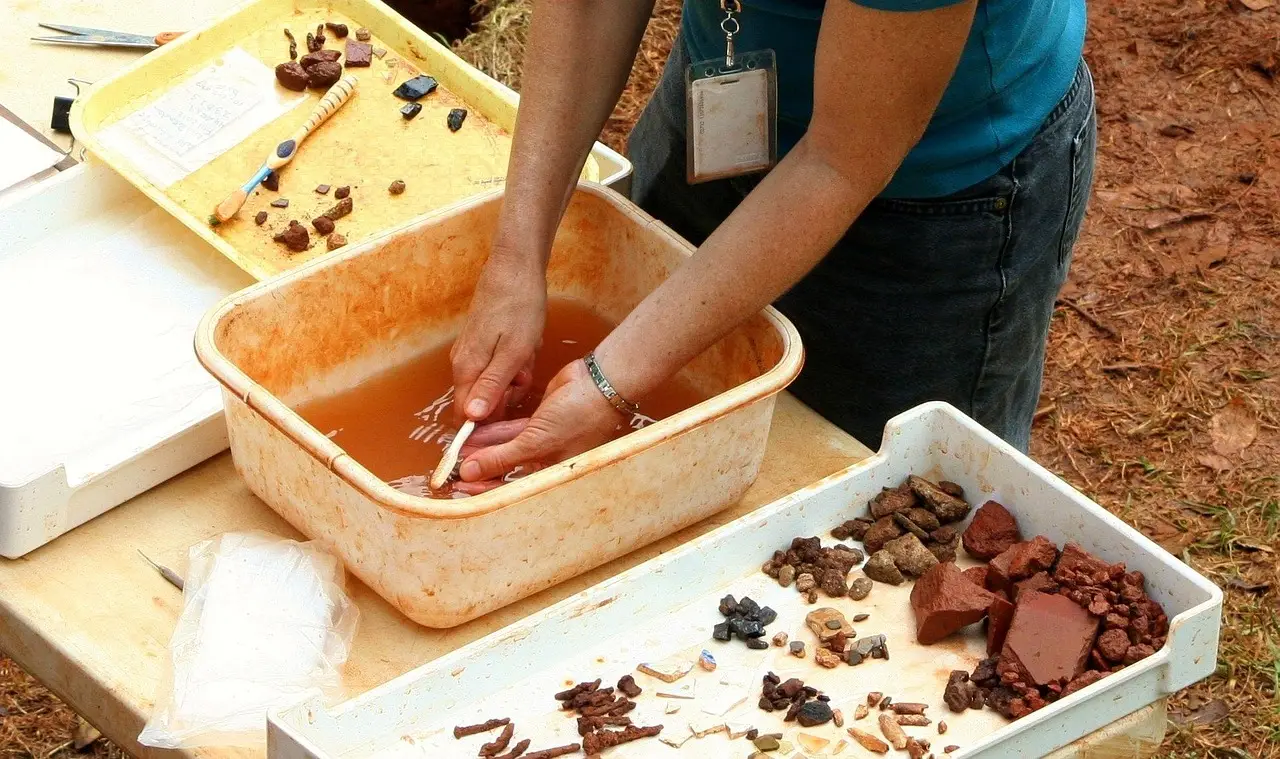
- The team sorted roughly 40 kg of clay fragments, many smaller than a sugar cube, excavated from the 1950s to the 2020s.
- 11 of 15 recognizable figurines depict birds, including ducks in courtship poses.
A single clay figurine from the Upper Jordan Valley carries the fingerprints of both an adult and a child, pressed into the surface some 15,000 years ago. That paired print, archaeologists say, may be the clearest evidence yet that prehistoric art was taught, not just made — and that children were full participants in one of humanity's earliest symbolic traditions.
The findings come from a study published in PLOS One by archaeologists and ethnologists working on the Natufian culture, the first settled peoples of the Levant. The team, led by Laurent Davin of the Hebrew University of Jerusalem, identified 154 fragmented figurative clay artifacts dating from 15,000 to 11,650 years ago — millennia before agriculture reached the region.
"These discoveries change how we understand the beginnings of artistic expression in this region," Davin said. "Thousands of years before agriculture emerged, people were already using clay to create figures, as part of their beliefs and knowledge of the natural world."
What did the researchers actually find?
The short answer: a lot of very small things. The team sorted through tens of thousands of lumps of heated clay and sediment, many smaller than a sugar cube and totaling roughly 40 kilograms (nearly 90 pounds). The material came from three sites in the Southern Levant — Mount Carmel, the Upper Jordan Valley, and Lower Galilee — excavated between the 1950s and the 2020s.
The haul breaks down unevenly:
- 15 recognizable depictions of humans, gazelles, and birds
- 139 less-recognizable fragments
- Fingerprints on 2 figurines, 5 cylinders, and 50 other artifacts — the largest such assemblage known from the pre-Neolithic
Eleven of the 15 figurines depict birds: hunted waterfowl like ducks, plus falcon-like flyers. Some are simple. Others are anatomically detailed, showing feathers and what look like courtship poses — including the end-of-winter ritual in which male ducks splash females with water. Human figures appear to have been ornamented with perishable materials such as grass, string, hair, or feather headdresses.
Wear patterns tell a quieter story. These objects were not daily companions. They show signs of use but seem to have had short lives, possibly brought out only for ceremonies or specific seasons — timed, perhaps, to those duck courtship displays — rather than passed down as heirlooms.
Why the clay source matters
Here the story gets more interesting than "people made figurines." The artifacts contain unintentional inclusions: freshwater shells, bone splinters, flint flakes, charcoal. That means the makers were not scooping sediment from the floors of their settlements, where such material would differ. They traveled beyond their homes to collect clay.
"This pattern of acquisition, shared by all three communities, suggests that the Natufians sought out clays with particular plastic qualities, grain size and possibly also colors to suit this new mode of expression," the researchers write.
Three separate communities, all choosing material deliberately. That is not casual play. That is a tradition with standards.
Were children really making these?
This is the claim worth stress-testing, and the fingerprints are the evidence. Their diversity and morphology suggest that, in some communities at least, all members of society handled these objects. The researchers go further: children were not merely touching the figurines but shaping and coloring them. The young craftspeople seem to vary by socio-cultural factors across sites and times.
"What is particularly fascinating is the evidence that children were involved in making these objects, suggesting that creativity and cultural knowledge were shared across generations," Davin said.
One figurine holds both an adult's and a child's prints — possibly, the team suggests, a moment of teaching. An antediluvian apprenticeship. That reading is plausible. It is also, by the researchers' own framing, an interpretation of ridge patterns pressed into fired mud.
What does this change for our picture of prehistory?
Two long-standing paradigms take a hit. First, the assumption that the Natufians lacked a figurative artistic tradition. Second, the idea that such a tradition emerged alongside an agricultural economy. Neither survives this dataset.
The study also feeds into what archaeologists call the "revolution of symbols" — the timeline of when humans began making symbolic depictions. The Natufian work pushes that conversation back into a pre-farming world.
"This figurative shift in zoomorphic expression reflects developments through deep observation and accumulation of practical knowledge, possibly stored and transmitted in ritualized performance," the researchers conclude.
Caveats remain, as they always do with fragmentary evidence. Most of the 154 artifacts are, by the team's own description, less recognizable. The seasonal-use and teaching interpretations are informed inference, not observation. And 15 clear figurines is a small base for sweeping claims.
Still, the core finding stands on physical evidence: fired clay, deliberately sourced, shaped by hands both young and old, thousands of years before anyone planted a field.
via sciencealert.com (Source)
More from James Calloway
Show full bio
Staff writer covering regulation, policy and their impact on general science news at SciBeat.
584 articles
Nearby plates
- 15,000-Year-Old Clay Figures Rewrite Story of Early Human Creativity
- Clay figurines from 15,000 years ago rewrite Middle East prehistory
- Child Fingerprints on 15,000-Year-Old Clay Figurines
- Child Fingerprints on Ancient Clay Figures Suggest a Shared Craft
- Half a Million Years Ago, Humans May Have Kept Souvenirs