Plate Nº 31 · recorded November 14, 2026
PhysicsReported finding
Fusion Plasma Heats Itself With Its Own Waves, Experiment Shows
Experiments on Japan's Large Helical Device show unstable plasma heating itself with its own waves — a key step toward the self-heating that fusion power will need.
By Elena Vasquez4 min read701 words
In brief
- Experiments on the Large Helical Device directly observed plasma heating itself with waves generated by its own instabilities.
- The paper by Katsumi Ida et al. was published in Communications Physics (2026), DOI: 10.1038/s42005-026-02939-3.
- Full demonstration of fusion self-heating requires ITER-scale facilities and is expected around 2040.
- The same wave-driven heating process also occurs in Earth's magnetosphere plasma.
- Fusion power generation emits no carbon dioxide during electricity production.
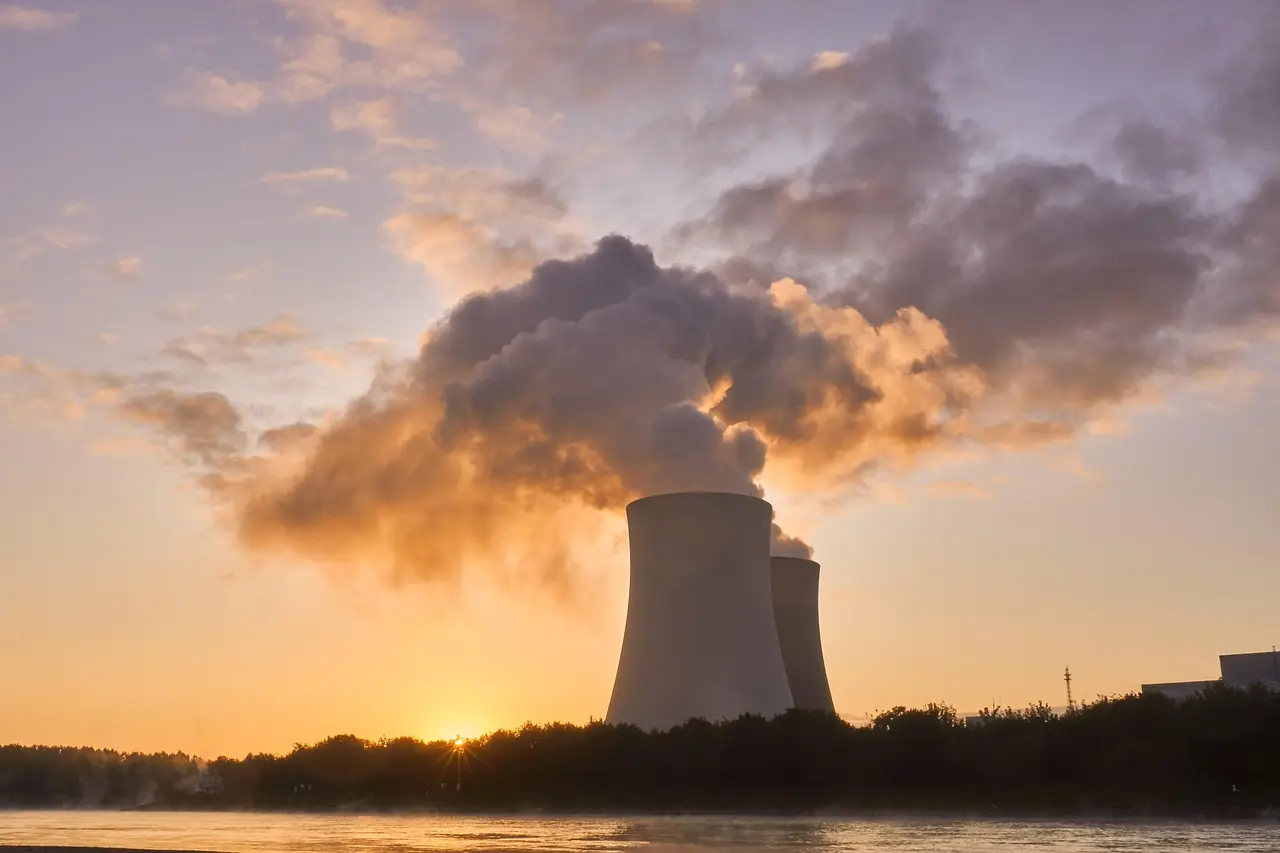
Physicists have directly observed fusion plasma heating itself with waves it generates, demonstrating a key step of the "self-heating" process that future fusion power plants will depend on. The experiments ran on the Large Helical Device (LHD), a helical magnetic confinement machine operated in Japan, and the results appeared in the journal Communications Physics.
The finding matters because self-heating sits at the heart of fusion power generation. Fusion produces no carbon dioxide during electricity generation, and research teams worldwide are working to confine extremely hot plasma with magnetic fields. To start a fusion reaction, engineers must inject high-energy particles or waves from outside to drive the plasma to extreme temperatures.
Once the reaction ignites, high-energy particles created by fusion reactions heat the plasma further. That feedback loop lets the hot state persist even when external heating gets dialed back.
What did the experiment actually show?
For decades, researchers treated plasma instability as pure bad news. When plasma turns unstable and generates waves, the standard view held, the plasma loses energy and its temperature drops. Most research focused on suppressing instabilities altogether.
The group led by professor Katsumi Ida took the opposite tack. They asked: "Rather than suppressing instability, isn't it more important to observe unstable plasma in detail and clarify its characteristics?"
So they deliberately created unstable plasma in the LHD and studied it closely. The gamble paid off. They caught the plasma in the act of heating itself through the very waves its own instability produced.
The takeaway: instability-generated waves don't only drain energy from plasma. They can also pump energy back in.
How did the researchers trace the heating?
The team tracked the effect through particle motion, specifically what physicists call the distribution function — essentially a map of how the plasma's particles are moving.
Scientists already knew that waves temporarily "distort" this distribution function, scrambling the orderly pattern of particle motion. What nobody had pinned down was what happens to the plasma's temperature afterward.
Ida's group analyzed the particle motion in detail and found something new. After the wave-induced distortion relaxed back to normal, the spread of the particles' motion had grown. A wider spread of particle motion means a hotter plasma, in plain terms.
The full sequence they observed reads like this:
- The plasma becomes unstable
- Waves are generated
- Distortions appear in the distribution function
- The spread of the distribution function increases — and the plasma heats up
This is direct evidence that waves born from instabilities can raise plasma temperature rather than only lowering it. That gives fusion scientists a fresh angle on how burning plasma might hold onto its extreme heat.
The takeaway in plain words: the plasma cleaned up its own wave damage and ended up hotter than before.
Why can't this be tested on a full fusion reactor?
No device on Earth can currently demonstrate the entire self-heating process in nuclear fusion. Demonstrating it in full requires large-scale facilities such as ITER, and full self-heating demonstrations are expected around 2040.
That's what makes the LHD result significant. The phenomenon — waves generated by plasma instabilities heating the plasma itself — is one of the key processes underpinning self-heating, and it can be verified with today's experimental machines. Observing it directly advances the understanding of how fusion plasma sustains its high temperature.
The takeaway: this is one confirmed piece of a much larger puzzle that won't be assembled until roughly 2040.
Does this connect to anything beyond fusion?
Yes. The researchers describe wave-driven self-heating as a universal physical process, one that occurs not only in fusion plasma but also in the plasma of Earth's magnetosphere, the region of space dominated by our planet's magnetic field.
The findings therefore bridge two research communities that usually work separately — fusion scientists and space plasma physicists. The team expects the result to encourage interdisciplinary research going forward.
The takeaway: one laboratory result, two fields of physics.
Publication details
The paper is Katsumi Ida et al., "Direct observation of phase-space dynamics during energetic-particle-driven MHD bursts," published in Communications Physics (2026), DOI: 10.1038/s42005-026-02939-3.
via phys.org/rss-feed/ (Source)
More from Elena Vasquez
Show full bio
Correspondent covering money, funding and market shifts around general science news at SciBeat.
422 articles
Nearby plates
- Heating Before Squeezing May Cut Fusion Energy Needs
- Princeton AI Predicts Fusion Plasma Instabilities 200 Milliseconds Early
- Princeton Lab Claims a Cheaper Path to Igniting Star Power
- Millions of tiny solar tornadoes may explain the sun's hottest mystery
- Gravity can snap and reconnect like the sun's magnetic field, study finds