Plate Nº 60 · recorded November 11, 2026
Biology & EvolutionReported finding
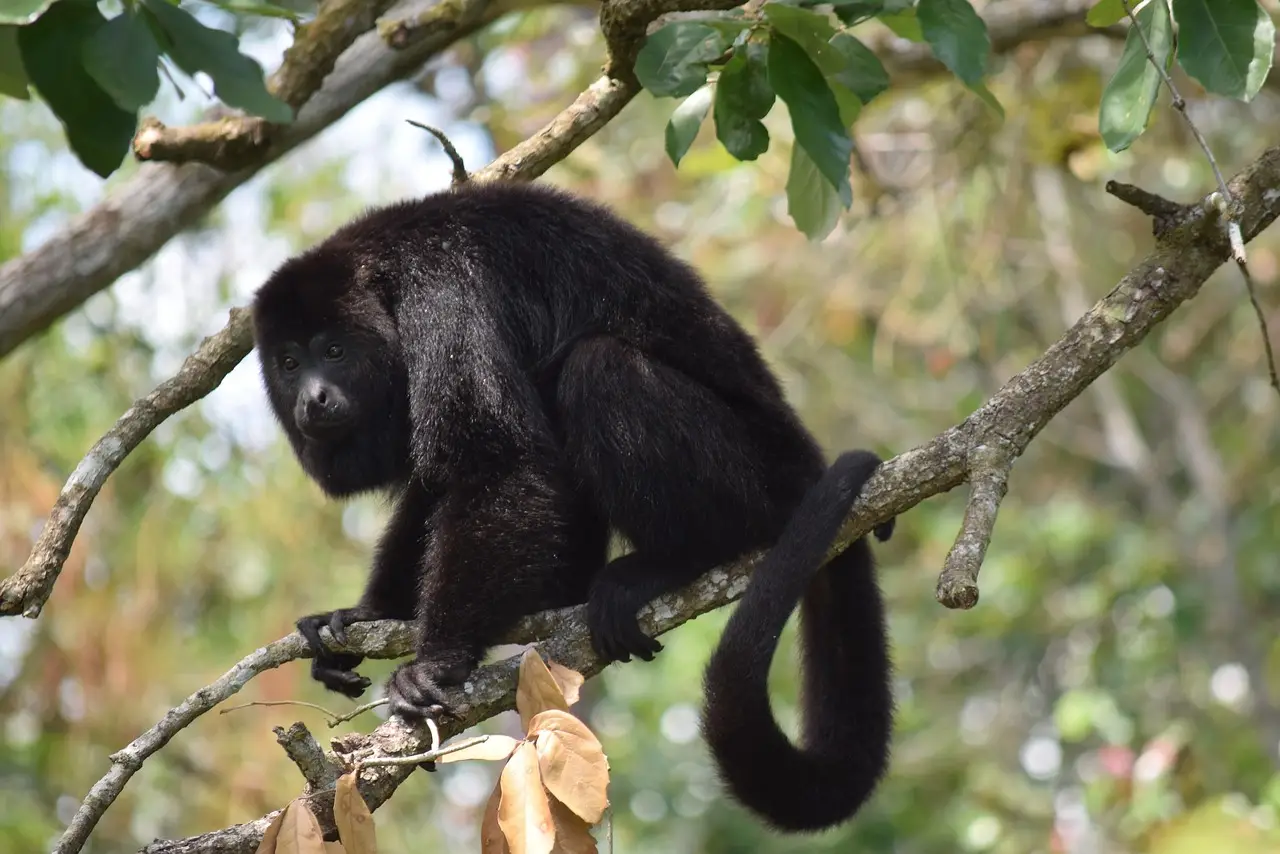
Genome study identifies two new Amazon howler monkey species
A 2026 genome study identifies Alouatta iroi and Alouatta matogrossensis as new species, traces ancient river barriers and flags severe habitat loss across the Amazon Basin.
By James Calloway4 min read849 words
In brief
- Genome analysis of 11 howler monkey species identified Alouatta iroi and Alouatta matogrossensis as two new species.
- Alouatta puruensis was named by Lönnberg in 1941, 85 years before the new findings.
- The Amazon, Rio Branco and Xingu rivers separated howler populations for millions of years.
- Alouatta matogrossensis occurs in southern Amazonia, where habitat is among the world's fastest-deforestation regions.
- The paper appeared in Communications Biology in 2026 under DOI 10.1038/s42003-026-11187-8.
By James Calloway
A genome study of 11 howler monkey species from South and Central America found two previously unknown species in the Amazon, 85 years after Alouatta puruensis, the last previously described howler species, was formally named by Lönnberg in 1941.
The newly recognized animals received the scientific names Alouatta iroi and Alouatta matogrossensis. Researchers at the University of Salford and international collaborators reached that conclusion by comparing genome-wide DNA data with physical traits recorded from museum specimens.
The study, published in Communications Biology in 2026, also maps where the groups live and reconstructs how they relate. It offers an updated account of how these primates evolved and spread across the region. That broad claim depends on the paper's sampling and statistical evidence, details not itemized in the study summary.
Our study shows that the Amazon still holds remarkable biological secrets, even among well-known animals such as howler monkeys. These findings are particularly important because many of these populations are facing increasing pressure from habitat loss and environmental change. Understanding the different species in existence is the first step toward protecting them.
— Dr. Romina Batista, honorary postdoctoral research associate at the University of Salford
Her wording makes species identification a first step, not a finished rescue. The summary gives no estimate of how many animals of either new species remain, so its strongest immediate claim concerns identity, distribution and exposure to habitat pressure.
Hidden lineages, clearer family tree
The analysis found that what scientists had treated as a single species contained distinct evolutionary lineages. In practical terms, genetically separate populations had been evolving apart, and some carried differences that the old classification did not capture.
The researchers describe their reconstruction as the most comprehensive evolutionary history of howler monkeys ever documented. That is a consequential claim, but the research summary gives no specimen counts, geographic balance or uncertainty ranges; readers judging its reach would need those details from the full paper.
The work combined three kinds of evidence:
- Genomic comparison: DNA data from across an animal's full genetic material.
- Physical comparison: Morphological data, meaning measurable features of museum specimens.
- Range mapping: Records of where each recognized group occurs.
Rivers that split populations
For millions of years, the Amazon, Rio Branco and Xingu rivers have acted as natural barriers. They kept howler populations from mixing, allowing genetic and physical divergence on opposite banks and in isolated forests.
That process helps explain the high diversity across the Amazon Basin. Different species evolved on opposite sides of major rivers and within isolated forest regions, and the researchers say these barriers have shaped how the monkeys diversified across the region.
Two gaps in biodiversity knowledge
The paper addresses the Linnean shortfall, the lack of knowledge about how many species actually exist, and the Wallacean shortfall, uncertainty about where those species live. Adding two names narrows the first gap; mapping the groups narrows the second.
The authors say the Amazon, the world's largest tropical forest, remains a center of biodiversity where the number of undescribed species is underestimated; those species may already be at risk. The study improves the map of one well-known primate group, not a complete inventory of the forest.
Conservation risk for newly named species
Several populations identified in the analysis may face a significant risk of extinction. Some newly recognized species had never previously received a conservation assessment, leaving scientists without a baseline for judging how secure they are.
One example is Alouatta matogrossensis, the Mato Grosso red howler monkey, which occurs in southern Amazonia. Its habitat is considered one of the world's fastest-deforestation regions because of cropland expansion and other factors. Habitat loss and fragmentation threaten the area's broader biodiversity, too.
This discovery comes at a critical time, as increasing deforestation, climate change and habitat loss threaten many Amazonian species before they are fully understood or even discovered by science. We hope these findings will help conservation organizations identify the most vulnerable populations and prioritize protection efforts across the Amazon Basin.
— Professor Jean Boubli, University of Salford's Environmental Research & Innovation Centre
The statement describes a possible conservation use, not a completed rescue. Accurate species names can guide protection, but they cannot preserve disappearing forest.
What does this change for howler monkey protection?
The practical change is sharper targeting. If conservation groups can distinguish species and isolated populations, they can identify which areas and animals need surveys and protection. The study offers evidence for that work, but it does not show that organizations will act.
For the Mato Grosso red howler monkey, one relevant initiative already exists. The Reconecta Project, led by conservationist Fernanda Abra, aims to reduce road deaths among tree-dwelling species by connecting forest fragments. It targets road mortality, one pressure on these animals, but not the cropland expansion driving wider habitat loss.
The paper, titled Genome-wide analyses reveal recent diversification and hidden diversity in Amazonian howler monkeys, including two new species, appeared in Communications Biology in 2026. Its citation begins “Romina Batista et al.” and its DOI is 10.1038/s42003-026-11187-8.
via phys.org/rss-feed/ (Source)
More from James Calloway
Show full bio
Staff writer covering regulation, policy and their impact on general science news at SciBeat.
346 articles
Nearby plates
- 17-Million-Year-Old Ape Jaw From Egypt Rethinks Ape Origins
- Taung Child age and fossils reshape the human family tree
- Bats First Evolved in Europe 65 Million Years Ago, Genome Study Finds
- Those Weren't Dire Wolves, Scientists Say — Just Edited Grey Wolves
- Ancient DNA reveals extinct yak relative hidden in Siberian bones