Recorded November 27, 2026
Biology & EvolutionReported finding
Gut Viruses Found With Shells That Mimic Life's Chemistry
A University of Miami team found nearly 20% of the smallest known viruses carry shells resembling bacterial chemistry containers, hinting that viruses and cells swapped designs both ways over billions of years.
By James Calloway4 min read774 words
In brief
- Researchers screened over 14.4 billion DNA fragments from seawater, soil, wastewater, and the human gut.
- Nearly 1 in 5 of the smallest viruses had shell proteins resembling encapsulins, versus 2.5% among larger viruses.
- The largest cluster comprised 76 closely related viral sequences, all from the human gut.
- The team found evidence of at least three independent transitions between viral shells and encapsulins.
- The study was published in Nature Communications.
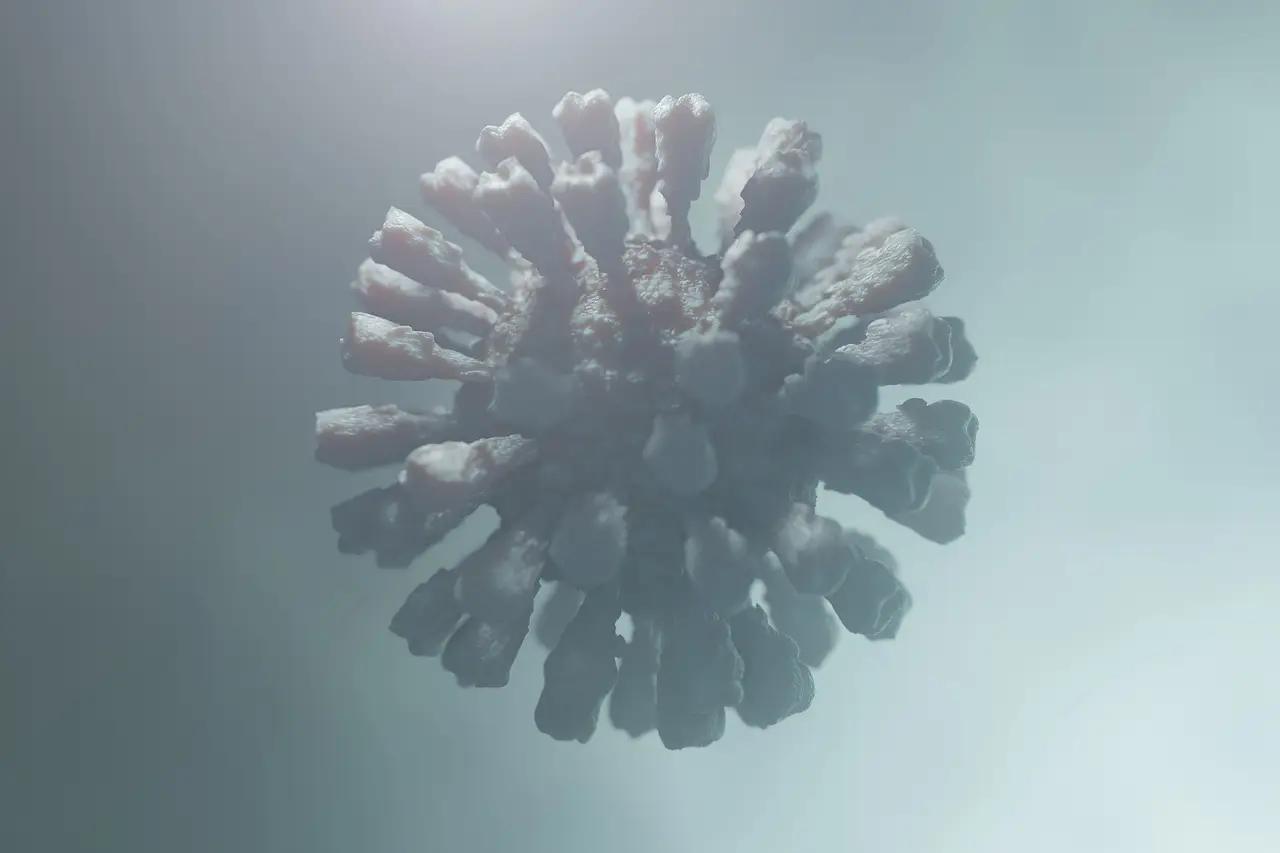
Nearly one in five of the smallest known viruses carries a protein shell strikingly similar to a structure bacteria use for chemistry, not infection. That number, from a new University of Miami study, suggests viruses and living cells have swapped shell designs repeatedly throughout evolution — not just in one direction.
The findings, published in the journal Nature Communications, come from researchers who sifted through more than 14.4 billion DNA fragments collected from seawater, soil, wastewater, and the human gut. Among the smallest viruses examined, roughly 20% had shell proteins resembling bacterial encapsulins. Among viruses with slightly larger genomes, that figure dropped to just 2.5%. The largest single cluster comprised 76 closely related viral sequences, all found in the human gut.
So what does this change for how we think about life's history? Potentially a lot — with the usual caveats.
What are these shells, exactly?
Most viruses follow a simple blueprint: genetic material, DNA or RNA, sealed inside a protein shell called a capsid. Some viruses add a fatty outer membrane or elaborate tails that inject genetic material into cells.
Bacteria and archaea — microorganisms often found in extreme environments — build lookalike structures called encapsulins. But these containers do something different. They house enzymes, store iron, and run the chemical reactions that keep cells alive. They don't carry genes.
Many viral capsids and encapsulins share a distinctive protein shape known as the HK97 fold, named after a virus that infects bacteria.
Why scientists suspected a missing piece
A comprehensive 2021 study concluded that encapsulins likely evolved from bacteriophages — viruses that infect bacteria. Somewhere along the evolutionary road, bacteria repurposed viral shells into miniature chemical factories.
One problem nagged at that story, though. The known viral structures were considerably more complicated than their cellular counterparts. Simpler viruses might simply have escaped notice. Abelardo Aguilar, a doctoral student at the University of Miami, suspected exactly that. He and his colleagues were right.
To find the missing viruses, the team turned to artificial intelligence, including Google's Nobel Prize-winning AlphaFold, which predicts protein structures. They searched for viruses with unusually small genomes whose shells resembled encapsulins.
What the gut viruses still hide
The newly found viruses present a genuine mystery. They appear to lack the machinery other viruses use to package DNA and inject it into bacteria. Yet they carry genes suggesting they can hide inside bacterial DNA and stay dormant.
How do they reproduce? Nobody knows yet. The researchers suspect these viruses borrow machinery from other viruses, or rely on a packaging method science has overlooked. Until scientists isolate and study them in a laboratory, their survival strategy remains speculation.
A two-way evolutionary street?
By comparing amino acid sequences and the three-dimensional shapes of the proteins, the team reconstructed evolutionary relationships. They found evidence of at least three independent transitions between viral shells and encapsulins. Evolution, it appears, ran in both directions.
The mechanism may lie in how viruses build their shells. Many viruses first construct a smaller, immature shell around internal scaffolding proteins. As genetic material enters, the shell expands and releases the scaffolding. The researchers found these immature shells more closely resemble encapsulins than mature viral capsids. Change the proteins inside, and a chemical reactor could become a container for genetic information — or the reverse.
"One implication of this research is the possibility that viral capsids could also facilitate biochemical reactions, which would open up the potential roles that capsids have in environments as a whole," Aguilar said.
The deep-time guess — flagged as a guess
The researchers speculate that the earliest versions of these protein shells contained just 12 to 24 protein building blocks. That's too small to hold a self-replicating genome, but roomy enough to host chemical reactions. Only later, as shells grew, might they have accommodated genetic material.
It's an elegant idea. It is also, by the authors' own framing, speculation about events billions of years ago, reconstructed from protein shapes in modern samples. No one has watched these shells evolve. No one has yet grown these gut viruses in a dish.
Still, the core result stands on firmer ground. Two fundamental pieces of biological machinery — containers for life's chemistry and containers for its genetic instructions — appear to share a more intertwined evolutionary history than scientists previously appreciated. Viruses themselves occupy that peculiar borderline: they carry genetic information, evolve, and adapt, yet cannot reproduce independently or sustain their own metabolism, which keeps the debate over whether they're alive running to this day.
Whether the earliest shells ran chemistry before they carried genes may take years, and better lab tools, to settle.
via zmescience.com (Source)
More from James Calloway
Show full bio
Staff writer covering regulation, policy and their impact on general science news at SciBeat.
625 articles
Nearby plates
- Oxford Team Watches Virus-Like Particles Build Themselves in Real Time
- Rotavirus Breakthrough: Scientists Film How Naked Viruses Break Into Cells
- Poxvirus Core Machinery Mapped in 3D at Sub-Nanometer Scale
- New gut viruses point to a shared ancestor over 700 million years old
- Billion CRISPR Matches Map Microbes' Global Arms Race With Viruses