Plate Nº 67 · recorded November 12, 2026
Biology & EvolutionReported finding
Half a Million Bird Records Show Females Dying Younger
Female birds survived at 47.9% annually versus 53.8% for males across 92 species, a 26-year banding study found, with migration and unequal food access the prime suspects.
By James Calloway5 min read906 words
In brief
- Females had lower annual survival than males in 82 of 92 North American bird species, from 563,414 banding records collected 1992–2018.
- Average annual apparent survival was 47.9% for females versus 53.8% for males — a relative difference of 12.4%.
- The survival gap was largest among long-distance migrants and in species where males carried greater fat reserves.
- A 2026 review of 1,311 studies found 36% didn't mention sex; fewer than half of sex-aware adult studies reported survival by sex.
- The study was published in Proceedings of the Royal Society B and led by UCLA's Joanna Wu.
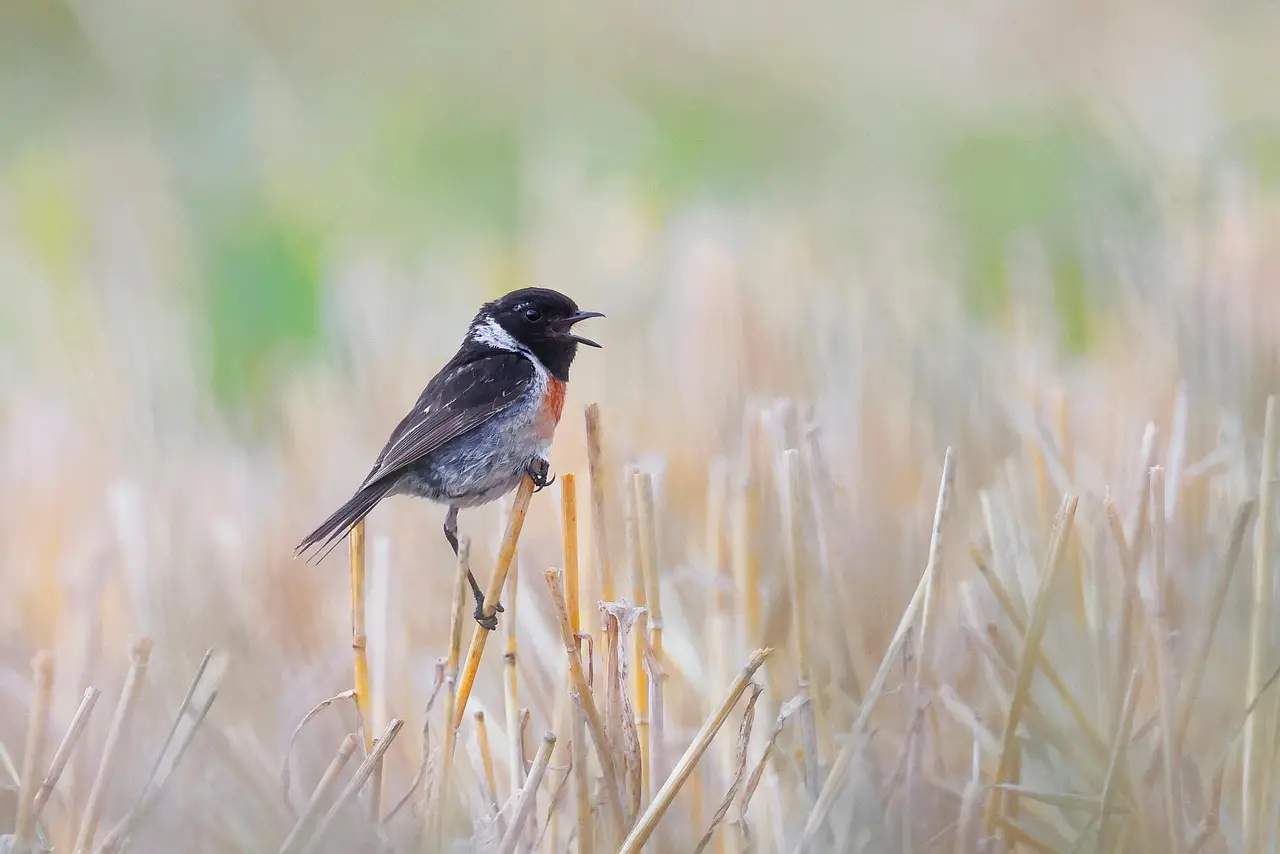
Female birds died at higher rates than males in 82 of 92 North American species, according to a new analysis of more than half a million bird-banding records, and the gap was widest among long-distance migrants. Adult females averaged a 47.9% annual survival rate versus 53.8% for males — a relative difference of 12.4% that translated into roughly 1.36 remaining years of adult life for females, against 1.61 for males.
That's the headline finding from a study published in Proceedings of the Royal Society B, led by Joanna Wu, a doctoral researcher in ecology and evolutionary biology at the University of California, Los Angeles. In humans, and in most female mammals, females outlive males. In many North American birds, the script flips.
How do you count bird lifespans?
Wu and her colleagues drew on data from the Monitoring Avian Productivity and Survivorship (MAPS) program, collected between 1992 and 2018 at 1,229 stations across the United States and Canada. The dataset covered 563,414 individually banded adult birds from 92 species. Researchers caught birds in fine mesh nets, fitted each with a numbered leg band, and recorded sex, age, weight and other traits. When a banded bird turned up again in a later year, the band identified it.
Most birds were never caught again. That's a problem, and we'll come back to it. But the team identified 22,415 individuals captured at least twice, more than six days apart, during their initial banding year — classifying these as local residents rather than birds merely passing through.
The result: females showed lower estimated annual survival than males in 82 of 92 species. The difference reached statistical significance in 35 species. And it was especially pronounced among long-distance migrants, where males were considerably more likely to survive year to year. Among birds that stay put, the gap shrank.
Why would the same journey kill more females?
The study points to the enormous physical demands of migration, combined with unequal access to food and habitat. Several clues line up:
- In some migratory species, females winter farther south than males, adding distance and risk to an already punishing trip.
- Species with rounder, less pointed wings — a shape generally tied to poorer long-distance flight — showed larger survival gaps.
- Where males carried greater fat reserves than females, the disparity was more pronounced. One reading: dominant males monopolize the best feeding territories, leaving females with less fuel.
"They can encounter bad weather, predation, or lack of food," Wu told Audubon. "It's a really physiologically stressful time during migration."
Notably, it doesn't seem to be about the eggs. You might assume that laying eggs drains females. But females from species with larger clutches or greater relative egg loads showed no consistent disadvantage.
And migration can't explain everything. Non-migratory females also tended to fare worse, and the researchers never directly measured how far individual females traveled. Genetics may play a role too. Male birds carry two matching Z chromosomes, while females have ZW — the reverse of the human XX/XY arrangement. Matching chromosomes might shield males from harmful mutations. It's a plausible idea. The team discussed it but couldn't test it directly.
What does this change for conservation?
Possibly a lot — because scientists have historically studied male birds far more than females. Males are often more colorful, conspicuous and vocal, which makes them easier to observe, and that bias can distort what we think birds need to survive.
Wu and her colleague Morgan Tingley quantified the blind spot in a separate 2026 systematic review of 1,311 published studies of bird survival. Thirty-six percent didn't mention sex at all. And among 763 studies of adult birds that did, fewer than half reported survival separately for males and females. An important biological difference, in other words, hid partly because researchers weren't looking for it.
The consequences may be concrete. A 2019 study in Biological Conservation found that only 8% of conservation plans examined for 66 North American migratory bird species accounted for differences in where males and females live.
Take the golden-winged warbler. In Central America, males generally winter in higher-elevation forests while females occupy lower ground. Between 2000 and 2016, female-dominated winter habitats lost twice as much forest as male-dominated areas. Protect mainly male territory, and you miss the habitat females actually depend on.
"It goes to show that we can't just assume that what's true for males is also true for females," Wu told Audubon.
How solid are the numbers?
Here come the caveats, and they matter. The study measures apparent survival — researchers cannot always tell a bird that died from one that permanently moved elsewhere. A female that emigrated looks, in the data, like a dead female. The study also does not establish that lower female survival has accelerated North America's bird declines.
"If the females have already successfully reproduced before they die, their shorter lives might not make much of a difference," Wu said in a statement.
But if females face greater threats before they reproduce, conservationists may need to rethink which habitats they prioritize and how they estimate whether populations will persist. Half a million records say something is off. They don't yet say exactly how much of it is death, how much is departure — or how much of the blame belongs to genes.
via zmescience.com (Source)
More from James Calloway
Show full bio
Staff writer covering regulation, policy and their impact on general science news at SciBeat.
346 articles