Plate Nº 49 · recorded November 11, 2026
Biology & EvolutionReported finding
Higher male share linked to poorer female mule deer health
After 15 years of productivity data and seven years of body-reserve tracking, Utah researchers linked higher male-to-female ratios with poorer female condition and slower mule deer population growth.
By James Calloway4 min read866 words
In brief
- The 2026 study combined 15 years of productivity data with seven years of body-reserve data.
- Higher male-to-female ratios were associated with lower female body-fat accumulation and lower population growth the following year.
- Some Utah areas recorded 50% adult female mortality after the heavy 2023 winter.
- McMillan said males are 50% larger than females and consume 50% more forage.
- The researchers proposed greater forage competition as one mechanism behind poorer female condition.
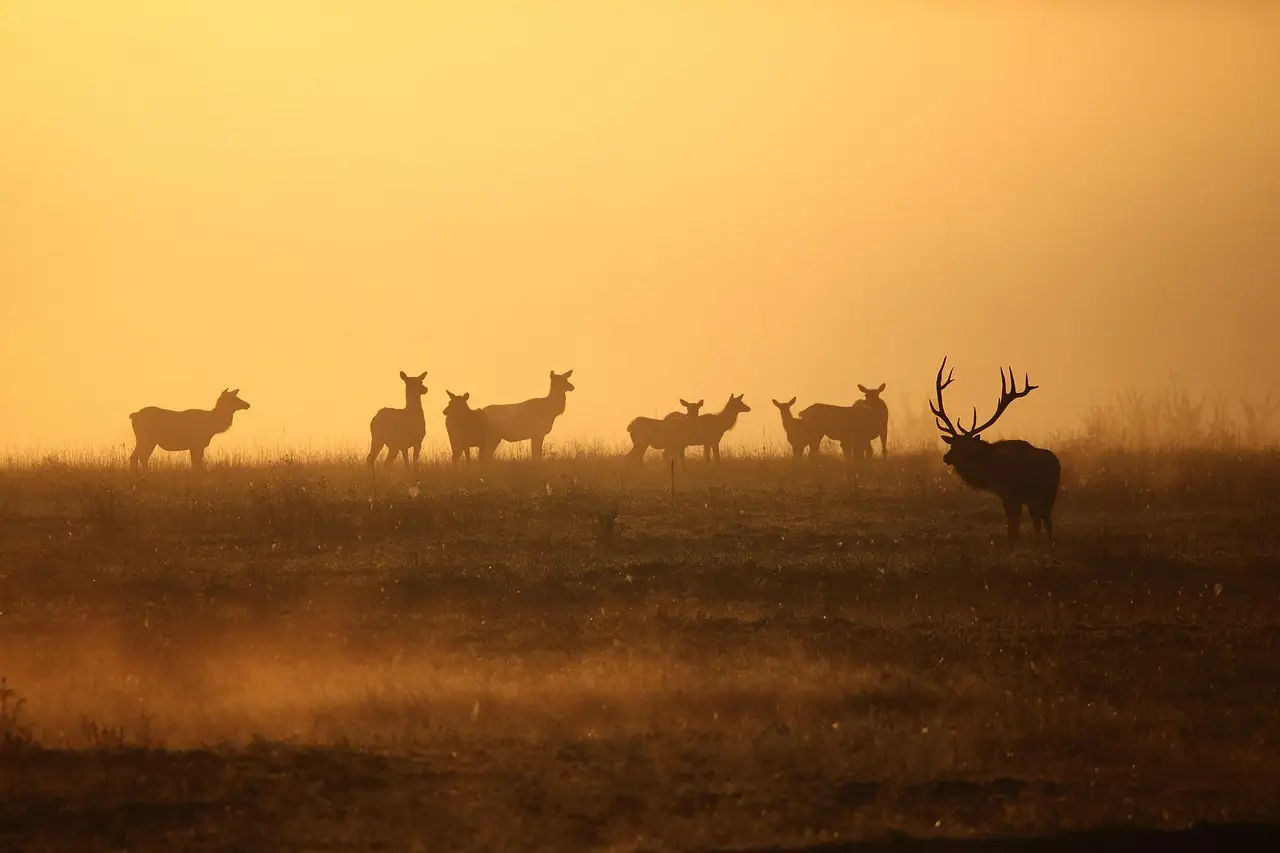
Using 15 years of mule deer productivity records and seven years of body-reserve data, a 2026 study found that a higher male-to-female ratio was associated with poorer female nutrition and slower population growth.
That association offers one possible explanation for why mule deer across western North America continued to decline even as managers tried to increase the male share of herds.
The paper, “Dams in distress: Adult sex ratio, female nutritional condition, and population dynamics in mule deer (Odocoileus hemionus),” appeared in Ecological Solutions and Evidence. BYU postdoctoral researcher Ranjana Pal led the work with professors Randy Larsen and Brock McMillan, Utah’s Division of Wildlife Resources and additional co-authors.
“More males really don’t help grow the population,” BYU plant and wildlife sciences professor Brock McMillan said. “I think this is a game changer. Agencies and the public have continually pushed to decrease male deer harvest—which increases male-to-female ratios—but this paper suggests that is exactly opposite of what we should do for the mule deer population.”
That conclusion needs testing, not victory. The study identifies an association, not proof that changing the sex ratio alone caused every decline. It also does not show that more males can never help a mule deer population.
Interest in mule deer hunting surged in the 1980s and 1990s. Management strategies shifted toward increasing the proportion of mature males, often by reducing male harvest. The change may have improved hunting conditions, yet the overall western mule deer population continued to shrink.
How the study tracked condition
The researchers combined 15 years of productivity data with seven years of body-reserve data, meaning measurements of the fat wild animals carry between seasons, to quantify how reduced male harvest affected free-ranging mule deer.
At the start of each winter, the team flew a helicopter over female deer, captured them with nets, recorded body mass, size, rump fat and other measurements, then released them.
Females accumulated less body fat in areas managed for high male-to-female ratios. In the following year, those areas also showed lower female population growth.
Body fat is not a decorative measure. It provides energy for winter survival and reproduction, and poor female condition can endanger both a female and her fawns.
Why more males could mean less forage
Female mule deer face heavy summer and fall demands: producing milk for fawns, mating and storing fat for winter survival and reproduction. The authors suggest that more males can intensify competition for food, or forage, during those months, even when total deer density remains constant.
In McMillan’s explanation, males are 50% larger than females and therefore consume 50% more forage. He said a female’s fat reserves affect her chance of surviving any winter; a skinny female can die, especially in strongly temperate regions.
That makes forage competition a plausible mechanism, not a proven step in the chain. The proposed link still needs direct testing across landscapes with different food supplies and winter conditions.
Some Utah areas also saw 50% mortality among adult females after the heavy 2023 winter. The data additionally suggest that poorer female health may connect with more aggressive competition among males during mating and with evolving social interactions among deer. Neither the winter deaths nor those behavioral links prove that a high male-to-female ratio caused them.
What was overlooked?
“Females have long been considered the primary drivers of population growth while the role of males has generally been overlooked,” Larsen and colleagues wrote. “The biological consequences of the strategy to increase male proportions may involve demographic trade-offs that do not translate into long-term improvements.”
Here, a demographic trade-off means a gain in one measure can bring a loss elsewhere. Increasing the number of males may produce attractive hunting ratios while leaving females, fawns and later population growth under greater strain.
The researchers’ warning also reaches the next generation. Males born to females in poor nutritional condition may experience lifelong reduced growth and impaired antler development, potentially hurting hunters as well as the population.
McMillan called the male-harvest implication counterintuitive: harvesting more animals can sometimes lead to better populations, at least according to the data. He said the research may explain part of the mule deer decline seen over the past 30 years.
What does this change for mule deer management?
The immediate change is a serious challenge to a decades-old assumption: that protecting more males and harvesting fewer of them will reliably increase mule deer numbers. The study instead directs attention toward female nutrition and the demographic costs of a high male-to-female ratio.
It does not establish an optimal harvest ratio, and the findings do not amount to a universal policy switch. Managers still need local evidence about female condition, food supply, mortality and herd structure before changing rules.
For hunters, the practical warning is simple: a stronger buck-to-doe ratio may not mean a healthier herd. Poorly nourished females may produce sons with slower growth and impaired antler development.
The study appeared as Ranjana Pal et al., “Dams in distress,” in Ecological Solutions and Evidence (2026). Its DOI is 10.1002/2688-8319.70353.
via phys.org/rss-feed/ (Source)
More from James Calloway
Show full bio
Staff writer covering regulation, policy and their impact on general science news at SciBeat.
346 articles
Nearby plates
- Half a Million Bird Records Show Females Dying Younger
- Frozen sperm produces first embryos in endangered Okinawa rail
- Roads and recreation cut wolverine numbers in Canadian mountains
- Two Finland eagle populations grew 9% a year — but differently
- Abandoned for Over a Decade, Farm Field Blooms with Thousands of Orchids