Plate Nº 24 · recorded November 17, 2026
Biology & EvolutionReported finding
Harbor Seal Pups Expose Mercury's Hidden Neurological Damage
A 26-part, 12-minute neurological exam for stranded harbor seal pups linked prenatal mercury exposure to impaired movement and touch response, with implications for humans sharing the same fish.
By Marcus Bennett4 min read899 words
In brief
- Researchers developed a 26-part neurological exam for harbor seal pups that takes under 12 minutes to complete.
- The exam was validated on 45 stranded harbor seal pups at The Marine Mammal Center in Sausalito over two years.
- Prenatal mercury exposure was associated with altered touch response, impaired movement and longer rehabilitation.
- Steller sea lion pups from Alaska's western Aleutian Islands showed elevated mercury, PCBs and DDT.
- The research follows a One Health approach linking animal and human exposure through shared marine food webs.
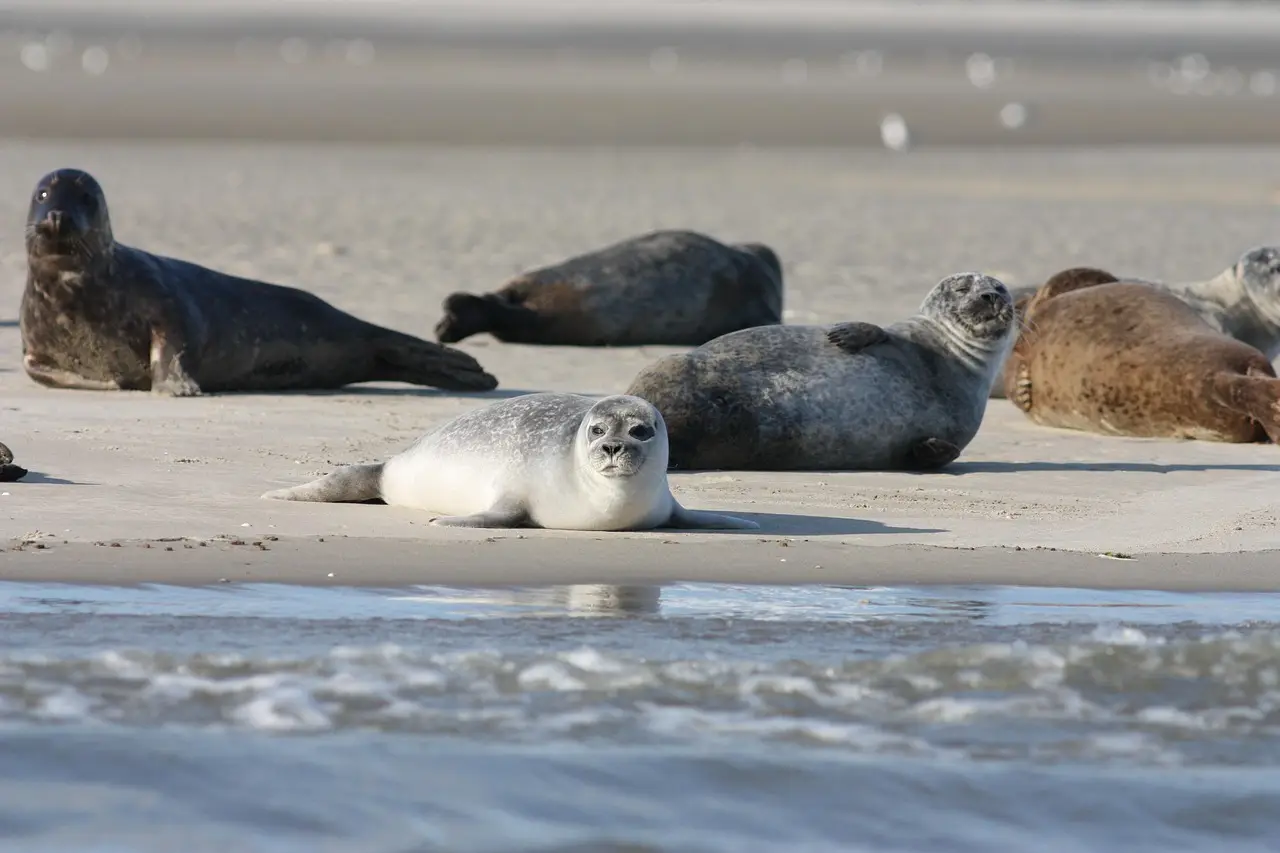
A 26-part neurological exam, completed in under 12 minutes, has given veterinarians the first standardized tool for detecting brain and nerve dysfunction in harbor seal pups — and researchers have already used it to link mercury exposure before birth to abnormal touch responses, impaired movement and longer rehabilitation stays.
The work, led by veterinary toxicologist Dr. Todd O'Hara of the Texas A&M College of Veterinary Medicine and Biomedical Sciences, marks a shift in how scientists study contaminated marine mammals: from measuring what pollutants animals carry to measuring whether those pollutants actually impair them.
Why seal pups carry the strongest signal
Mercury biomagnifies — it becomes more concentrated as it moves from prey to predator through marine food webs. Fish-eating marine mammals along the Pacific Coast of North America therefore encounter elevated levels, and their pups can inherit that burden. Contaminants pass from mother to offspring during gestation and nursing, so young animals reveal exposures that begin at the earliest stages of life.
One study involving O'Hara found that Steller sea lion pups from Alaska's western Aleutian Islands carried higher concentrations of mercury and persistent organic pollutants — including PCBs and the pesticide DDT — than adult females or Steller sea lions from other locations. PCBs and DDT have been banned in the United States for decades, but they break down slowly and accumulate in animal tissue over time.
A separate study found that mercury and other element levels in pups varied by location, likely reflecting differences in their mothers' diets.
"Differences in ocean currents and environmental conditions can shape local food webs and prey composition," said Dr. Daniela A. Murillo Cisneros, a postdoctoral fellow at Centro de Investigaciones Biológicas del Noroeste S.C. in Mexico. "These regional food-web differences can influence maternal exposure and, in turn, the exposure their pups receive."
How do you examine a seal's nervous system?
A neurological exam built for a dog, cat or horse does not translate to a pinniped — the fin-footed group that includes seals, sea lions and walruses. Their flippers, reduced external ears, blubber layers and swimming-adapted bodies demand different tests.
"As the harbor seals are wild animals and primarily aquatic, we had to be creative and develop new ways to assess their neurological function," said Dr. Cara Field, director of conservation medicine at The Marine Mammal Center in Sausalito, California. "Fish-head-on-a-string was a useful stimulus and, apparently, quite tasty."
Working with the center, veterinary neurologist Dr. Christine Thomson and colleagues evaluated 45 stranded harbor seal pups admitted over two years. The result: 26 assessments tailored to pinniped anatomy and behavior, deliverable in less than 12 minutes by any clinician.
The exam helps veterinarians localize where in the nervous system abnormalities occur, guide prognosis, diagnosis and treatment, and distinguish toxic exposure from other conditions. During the study, some pups with abnormal neurological signs turned out to have an ear infection, a severe congenital brain abnormality or malnutrition instead.
"By developing a bespoke neurological examination protocol, we can identify pups with neurological dysfunction and pursue further diagnostic tests to identify the cause, such as intoxication, meningitis or developmental problems," Thomson said. "With a diagnosis, appropriate treatment and rehabilitation can be undertaken."
What did mercury exposure actually change?
Detecting a contaminant does not prove it is harming an animal. The clinical assessments closed that gap. In research involving Dr. Marianne Lian, a former doctoral student of O'Hara's, prenatal mercury exposure was associated with differences in how pups responded to touch, how they moved, and how long they needed rehabilitation.
"Measuring these adverse effects can be especially difficult in a wild animal," Lian said. "These findings supported that fetal exposure to mercury can put wild animals at risk for neurodevelopmental abnormalities."
Harbor seals offered a practical advantage: detailed neurological exams were difficult to conduct on Steller sea lion pups in remote Alaskan rookeries. The findings may extend to other pinnipeds, including walruses.
What does this mean for rehabilitation — and for people?
Subtle impairment carries real stakes for a released animal that must swim, navigate and forage to survive.
"An animal may appear healthy while still having subtle neurological abnormalities that could affect its ability to survive after release," O'Hara said. "Being able to identify those effects gives rehabilitation organizations, such as the Marine Mammal Center, a more complete picture of the animal's health and whether it is ready to successfully return to the wild."
Because marine mammals and people share marine food resources, the research reflects a One Health approach — the recognition that animal, human and environmental health are interconnected. Events such as El Niño can shift prey abundance and distribution, changing what mammals eat and how much mercury their offspring encounter before birth.
"By studying contaminants and biotoxins across those shared food webs, we can better understand exposures that may have implications for both animal and human health, including important subtle neurologic impacts on people," O'Hara said.
The team will next study California sea lions in Mexico and continue community-based participatory research on harbor seals in Alaska, focusing on mercury and other trace elements. Other Texas A&M contributors include Dr. Jill Hiney, Dr. Carlos Rosado Berrios and retired faculty member Dr. Robert Taylor.
The findings are preliminary associations, not proof of causation, but they give clinicians a reusable yardstick and researchers a bridge from contamination to consequence.
via phys.org/rss-feed/ (Source)
More from Marcus Bennett
Show full bio
News editor covering regulation, policy and their impact on general science news at SciBeat.
493 articles
Nearby plates
- California rodenticide rules cut exposure in young owls by more than half
- Why the Same Chemical Harms One Species and Spares Another
- Dive Depth, Not Duration, Sets Sea Lions' Recovery Clock
- Ocean acidification linked to declines in a coastal food chain
- Predator 'Alarm Scents' Predict Toxic Algal Blooms Seven Weeks Early