Recorded November 25, 2026
Space & AstronomyReported finding
Hera Spacecraft Captures First Deep-Space Solar Eclipse at Asteroid Didymos
ESA's Hera mission photographed Dimorphos casting a solar eclipse shadow on asteroid Didymos from 1 km away, ahead of its first close-up image reveal on 25 November.
By Nathan Brooks3 min read578 words
In brief
- ESA's Hera spacecraft captured Dimorphos casting an eclipse shadow on Didymos from about 1 km (0.6 miles) away.
- Dimorphos is 151 m across, roughly the size of the Great Pyramid of Giza; Didymos is 730 m, a bit smaller than the Burj Khalifa.
- Gravity on Didymos is about 40,000 times weaker than Earth's; on Dimorphos, about 200,000 times weaker.
- Hera's first close-up images of the DART-impacted Dimorphos will be revealed in a livestream on 25 November at 19:45 CET.
- NASA's DART spacecraft impacted Dimorphos in 2022 to shift its orbit — Hera is investigating the aftermath.
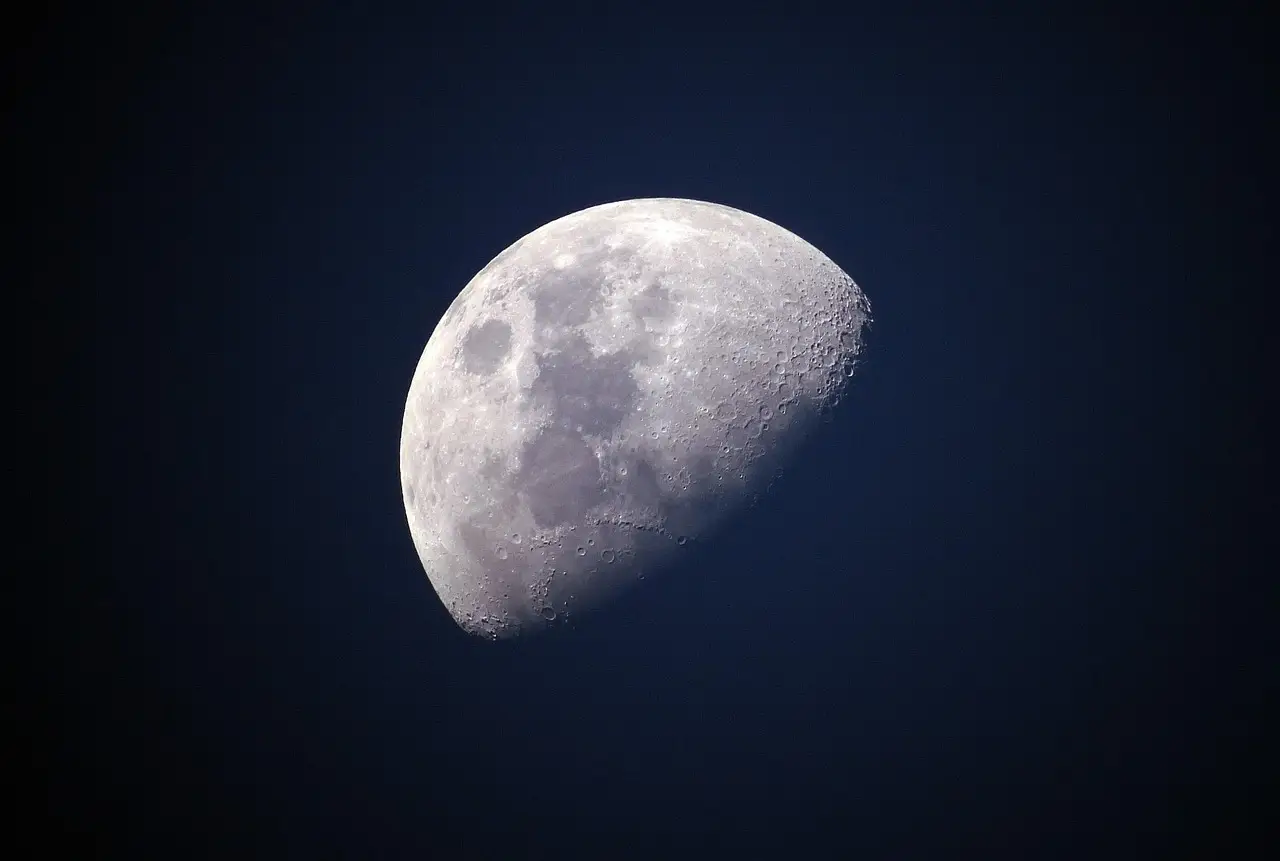
A spacecraft has photographed a solar eclipse in deep space for planetary defense, and the numbers behind it are startling. The European Space Agency's Hera mission captured the 151-meter moonlet Dimorphos casting its shadow across its parent asteroid Didymos, blanking out the sun for the stretch of rocky surface underneath.
The image marks one of Hera's early views of a binary asteroid system that NASA deliberately altered in 2022. On Wednesday 25 November, the Hera team will unveil the mission's first close-up images of Dimorphos on a livestream starting 19:45 CET, via ESA WebTV or the ESA YouTube channel.
What makes this eclipse possible?
Dimorphos orbits just about a kilometer — 0.6 miles — from Didymos. That extreme proximity is why its shadow covers a visible patch of the parent body. The two bodies follow the same celestial mechanics as Earth and the moon, just at a dramatically smaller scale.
Patrick Michel, Hera principal investigator and director of research at CNRS / Observatoire de la Côte d'Azur, puts it in plain terms. "Eclipses just like last summer's total solar eclipse occur on asteroids as well, when they have a small moon like this one," he said.
The same physics applies. The scale doesn't.
How small are these asteroids, really?
To translate the numbers, ESA offers two familiar comparisons. Dimorphos, at 151 meters (495 feet) across, is roughly the size of the Great Pyramid of Giza. Didymos, at 730 meters (2,395 feet) in diameter, is slightly smaller than Dubai's Burj Khalifa skyscraper.
Gravity on these bodies is almost nonexistent. Didymos pulls with about 40,000 times weaker gravity than Earth's. Dimorphos is weaker still — roughly 200,000 times feebler than what keeps you anchored to the ground.
Michel imagines the view with a caveat. "In principle someone could be sitting on Didymos and have the same kind of eclipse experience," he said, "although in practice sitting there would be very difficult because its gravity is so low and it is spinning very fast."
Which camera took the picture?
Hera's monochrome Asteroid Framing Camera acquired the image, and it pulls double duty. ESA uses it both for navigation and for science imaging, meaning the same hardware steers the spacecraft and documents the asteroids.
Why is Hera there at all?
The mission is a crash-scene investigation in space. In 2022, NASA's DART spacecraft deliberately impacted Dimorphos to shift its orbit around Didymos — humanity's first full-scale test of deflecting an asteroid.
Hera has now arrived to gather close-up data on the aftermath. Its goal: turn that one-off experiment into a well-understood, and potentially repeatable, planetary defense technique. Engineers can't reliably scale up a deflection method they've only measured from afar, so Hera's detailed survey of the impact site is the verification step.
What happens next?
The 25 November livestream is the milestone to watch. The Hera team will share the first close-up images of Dimorphos since DART reshaped it, giving the public the sharpest look yet at a human-altered solar system object.
For now, the eclipse image is a reminder of how familiar physics plays out in unfamiliar places. A moonlet the size of an Egyptian pyramid, circling a spinning rock weaker-gravity than any human has stood on, still casts a shadow and still blocks the sun — just as our own moon does over Earth every few years.
via phys.org/rss-feed/ (Source)
More from Nathan Brooks
Show full bio
Market editor covering companies, deals and strategy in general science news at SciBeat.
600 articles
Nearby plates
- Hera Probe Beams Home First-Ever Shadow of One Asteroid on Another
- Hera Sees Two Asteroids for the First Time — and a Puzzle Worth Billions
- Europe's Hera Probe Arrives at Dimorphos for First Close-Up of DART Crash Site
- Hera's Infrared Camera Sees the Asteroid DART Hit Hiding in Shadow
- Europe's Hera Spacecraft Arrives at Asteroid Pair Hit by NASA