Recorded November 20, 2026
PhysicsReported finding
Hollow 'PAC-MAN' Capsules Filter Particles Using Turbulence Alone
Hollow single-hole capsules capture or expel particles using only turbulence and geometry, researchers report in Science, opening paths to water cleanup and drug delivery.
By Priya Raman3 min read659 words
In brief
- Capsules with a single opening selectively filter particles using turbulence alone, no chemistry, published in Science (2026), DOI 10.1126/science.aee9889.
- The effect worked at three scales: 1 centimeter, 1 millimeter and 5 micrometers — the smallest smaller than a red blood cell.
- Changing a centimeter shell's hole size by less than 10 percent switched it from collecting particles to rejecting them.
- Tuned shells can release cargo at rates ranging from seconds to years, suggesting drug delivery uses.
- Research was co-led by Stefano Sacanna (NYU) and William Irvine (University of Chicago).
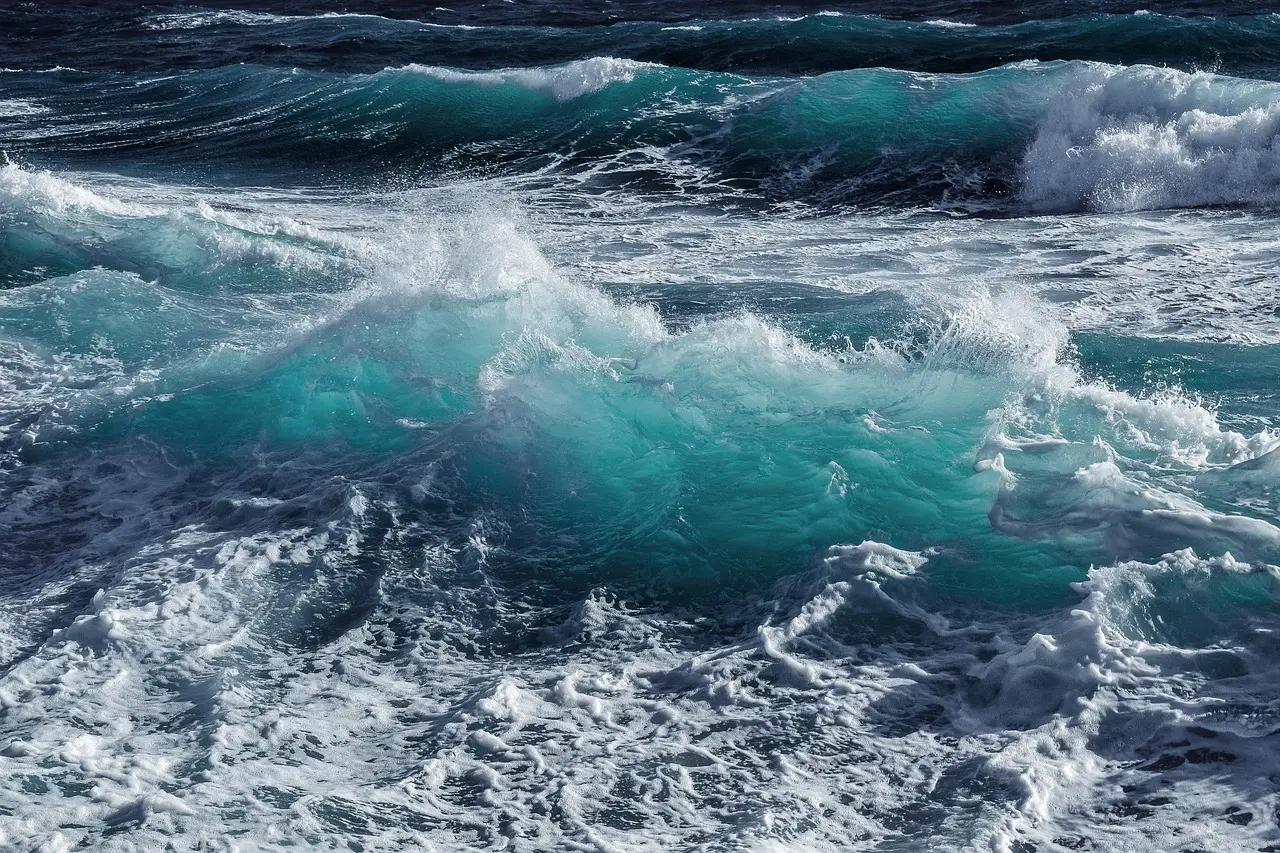
Hollow capsules with a single opening can selectively capture or expel particles from turbulent water using nothing but geometry and the chaos of the flow itself, researchers report in the journal Science. The work, co-led by New York University chemist Stefano Sacanna and University of Chicago physicist William Irvine, suggests a new route to water filtration and targeted drug delivery that spends no energy controlling the fluid.
The team fabricated hollow polymer capsules, each pierced by one hole, and submerged them in stirred or shaken liquid. Turbulence (the irregular, chaotic motion of a fluid, seen in everything from cream swirling into coffee to river rapids) raged outside, but the capsule walls shielded the interior, forming what the researchers call a "turbulence shelter." Only swirls smaller than the hole can enter, so the interior stays calm while the exterior churns.
That asymmetry turned the opening into a selective gate.
"Inside the capsule, it's fairly calm. But outside, the environment is raging," Irvine explained. "This creates a gradient, so particles flow, and functions emerge."
The result resembles a video game. Depending on how well a particle fits the hole, a shell either gobbles particles up until it is packed full or keeps them out almost completely. "Because the hungry ones look like little PAC-MANs, we call this the PAC-MAN effect," Sacanna said.
How does the filtering actually work?
Not like a sieve, Sacanna stressed. Particles small enough to slip through the hole can still be excluded, while ones that barely fit get packed in. The capsule reshapes the turbulence at its opening, and that reshaped flow decides which particles end up inside. No chemical attraction is involved.
"Turbulence is usually thought of as pure chaos: it mixes, scatters and wastes energy. We asked whether that chaos could be put to work," Sacanna said.
Does it work at every scale?
The researchers tested hollow capsules at three sizes:
- 1 centimeter, printed on specialized 3D printers at the University of Chicago
- 1 millimeter, also 3D-printed in Chicago
- 5 micrometers — smaller than a red blood cell — synthesized chemically in Sacanna's laboratory
All three took in or dispensed particles according to the size of the capsule's hole, and the team could tune each system by adjusting the opening's size and the shell's thickness.
"This PAC-MAN effect manifests in all three systems, spanning from microscopic to macroscopic scales — the same simple design works throughout," Sacanna said.
The tuning proved remarkably sensitive. With centimeter-sized shells, changing the hole size by less than 10 percent was enough to flip a shell from collecting particles to rejecting them. The microscopic shells could distinguish particles by size or density, taking in only certain ones.
What could it be used for?
The capsules' ability to accumulate particles or release them on demand points toward two applications. In environmental cleanup, shells tuned to capture specific contaminants could pull them from water. In medicine, capsules tuned to release their cargo at rates ranging from seconds to years could serve as drug delivery vehicles.
The broader lesson, the researchers said, concerns energy. A bird must flap its wings; a fish must move its tail. Here, engineering a specific particle shape lets ambient energy already flowing around the capsule do the work.
"This gives us a new way of thinking about filtration: instead of spending energy to control a flow, you let the energy already present in turbulence do the work," Sacanna said.
"You're essentially getting order out of chaos," Irvine added.
The findings are preliminary laboratory demonstrations rather than commercial filtration devices, and the path from a 5-micrometer test capsule to a regulated drug delivery system remains long. Still, the study shows that one simple design principle can operate across scales differing by a factor of two thousand.
Matteo Sabato et al., "Quiet within, chaos without: Turbulence shelters drive selective particle capture and release," Science (2026). DOI: 10.1126/science.aee9889.
via phys.org/rss-feed/ (Source)
More from Priya Raman
Show full bio
Senior reporter covering people, launches and day-to-day practice in general science news at SciBeat.
549 articles
Nearby plates
- UCLA Adds a Lid to Nanovials, Unlocking Longer Cell Experiments
- Motorless Biodegradable Bubble Flees Lactic Acid, Study Shows
- Noise, Not Motors: How Pig Hearts Reveal a New Way to Close Soft Valves
- Glowing Dyes Show Nuclear Pores Run Like Liquids, Not Gummy Bears
- Nuclear Pores Stay Liquid in Living Cells, Solving DNA Gateway Mystery