Recorded November 25, 2026
Biology & EvolutionReported finding
Human Umbilical Cord Doubles as a Fetal Cooling System, Study Finds
A survey of 130 mammal species suggests the human umbilical cord's rare coiled, three-vessel design helps transfer fetal heat to the mother — with possible implications for heat-linked preterm birth risk.
By Elena Vasquez4 min read855 words
In brief
- Researchers analyzed umbilical cord anatomy from 130 mammal species, the largest study of its kind, published in Science Advances (2026).
- Humans combine a three-vessel, tightly coiled cord with loss of the allantoic duct — a combination found in only a tiny fraction of mammals.
- A major international review linked heat waves to roughly a 26% increase in odds of premature birth.
- Models predict cord length, blood flow and coiling all influence fetal heat transfer to the mother, with more efficient cooling in larger mammals.
- Mammals with greater maternal investment tended to have four-vessel cords; lower-investment species tended to have two.
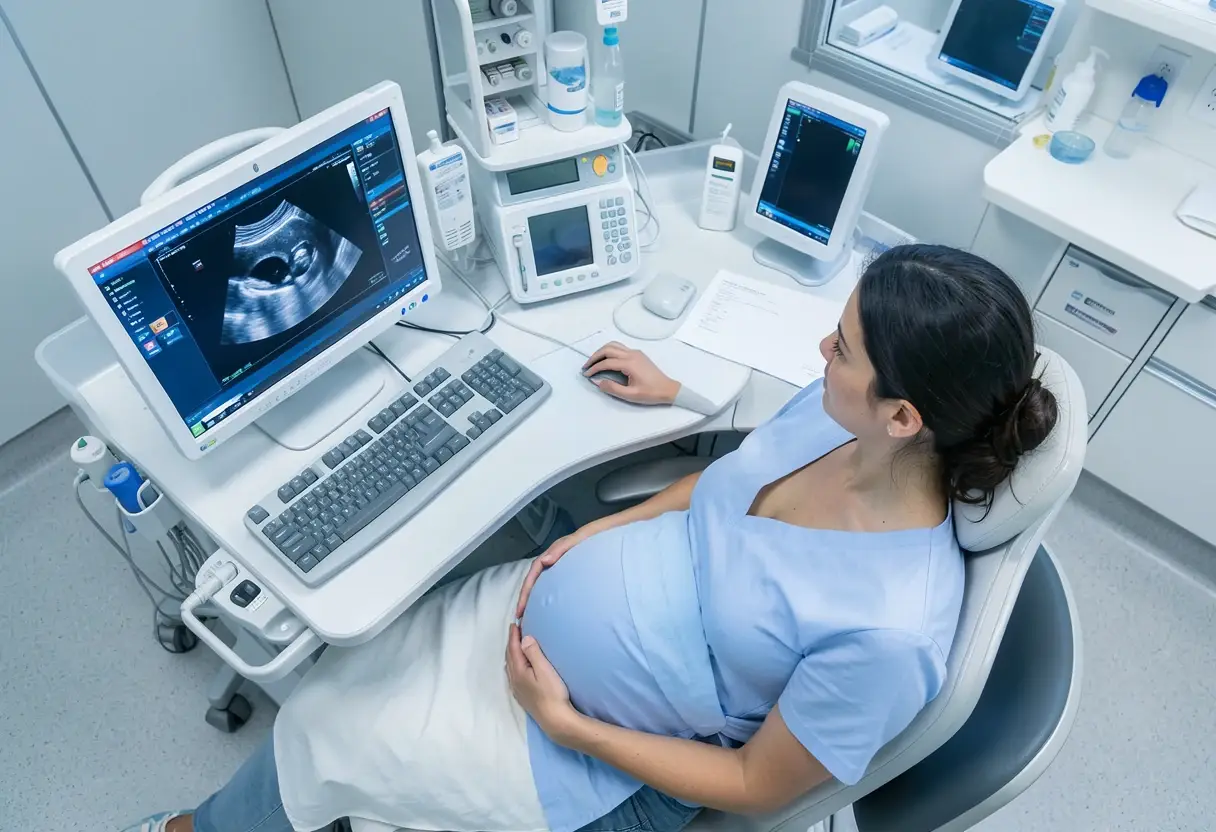
The human umbilical cord, with its rare three-vessel, tightly coiled design, may act as a heat-transfer system that helps unborn babies stay cool, according to the largest anatomical survey of its kind, published in Science Advances by a team led by scientists at the University of Manchester and the University of Southampton.
The study analyzed existing anatomical data on umbilical cords from 130 mammal species. Its verdict: the cord linking mother and fetus has evolved in strikingly different ways across the animal kingdom, and the human version sits at an unusual corner of that map.
The takeaway: a structure most people write off as a simple pipeline may quietly regulate fetal temperature.
What makes the human cord an evolutionary rarity?
The researchers first reconstructed the anatomy of the earliest placental mammals. That ancestor, they concluded, most likely had an uncoiled cord containing three blood vessels plus an allantoic duct — a temporary tube connecting the fetal bladder to the allantoic sac.
Humans kept the three-vessel arrangement but evolved a tightly coiled cord and lost the duct. That combination appears in only a tiny fraction of mammal species. Most mammals still retain the duct within the cord, and the reasons for keeping or losing it remain unknown.
The takeaway: humans hold onto one ancient feature while abandoning another — a combination evolution rarely produces.
How could a cord cool a fetus?
A growing fetus generates heat but cannot cool itself directly. Instead, excess heat passes through the placenta into the mother's blood, effectively making the mother the baby's cooling system.
Using data from advanced imaging and mathematical modeling, the team tested how different cord structures affect the transfer of oxygen and heat between mother and baby. Two results stand out:
- The models predict little oxygen is lost through exchange between neighboring vessels across the cord structures studied, protecting oxygen supply before birth.
- Cord length, blood flow and the degree of coiling all influence how effectively excess fetal heat moves through the placenta into the mother — with more efficient cooling predicted in larger mammals.
The researchers argue the umbilical cord may play a much bigger role in temperature regulation than previously realized.
The takeaway: geometry matters — the cord's shape can speed or slow the escape of fetal heat.
Why the 'triple helix' matters
Inside the cord, blood vessels tend to favor geometric patterns that minimize heat being unintentionally exchanged between the umbilical arteries and the vein, the team found. That arrangement keeps heat moving away from the fetus.
In humans, these vessels form a striking "triple helix" that may help protect the heat exchange between fetus and mother.
Lead author Dr. Igor Chernyavsky of the University of Manchester said: "People tend to think of the umbilical cord simply as a pipeline delivering oxygen and nutrients to the developing baby, but our findings suggest it may also be a sophisticated and critically important heat-transfer system in placental mammals."
Chernyavsky added: "Our study offers a new perspective on the umbilical cord, one of pregnancy's most familiar but least understood vascular systems."
The takeaway: the cord's coiled architecture may be a working radiator, not just plumbing.
What does this mean in a warming world?
The stakes extend beyond anatomy. Previous research has linked heat waves to higher odds of premature birth, with a major international review reporting an increase of about 26%.
The new study explores how cord structure could influence a fetus's ability to shed heat, offering a possible avenue for understanding vulnerability to rising temperatures.
Co-lead author professor Rohan Lewis of the University of Southampton said: "In a warming world this insight into how cord structure influences fetal cooling may be important for health and successful reproduction in humans and other animals."
The findings could also help clinicians understand healthy pregnancies as well as complications involving unusually long, short, under-coiled or over-coiled cords, and may offer new insight into how rising temperatures and maternal fever affect unborn babies.
The takeaway: if cords shape heat loss, cord abnormalities could explain some heat-related pregnancy risks.
Do vessel counts track reproductive strategy?
Across the 130 species studied, the team spotted a trade-off pattern. Mammals with greater maternal investment in pregnancy — measured by the combined birth weight of their newborns — tended to have four-vessel cords. Species with lower investment tended to have two.
Lewis said: "Evolution works through trade-offs. The association between vessel number and reproductive strategy raises the possibility that umbilical cords have evolved to balance the demands of supporting the developing fetus with the available resources. The human three-vessel cord may be one solution to that balance."
The findings are preliminary in one sense — the heat-transfer results come from mathematical models rather than direct measurement, and the reasons for retaining or losing the allantoic duct remain open questions.
The takeaway: three vessels may be evolution's middle setting — enough support without over-spending maternal resources.
Publication details
The study appears as Tianran Wan et al., "Umbilical cord structure shapes feto-maternal heat transfer across mammals," Science Advances (2026). DOI: 10.1126/sciadv.aeg5645.
via phys.org/rss-feed/ (Source)
More from Elena Vasquez
Show full bio
Correspondent covering money, funding and market shifts around general science news at SciBeat.
634 articles
Nearby plates
- Why Snake Embryos Twist Into Right-Handed Spirals: A Gut Explains It
- Placental Fish Show Mother-Baby Gene Conflict Seen Before Only in Mammals
- Chameleon Embryos Share a Developmental Trick Once Thought Unique to Mammals
- 120-Million-Year-Old Mammal Fossil Had Three Sets of Teeth
- The Womb Itself Tells a Mouse Embryo Which End Is Head