Plate Nº 35 · recorded November 14, 2026
Biology & EvolutionReported finding
Placental Fish Show Mother-Baby Gene Conflict Seen Before Only in Mammals
UC Riverside biologists found genomic imprinting — the mother-baby gene battle over nutrients — in placental fish, the first evidence outside mammals that pregnancy itself drives the conflict.
By James Calloway3 min read692 words
In brief
- Genomic imprinting found in placental fish for the first time outside mammals, published in Science Advances (2026), DOI 10.1126/sciadv.aeh5487.
- Fish and mammals last shared a common ancestor hundreds of millions of years ago, before either evolved a placenta.
- Researchers bred fish lines through 10 to 12 generations of brother-sister matings to distinguish maternal and paternal genes.
- A developing baby shares on average only half its genes with a full sibling, fewer with a half-sibling.
- Errors in imprinting are associated with human developmental disorders.
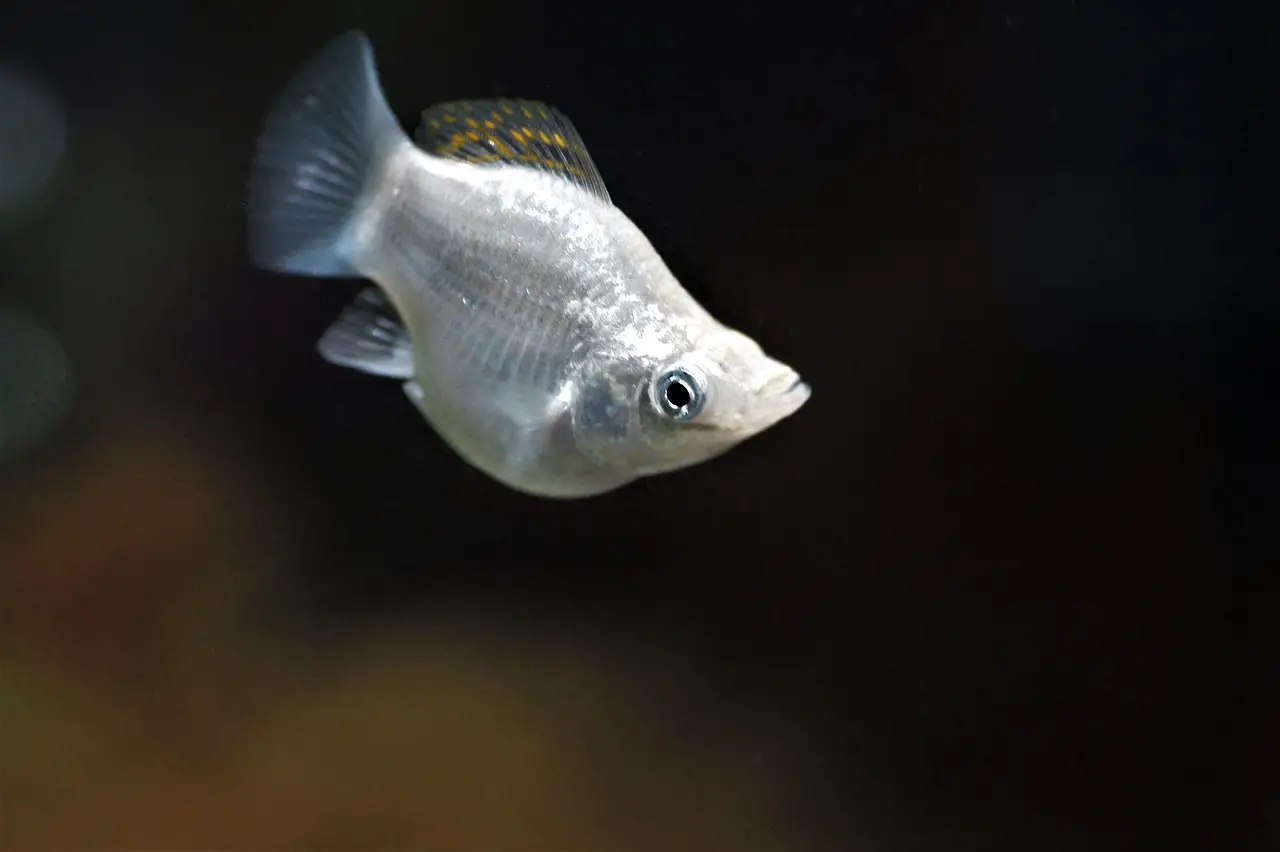
For the first time outside mammals, scientists have found genetic evidence that unborn babies and their mothers fight over nutrients — and the battleground is a fish. The study, led by UC Riverside evolutionary biologist David Reznick and published in Science Advances, detected the imprinting signatures in placental fish whose last common ancestor with mammals lived hundreds of millions of years ago.
The finding suggests pregnancy itself, not something special about mammals, creates the conflict. "We like to think there's something special about mammals," Reznick said. "But it turns out these aren't such special features."
What did the researchers actually find?
The team documented genomic imprinting — a phenomenon where only one parent's copy of certain genes is active while the other sits switched off. In mammals, some of these genes influence how much nourishment a fetus extracts, with paternal copies sometimes pushing growth and maternal copies restraining it.
In fish from the family that includes guppies and mollies — live-bearers, some of which evolved placentas that feed embryos throughout pregnancy — the researchers found patterns of gene activity consistent with exactly this maternal-paternal tug-of-war.
Fish and mammals evolved their placentas independently, millions of years apart. Yet both groups appear to use some of the same groups of genes to move nutrients into cells. Nature, it seems, arrived at similar solutions twice.
Why would a mother and baby compete?
Here's the logic, and it's colder than it sounds. A mother's evolutionary success depends on her current baby and on future offspring. A developing baby shares only about half its genes with a full sibling, and fewer still with a half-sibling from a different father. So genes can favor a fetus demanding more nourishment even at a cost to its mother's future reproduction.
"What's in the best interest of the baby to get from its mother is more than what's in the mother's best interest to give," Reznick said.
Reznick labels the growth-promoting genes "give me more" genes and the restraining ones "you can't have it" genes. Neither copy is automatically dominant. But if the mother's copy of a "give me more" gene is silenced, the father's copy rules. Which parent's copy stays active depends on the particular gene.
The stakes aren't trivial. Extra nourishment for one offspring costs the mother energy, potentially delaying her next pregnancy or reducing her lifetime number of young.
How do you test this in a fish?
Reznick bred separate family lines through 10 to 12 generations of brother-sister matings, then crossed fish from different lines. That inbreeding made it possible to tell which genes came from which parent in the offspring.
Collaborators at Xu Wang's comparative genomics lab at Auburn University's College of Veterinary Medicine then measured genetic activity in the fishes' placental tissue, hunting for cases where one parent's gene copy out-acted the other's. They found them.
Imprinting was first discovered in mammals through mouse embryo experiments, and later in flowering plants — which, like animals, nourish offspring after fertilization.
What does this change for human medicine?
Possibly something, eventually. Errors in imprinting are associated with human developmental disorders, and understanding why certain genes switch on or off may clarify how fetal growth is controlled. That's the promise. The caveat: this study shows patterns in fish tissue, not a mechanism mapped to a human condition. Any medical payoff remains speculative.
A skeptic converts
Reznick himself is the story's best evidence that the idea earned its place. When he first encountered the mother-fetus conflict theory years ago, he wanted nothing to do with it. "I thought it was the silliest thing I'd ever heard," he said. "I rejected the idea out of hand."
His own data changed his mind. The study, by Ying Zhang and colleagues, suggests imprinting evolved independently wherever mothers and developing young stayed connected through a placenta — a result that demotes mammals from exception to example.
The paper: Ying Zhang et al., "Independent origin of genomic imprinting in placental fish," Science Advances (2026). DOI: 10.1126/sciadv.aeh5487.
via phys.org/rss-feed/ (Source)
More from James Calloway
Show full bio
Staff writer covering regulation, policy and their impact on general science news at SciBeat.
377 articles
Nearby plates
- Healthy Calves Born Without 'Essential' Pregnancy Protein
- Mouse Embryo Films Reveal a Second Cellular Source for the Placenta
- 10,000 Years of Sheep Breeding Left a Mark in Gene Regulation
- Humpback Whale Mother Stayed With Dead Calf for Days, Study Finds
- Chameleon Embryos Share a Developmental Trick Once Thought Unique to Mammals