Plate Nº 72 · recorded October 9, 2026
Biology & EvolutionReported finding
120-Million-Year-Old Mammal Fossil Had Three Sets of Teeth
A 120-million-year-old fossil from China shows a third generation of teeth and jaw-linked ear bones, hinting early mammal evolution was more experimental than assumed.
By James Calloway3 min read613 words
In brief
- A fossil mammal roughly 120 million years old shows evidence of three generations of teeth.
- The specimen, Dongoconodon platycauda, was recovered in 2016 from the Jiufotang Formation in Liaoning, China.
- Researchers compared its leg bone proportions against a database of 124 living mammal species to reconstruct its movement.
- The study, led by Shundong Bi of Yunnan University, was published in Nature Communications on October 8, 2026.
- CT scans revealed ossified Meckel's cartilage linking the lower jaw to the middle ear bones, unlike in modern mammals.
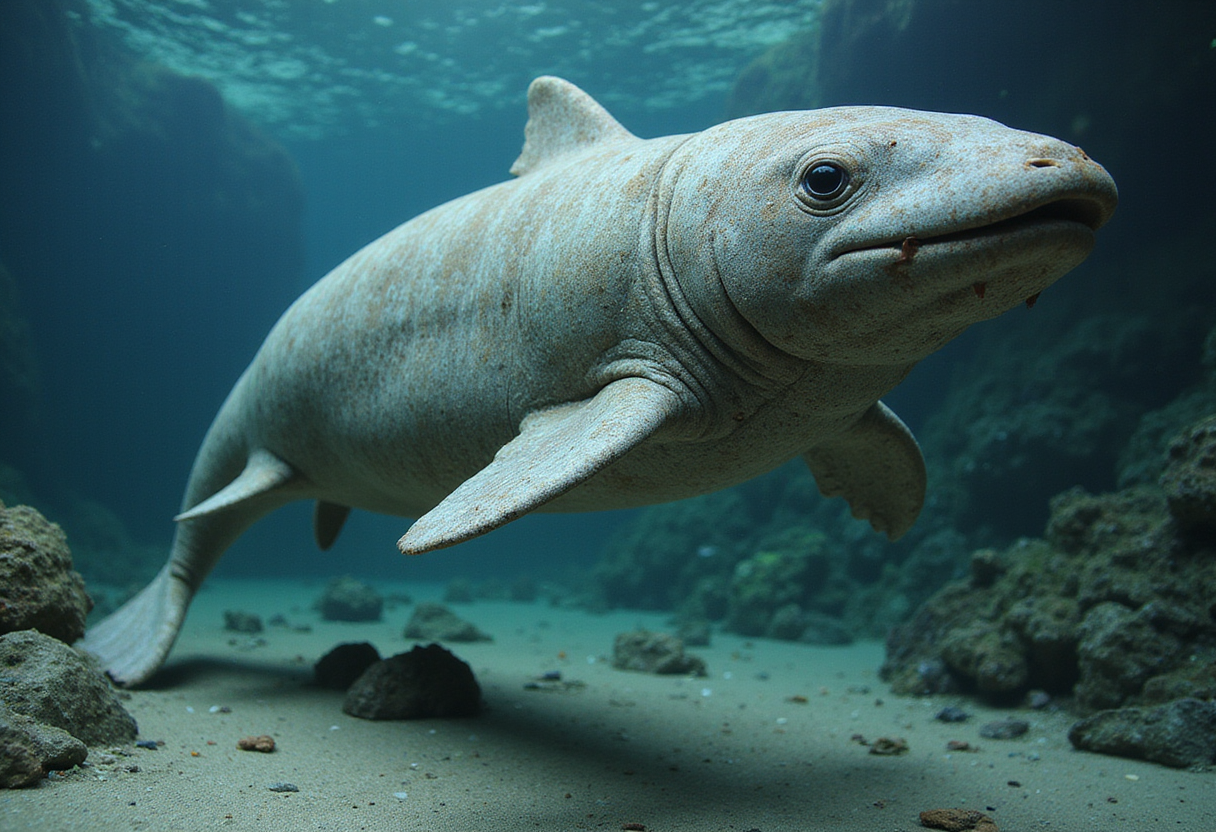
A 120-million-year-old fossil mammal from northeastern China has yielded two evolutionary surprises: evidence of a third generation of teeth and a direct bone connection between the lower jaw and the middle ear. The discovery, published in Nature Communications on October 8, 2026, challenges long-standing assumptions about how, and how neatly, key mammalian traits evolved.
The animal, named Dongoconodon platycauda, may have resembled a cross between a platypus and a beaver-like rodent. It swam through Early Cretaceous waterways using webbed paddling feet and a rudder-like tail.
What makes a third set of teeth so surprising?
Most mammals — humans, dogs, cats, horses — are what scientists call diphyodonts. In plain English, that means we get one set of baby teeth followed by one set of adult teeth, and that's it.
Paleontologists have long assumed that this two-generation system evolved early in mammalian history and stuck. Dongoconodon platycauda appears to break that rule.
Researchers led by Shundong Bi of Yunnan University examined the skeleton with high-resolution CT scans. They found:
- teeth already erupted and wearing down from chewing;
- replacement teeth still developing inside the jawbone;
- in at least one position, a tiny enamel cap beneath a replacement tooth, indicating a third generation forming underneath.
Evidence of three tooth generations appeared across all four tooth types: incisors, canines, premolars and front molar-like teeth.
The specimen was recovered in 2016 from the Jiufotang Formation in Liaoning, China.
What did the ear bones reveal?
The second surprise sat deeper in the skull. The CT scans showed a delicate bar of bone — called ossified Meckel's cartilage — linking the animal's lower jaw directly to its middle ear bones.
In modern mammals, those tiny ear bones sit detached from the jaw and serve only for hearing. The fossil suggests how the split happened over evolutionary time: the cartilage began detaching from the jaw before it separated from the middle ear bones.
This gives paleontologists a rare snapshot of a transition in progress, rather than just the before and after states.
How did the animal swim?
To reconstruct its locomotion, the team measured the fossil's long leg bones and compared those proportions against a database of 124 living mammal species.
The results point to a semiaquatic lifestyle. Broad hands and feet with flattened finger bones resembled the webbed feet of modern platypuses. Box-like tail bones closely matched those of modern nutria, the large semi-aquatic rodents.
"The new fossil shows adaptations for semiaquatic life, with hands and feet like the platypus that were similarly webbed," the research team wrote. The authors conclude the animal paddled with its forefeet and steered with its tail.
How firm are the conclusions?
This study rests on a single specimen, and that is its main limitation. One fossil cannot, by itself, redraw the mammalian family tree or prove that three tooth generations were common among early mammals.
Still, finding two major novelties in a single animal hints that early mammalian evolution may have been a more experimental process than the textbook picture suggests. As the authors put it: "This diversity indicates that key mammalian traits did not necessarily evolve in a tightly linked fashion."
In other words, teeth, ear bones and swimming limbs may have evolved largely on their own separate schedules — not as a single coordinated package.
Future fossil discoveries from the Jiufotang Formation and elsewhere will show whether Dongoconodon platycauda was an oddball or a sign that early mammals were far more varied than we assumed.
Publication details: Shundong Bi et al., "A polyphyodont, semiaquatic eutriconodontan mammal from the Early Cretaceous of China," Nature Communications (2026). DOI: 10.1038/s41467-026-77339-w.
via Phys.org Biology (Source)
More from James Calloway
Nearby plates
- Animals May Have Evolved 200 Million Years Earlier Than Fossils Show
- Animals May Have Evolved 200 Million Years Earlier Than Thought
- 700,000-Year-Old Elephant Tooth Rebuilds a Lost Levant Ecosystem
- Adult Fossil Confirms Homo erectus Roamed Southern Africa 2 Million Years Ago
- 94.5 Million Years Ago, the Tibetan Plateau Was a Hot-Tub Sea