Recorded November 19, 2026
Biology & EvolutionReported finding
Duck-Billed Dinosaur's 'Teeth' Were Actually Blood Vessels, Study Finds
New CT scans of Tethyshadros insularis show its 'tooth-like spikes' were blood vessels and nerves feeding a bird-like beak that sensed, cropped and cooled — upending old reconstructions.
By James Calloway4 min read826 words
In brief
- Tethyshadros insularis lived 81 million years ago in what is now Italy.
- The study, published November 11 in Royal Society Open Science, analyzed three specimens with micro-CT scanning.
- Wear scratches on teeth of one specimen exceeded 150 micrometers in width, indicating abrasive food.
- The closest anatomical match for the neurovascular pattern is found in modern birds, and in hooves of horses and cattle.
- The keratin beak covering likely exceeded the underlying bone in size and complexity.
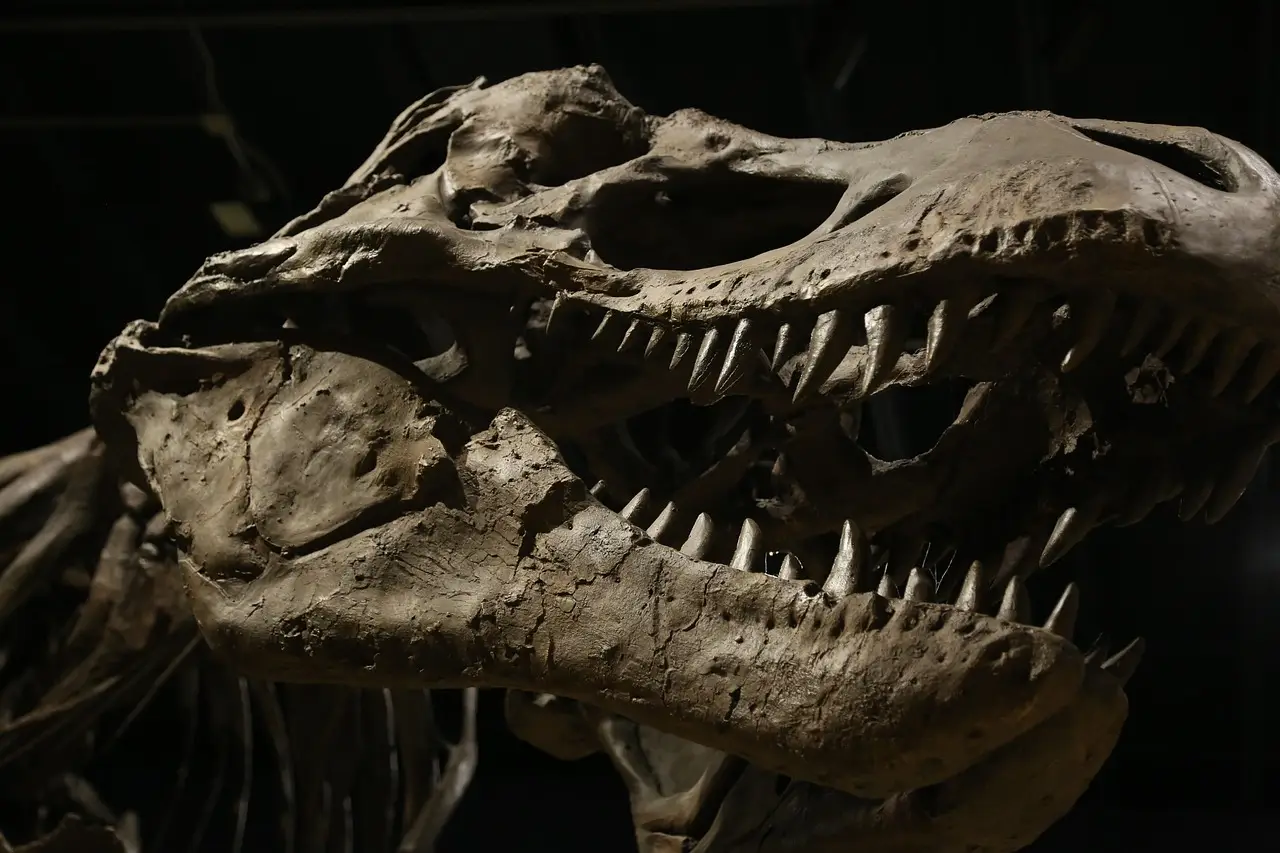
A duck-billed dinosaur that lived 81 million years ago in what is now Italy had no comb of tooth-like spikes at the tip of its snout, according to a new analysis published November 11 in Royal Society Open Science. Those structures, long illustrated in popular reconstructions, were part of a dense network of blood vessels and nerves feeding a large, bird-like beak.
That's a quiet but significant reversal. When Tethyshadros insularis was first described, paleontologists read the forward-facing, rod-like projections along the edge of its upper jaw as an odd, comb-like toothed beak. The idea stuck — and it shaped how artists drew the animal for years.
Now it looks wrong.
How do you re-examine a jaw that old?
The team, led by researchers including Dr. Alfio Alessandro Chiarenza of University College London, used micro-computed tomography — high-resolution CT scanning — to peer inside the jaw bones of three Tethyshadros insularis individuals, including the holotype, the specimen that formally defines the species.
The scans let them trace canals and openings inside the bone that once carried blood vessels and nerves. Those 'spikes' and the porous bone around them, the authors argue, are bony signatures of an exceptionally developed neurovascular network. This is the first detailed description of such structures in ornithopods, the group that includes duck-billed dinosaurs.
The reconstruction links circulation around the nostril, the palate and the base of the beak, plus a previously unrecognized sinus at the midline of the upper jaw. Large vessels looped along the cutting edge and probably supported a keratin sheath — the rhamphotheca, the same hard covering a bird's beak wears — that likely exceeded the underlying bone in both size and complexity.
The researchers compared the pattern against modern birds and turtles. The closest match came from birds. They also found strikingly similar arrangements around the nails and hooves of large mammals such as horses, cattle and elephants.
"The best-documented potential functional analogue is found in the vascular organization of ungual phalanges, both in large ornithischians and in extant large mammals bearing hooves or hoof-like structures," they wrote.
What did the beak actually do?
Several jobs, the researchers suggest. Deep wear scratches on the teeth of one large specimen — some wider than 150 micrometers — point to a diet of very abrasive material. The dinosaur likely swallowed coarse grit, probably limestone particles from the carbonate soils of its coastal habitat, along with its plants.
The beak was the primary cropping tool, and that heavy wear would have demanded rapid growth, comparable to the ever-growing incisors of rodents. A depression inside the premaxilla, the front bone of the upper jaw, probably held a blood sinus or a cluster of sensory nerve cells. That arrangement may have let the beak register mechanical stress, similar to structures found in alligators and some whales.
"Together with tactile papillae, the hadrosauroid beak could therefore have functioned as a highly proprioceptive organ, functionally analogous to that of birds," the scientists said — in plain English, a beak that could feel what it was doing.
There's a cooling angle too. Tethyshadros insularis lived in a warm, low-latitude environment, was comparatively large, and is inferred to have been warm-blooded. Animals like that need somewhere to dump heat. Blood flowing through the beak and nostrils could shed it — a strategy seen today in the toco toucan, whose bill dissipates substantial body heat. That matters especially for an animal without crests, sails or other obvious radiators.
As the authors put it: "Bird beaks are among the most complex and versatile oral structures in tetrapods." Across more than 10,000 bird species, beaks vary enormously in shape, reflecting how birds feed, interact and move through their environments, and they also handle preening, manipulation, thermoregulation, vocal production and even locomotion.
Beaks, the researchers note, weren't restricted to theropods — the lineage that gave us birds. Multiple ornithischian dinosaur lineages evolved specialized beaks or beak-like structures, often alongside toothed jaws. Duck-billed hadrosauroids are a textbook case: toothless beaks at the front, specialized tooth batteries at the back for efficient chewing. Yet the physiological role of the hadrosauroid beak, its appearance in life and its ecological significance "have been somewhat overlooked."
What does this change for the field?
Plenty, if the interpretation holds — and it's an interpretation, remember, built on bony canals and analogies with toucans and hooves, not on preserved soft tissue. The team concludes the hadrosauroid beak deserves re-evaluation as a large, dynamic, vascularized, sensory and thermoregulatory organ, comparable in complexity to a bird's bill.
They go further: this multifunctional beak-nostril complex may be a key innovation that helped drive dietary versatility, environmental responsiveness and, ultimately, the ecological expansion and body-size growth that characterize later hadrosaurids.
That's a big claim from three specimens. But the evidence, for now, points one way: Tethyshadros never had that comb of spike-teeth at all.
via sci.news (Source)
More from James Calloway
Show full bio
Staff writer covering regulation, policy and their impact on general science news at SciBeat.
570 articles
Nearby plates
- Italy's 'Spiked' Dinosaur Beak Was Actually Birdlike, Scans Show
- First European Meرaraptor Found in a Museum Drawer After 100 Years
- Six-Million-Year-Old Peru Skull Rewrites Whale Facial Symmetry
- 220-Million-Year-Old Skull From South Africa Unveils New Dinosaur Species
- 120-Million-Year-Old Mammal Fossil Had Three Sets of Teeth