Recorded November 18, 2026
Biology & EvolutionReported finding
A Toxin Helps African Lungfish Survive on Land, Study Finds
UNM researchers found a bacterial-derived toxin remodels African lungfish skin for land life — a drop of it flips aquatic skin to a terrestrial configuration, per a Cell study.
By Nathan Brooks3 min read688 words
In brief
- A study published in Cell in 2026 shows a toxin, Protop-CrTX, remodels African lungfish skin for land survival.
- A single drop of the toxin converted aquatic lungfish skin into land-adapted-like skin in lab experiments.
- The toxin gene likely originated in a bacterium and transferred to marine lungfish ancestors millions of years ago.
- Granulocytes, fast-moving immune cells, secrete the toxin in the skin during land adaptation.
- The UNM team, led by Irene Salinas with first author Daphne Siciliani, worked on the project for five years.
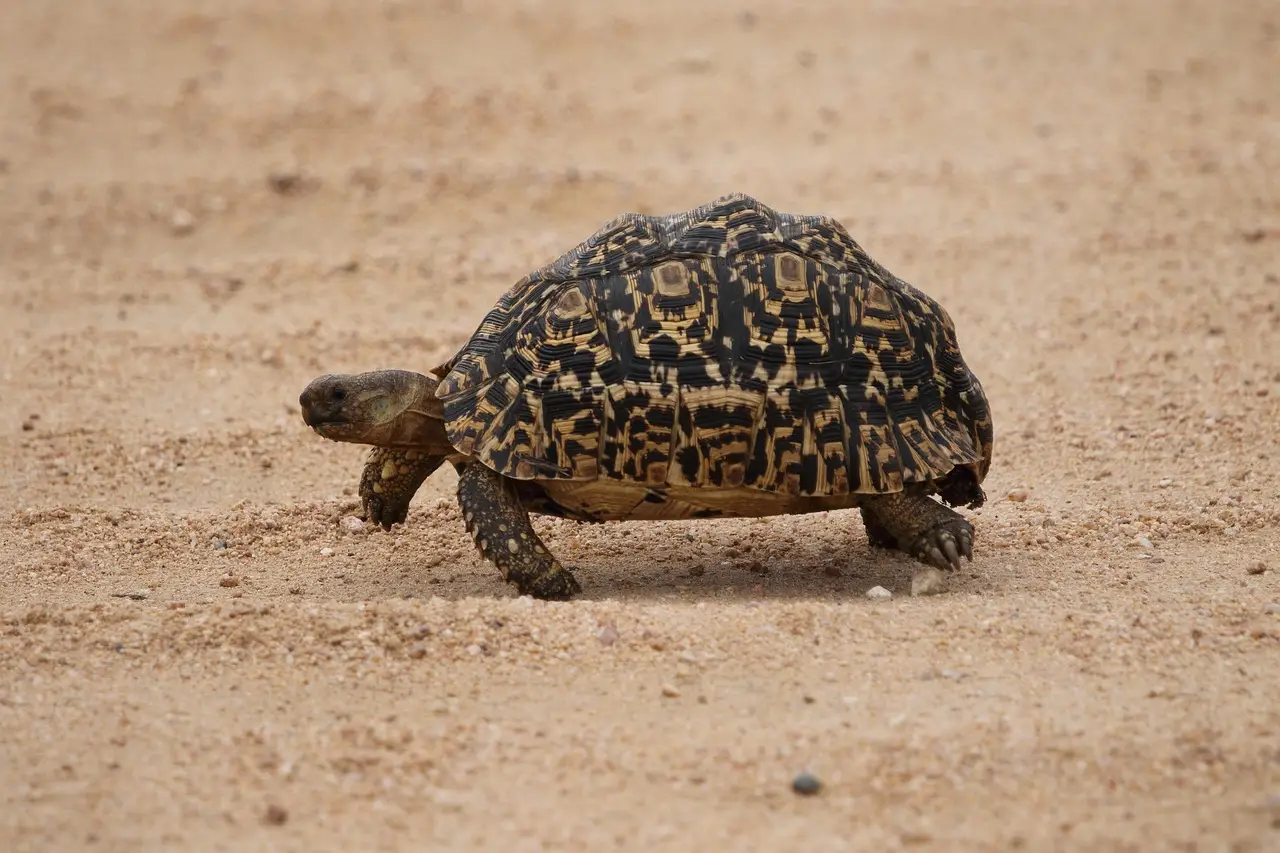
A single drop of a naturally occurring toxin can transform an African lungfish's aquatic skin into skin suited for life on land, according to a study published in the journal Cell in 2026. The finding, from researchers at The University of New Mexico, reveals an unexpected evolutionary trick: a weapon-like molecule repurposed into a construction tool.
The team, led by UNM professor Irene Salinas with first author Dr. Daphne Siciliani, a postdoctoral fellow of the Life Sciences Research Foundation, spent five years chasing the mechanism. Their search began as a hypothesis: because immune cells called granulocytes flood lungfish skin when the animals adapt to land in the lab, the immune system had to be involved somehow.
What they found instead surprised even them.
"I never thought we would stumble upon something as cool and exciting as a toxin," Salinas said. "Serendipity revealed a unique gene in the lungfish genome that was expressed in the skin in aquatic lungfish, but levels increased tremendously when animals were adapted to land. Unfortunately, this was a risky project."
Why does skin have to change at all?
Fish skin is a mucosal lining — think of the human gut or lungs — that continuously secretes mucus. That works fine underwater. On land, the same tissue faces dryness, ultraviolet damage, and a list of threats water never poses.
The answer is tissue remodeling, a broad biological process in which existing tissues restructure themselves. The same category of biology lets a mother's mammary glands switch on milk production for a newborn.
Each year, as droughts hit Africa, African lungfish move from water to land and rebuild their skin from an aquatic configuration to a terrestrial one. The new study pins the molecular switch.
How does the toxin work?
The researchers generated a lab-made version of the molecule, called Protop-CrTX, and exposed different skin cell types to it. The toxin punches tiny holes in target cells, and potassium leaks out, causing damage — classic toxin behavior.
Lungfish cells play a different game. The toxin still punches holes, but the cells appear to have evolved to block the potassium leakage and repair the pores.
"In a series of experiments, we show that a drop of this toxin is sufficient to turn the skin of an aquatic lungfish into skin that resembles a land-adapted lungfish, demonstrating that this toxin is a tissue-remodeling molecule," Siciliani said. "Interestingly, over evolutionary time this toxin has been repurposed to better support tissue-remodeling functions. This happened by adding many pieces to an originally simple gene that contained only one exon."
An exon is a segment of a gene that carries protein-building instructions. The ancestral version of the toxin gene had just one; evolution stacked on more.
Where did the toxin come from?
The team believes a bacterium originated the toxin gene, and it was transferred to marine lungfish ancestors millions of years ago. Over time, African lungfish repurposed the molecule — less toxicity, more remodeling.
"We knew nothing about this toxin or its relatives when we started to look at the available databases," Siciliani said. "Additionally, lungfishes are not known to be venomous or toxic to humans or any other animals, making this discovery even more puzzling."
What's the immune system's role?
Granulocytes — fast-moving immune cells that swarm the skin during land adaptation — turn out to be the toxin's couriers. They secrete the molecule in the skin, letting the lungfish sculpt specific skin regions on demand.
That's the broader lesson, the researchers argue: the immune system doesn't only battle danger. It also pitches in on everyday physiological jobs, like rebuilding a body's outer wall for a new environment.
The work adds a concrete molecular piece to one of vertebrate evolution's best-known stories — the move onto land — and points to an unexpected place where evolutionary innovation can hide: in a gene borrowed from a bacterium and softened into a repair kit.
Publication details: Daphne Siciliani et al., "Evolutionary repurposing of a pore-forming toxin drives epithelial remodeling during terrestrial adaptation," Cell (2026). DOI: 10.1016/j.cell.2026.10.038.
via phys.org/rss-feed/ (Source)
More from Nathan Brooks
Show full bio
Market editor covering companies, deals and strategy in general science news at SciBeat.
563 articles
Nearby plates
- Skin microbes may help young sawfish survive low-oxygen pools
- Reef fish shrug off acidic water in decade-long acidification test
- Harbor Seal Pups Expose Mercury's Hidden Neurological Damage
- MIT's Water-Resistant Microneedles Could Vaccinate Fish Weighing Just 1 Gram
- Fish thrive in urban waters, but their genes tell a different story