Plate Nº 27 · recorded November 18, 2026
Biology & EvolutionReported finding
Conventionally Bred Soybeans Survive Dicamba Drift, Study Finds
University of Illinois researchers confirmed conventionally bred soybean lines that tolerate dicamba drift, tested with drones at one five-hundredth of the labeled rate.
By Nathan Brooks4 min read783 words
In brief
- Tolerant and sensitive soybean lines diverged reliably at one five-hundredth of the labeled dicamba rate.
- The study grew out of accidental dicamba exposure observed in 2019 at a University of Missouri field station.
- Published in The Plant Phenome Journal (2026), DOI: 10.1002/ppj2.70118.
- Drones tracked damage over time; an earlier ACES study detected damage at one ten-thousandth of the label rate.
- Tolerance covers only drift-level exposure, and yield effects remain unknown.
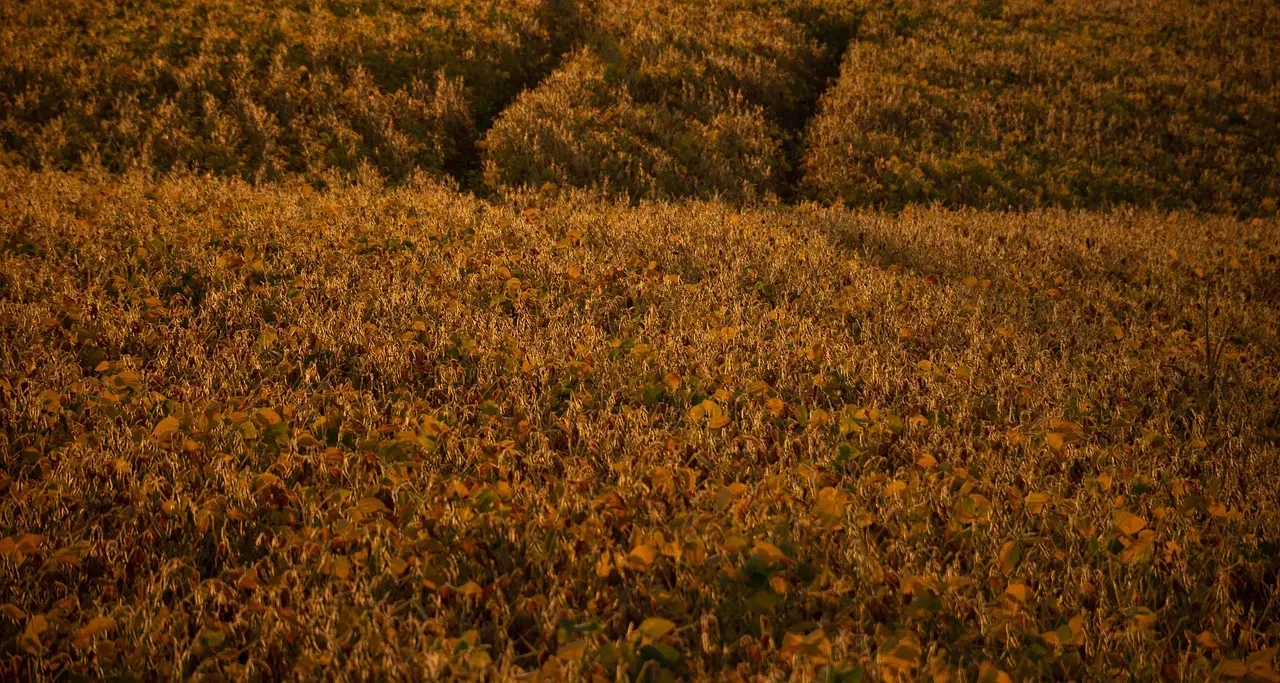
Soybean lines bred without genetic engineering tolerated dicamba drift at one five-hundredth of the labeled herbicide rate, according to a new University of Illinois Urbana-Champaign study. That dose, tiny as it sounds, reliably separated tolerant plants from sensitive ones — and repeated exposures at that level caused lasting damage only in the sensitive lines, mimicking what real-world drift does to fields.
The study, "Unmanned aerial vehicle time-series phenotyping illuminates genotype-specific responses to off-target dicamba exposure in soybean," appears in The Plant Phenome Journal (2026), DOI: 10.1002/ppj2.70118.
Dicamba is an herbicide sprayed on genetically modified, dicamba-resistant soybeans. Some growers plant those engineered beans not because they intend to spray, but as insurance against dicamba drifting from neighbors' fields. The new research suggests a conventional alternative could one day exist.
"Growers don't want chemicals trespassing on their farm and ruining their soybean crop," said study co-author Dean Riechers, a professor in the Department of Crop Sciences at U. of I.
Where did the tolerant lines come from?
The story starts with an accident. At a University of Missouri field station in the Bootheel — the state's far southeastern corner — non-resistant soybeans were getting stunted by off-target dicamba year after year. Local growers raise cotton and soybeans, and drift is, in the researchers' words, a huge problem there.
"When we visited, any non-dicamba-resistant soybeans were very stunted. This was happening year after year, which allowed the breeders there to select for tolerance to dicamba," said co-author Brian Diers, emeritus professor of crop sciences at U. of I.
At the time, Caio Vieira — now an assistant professor and soybean breeder at the University of Arkansas — was growing multiple soybean lines there with the late professor Pengyin Chen. Dicamba from off-target sources hit the plots, often repeatedly.
"Back in 2019, we observed different responses of soybean genotypes within the same genetic family. That provided us with strong evidence that this trait could be genetically regulated," Vieira said. His team then screened diverse soybean accessions and built mapping populations to pin down the genetics — the first project ever to treat dicamba tolerance as an inheritable trait. "Everything from field protocols to genetic materials had to be developed from scratch," he said.
The catch: nobody knew the dose or timing of the Missouri exposures. Replicating the effect required a clean site.
How did the team test it?
Vieira teamed up with Diers, Riechers, and Seda Özer, then a doctoral student with Diers and now head of the Plant Breeding and Genetics Department at the Oil Seeds Research Institute in Osmaniye, Turkey. They ran the trials at the Crop Sciences Research and Education Center in Urbana, where the only dicamba touching the plants was what the researchers applied themselves.
"We started with greenhouse experiments to see how much dicamba exposure was needed to distinguish tolerant and sensitive soybean lines. We then moved to field trials, testing different doses and repeated applications to better reflect what was happening in Missouri, where dicamba exposure wasn't always a one-time event," Özer said.
The team hadn't planned on drones. The idea of spotting differences from the air came from co-author Alper Adak, who also processed and analyzed the images. The drones tracked damage over time, echoing an earlier ACES study that detected drift damage from the air at one ten-thousandth of the labeled rate.
"We weren't just trying to detect the damage in this study. We wanted to find the level that separates the tolerant and sensitive lines," Riechers said. "The goal here was to see if we could repeat what researchers in Missouri found, then make lemonade out of lemons."
What the study can't tell us yet
The findings come with clear limits, and the researchers don't hide them. The tolerant lines handle only off-target-level exposure — not a full dicamba application at the labeled rate. And because plants bred for southern Missouri wouldn't reach maturity in central Illinois, the study can't say whether the tolerance trait costs yield, or whether it might also protect against other herbicides, diseases, or environmental stresses. Follow-up studies aim to answer both questions, and the team wants to move the trait into edamame and other specialty soybeans.
"The goal of this trait is not to spray dicamba on top of non-dicamba-resistant soybeans, but rather to allow non-dicamba-resistant plants to coexist along with cropping systems that include dicamba," Vieira said. "This is important to diversify herbicide-based cropping systems, as well as support the expansion of non-GMO soybean acreage for food-grade and specialty markets."
via phys.org/rss-feed/ (Source)
More from Nathan Brooks
Show full bio
Market editor covering companies, deals and strategy in general science news at SciBeat.
460 articles
Nearby plates
- MIT-led team gets up to $53 million to seek AI-designed weed killers
- First U.S. Clone of Tomato Spotted Wilt Virus Built in Texas
- Blue Light Kills Every Strain of Chicken Food-Poisoning Bug Tested
- Scientists Identify Protein Cascade That Lets Plants Feel Touch
- Resistance Gene Helps C. difficile Survive Hospital Disinfectants