Recorded November 19, 2026
Biology & EvolutionReported finding
Homo erectus Lived in China’s Rainforests 324,000 Years Ago
Nine fossil teeth from southern Chinese caves place Homo erectus in closed-canopy rainforests 184,000–324,000 years ago, with signs of travel toward northern Vietnam.
By Elena Vasquez4 min read851 words
In brief
- Nine hominin teeth came from more than 18,000 mammal fossils in China’s Baxian and Naxian caves.
- Radiometric dating placed the fossils between 184,000 and 324,000 years old.
- Eight teeth matched H. erectus anatomy, while four of five tested carried the species-linked protein pattern.
- PA1796 was the only tooth not definitively linked to H. erectus and may have belonged to a Denisovan.
- Strontium isotopes suggested possible travel as far as northern Vietnam, about 250 kilometers away.
By Elena Vasquez
Nine fossil teeth from southern China indicate that Homo erectus survived in closed-canopy rainforests 184,000–324,000 years ago and may have traveled 250 kilometers.
Two papers published in Nature analyze the Baxian and Naxian cave teeth, challenging two long-standing assumptions: that dense tropical forest lay outside the species’ range, and that its documented Chinese history largely stopped around 400,000 years ago.
Which hominin did the teeth belong to?
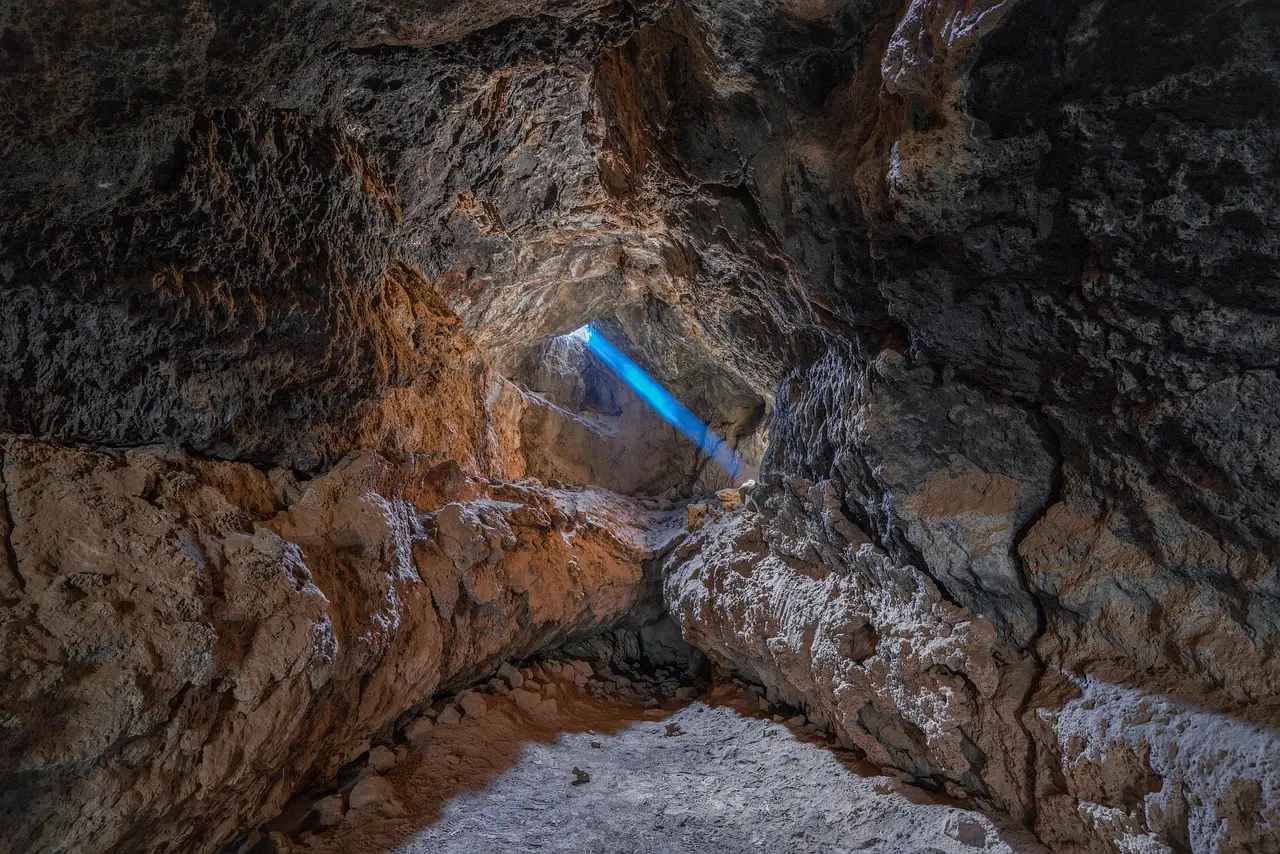
Researchers recovered nine hominin teeth—teeth belonging to humans or close relatives—from more than 18,000 mammal fossils. The cave deposits also held remains of elephants, apes, pandas, tapirs and rhinos. Naxian’s fossil-bearing chamber lies just 50 meters inside the cave.
An international team in the first Nature paper examined all nine teeth. Eight combined physical features usually found in H. erectus specimens. Researchers then analyzed proteins in five teeth, finding an H. erectus-associated pattern in four. A tiny change in that evidence led them to conclude that the specimens represented a previously unsampled H. erectus population.
PA1796 was the exception. Its anatomy and protein profile did not match H. erectus, and it also did not fit a Neanderthal or modern human. The researchers said it might be Denisovan, although its protein sequence did not match that group either. Only one Denisovan reference genome is available, so limited data could explain the mismatch.
Even with that possibility, PA1796 suggests H. erectus was not the only hominin living in the area at the time.
Takeaway: Eight teeth identify a distinct H. erectus population; the ninth suggests another hominin shared the area.
How old were the teeth?
Radiometric dating, which estimates age from radioactive decay, dated both the fossils and their enclosing sediments to between 184,000 and 324,000 years.
China’s H. erectus fossil record remains rich and detailed for more than 1 million years, then almost dries up around 400,000 years ago. The new specimens show that the species survived in the region for much longer than that gap had suggested.
Takeaway: The cave teeth push H. erectus’s documented Chinese presence well beyond 400,000 years ago.
Could H. erectus live in dense rainforest?
The old ecological story placed H. erectus in open country. The species lasted almost 2 million years and is often described as one of the most successful hominins known. It may have been the first hominin to master fire, is widely thought to have been the first to leave Africa, and prospered across Eurasia and Southeast Asia.
Its favored habitats were arid grasslands and savannas, meaning open landscapes with sparse tree cover. Reduced global rainfall during the early Pleistocene helped expand those habitats and the animal communities associated with them. H. erectus followed this favored environment into new areas, thrived for hundreds of thousands of years and gave rise to several descendant species.
The traditional narrative then said changing environments left H. erectus struggling in jungles and rainforests, paving the way for descendants, including Homo sapiens, to take over. Many researchers had treated dense rainforest as habitat suited mainly to H. sapiens. The new cave evidence complicates that sequence.
Researchers used isotope analysis, which compares chemical forms of elements, and minute trace elements to probe diet and geographic origin in some teeth. Carbon in the teeth came mostly from vegetation in tropical forests with a dense, closed canopy. That matches other fossil evidence showing rainforests dominated the area and period.
In the second paper, the researchers wrote: “This demonstrates that H. erectus was, at minimum, capable of persisting among rainforest fauna, even if such habitats did not represent its optimal ecological niche.”
Put plainly, survival was possible even if dense forest was not the species’ preferred habitat.
Did H. erectus travel beyond the caves?
Strontium isotopes offered another line of evidence. This chemical analysis compares isotope signatures in teeth that can reflect the geology of places where their owners lived. The results suggested that these H. erectus individuals migrated at times.
They may have traveled as far as what is now northern Vietnam, roughly 250 kilometers (155 miles) from the caves. The findings support mobility, but not a fixed route or itinerary for every animal.
The researchers summarized the wider result: “Rather than being restricted to open savanna or woodland habitats, as traditionally assumed, these populations persisted in closed-canopy tropical rainforests while simultaneously engaging in potential long-distance mobility across diverse ecological and geological landscapes.”
Takeaway: The teeth support a forest-tolerant, mobile H. erectus population, while leaving the ninth tooth and exact movements unresolved.
What remains uncertain?
The forest evidence comes from some teeth in a previously unsampled population, so it does not show that every H. erectus group lived in rainforest. The unusual PA1796 tooth remains unassigned, and its proposed Denisovan identity is provisional because only one reference genome exists.
Likewise, the distance to northern Vietnam represents a possible range of travel, not proof that every tooth owner journeyed there.
Takeaway: These H. erectus survived in dense forest, but the identity of PA1796 and the animals’ individual movements remain open questions.
via sciencealert.com (Source)
More from Elena Vasquez
Show full bio
Correspondent covering money, funding and market shifts around general science news at SciBeat.
612 articles
Nearby plates
- Homo erectus survived in China until 184,000 years ago
- Homo erectus survived 200,000 years longer than we thought
- Homo erectus survived in China's rainforests until 184,000 years ago
- No Male Markers in 20 Homo naledi Fossils: Was This Cave Women-Only?
- Proteins From 20 Fossils Give Denisovans a Face of Their Own