Plate Nº 95 · recorded October 30, 2026
Earth & ClimateReported finding
Ice Ages May Have Started With a Pole-to-Pole Ocean Chain Reaction
St Andrews scientists found northern ice sheets may have cooled Atlantic waters that traveled to Antarctica, boosting ocean CO2 storage and deepening past ice ages.
By Elena Vasquez3 min read691 words
In brief
- Northern cooling alone produced 74% of the CO2 drawdown of full global cooling in simulations.
- The study, led by Dr. Madison Shankle, was published in the Journal of Climate on October 28, 2026.
- Colder North Atlantic waters circulate south and may alter Southern Ocean circulation around Antarctica.
- The process could store more CO2 in the ocean, lowering atmospheric levels and intensifying ice ages.
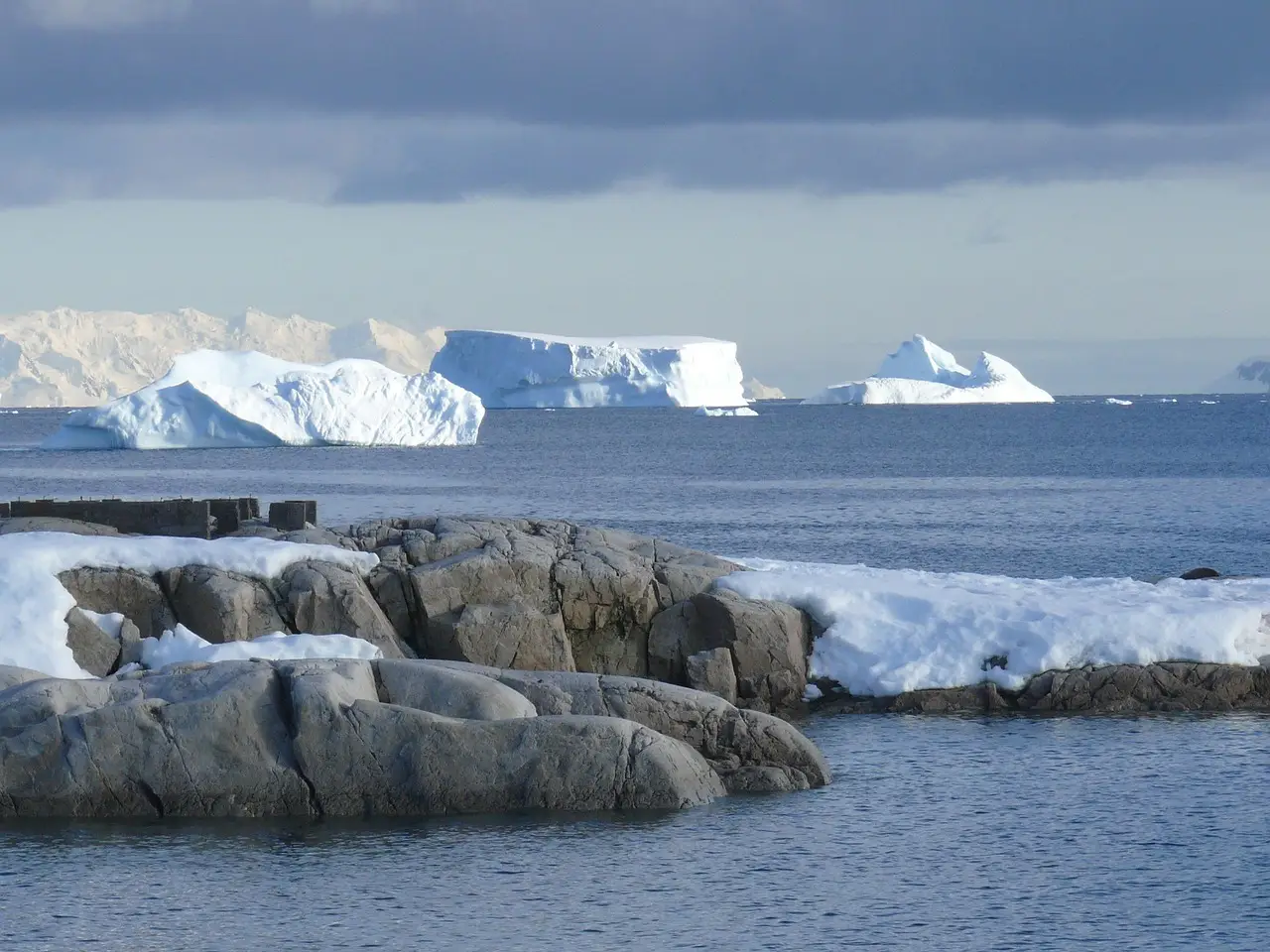
Cooling the far north alone produced 74% as much ocean carbon dioxide uptake as cooling the entire planet. That single figure, from new University of St Andrews research, may explain how Earth's ice ages took hold — starting at one pole and ending at the other.
The study, published October 28, 2026, in the Journal of Climate, describes a previously unknown link between Northern Hemisphere ice sheets and ocean circulation near Antarctica. Growing northern ice, it suggests, set off a chain reaction that pulled CO2 out of the atmosphere and chilled the whole planet.
Lead author Dr. Madison Shankle of the St Andrews School of Earth and Environmental Sciences said the team has demonstrated the mechanism in action: "Essentially, we've produced evidence of a plausible mechanism connecting these two far-flung puzzle pieces — Northern Hemisphere ice sheets and Southern Hemisphere ocean circulation changes leading to CO2 drawdown — which has been a tricky thing to explain in our theory of Earth's past ice ages. Our study takes the step of actually demonstrating them working in model simulations, which is a big step forward for this field."
Why the connection matters
Scientists have long known that falling atmospheric CO2 drove past ice ages, with much of the carbon moving into long-term storage in the oceans. The Southern Ocean around Antarctica controlled much of that transfer. The nagging problem was distance. Natural wobbles in Earth's orbit let northern ice sheets grow, but nobody could fully explain how ice thousands of kilometers away made the distant Southern Ocean absorb more CO2.
The new work fills that gap.
How does northern ice change Antarctic waters?
The mechanism runs through the ocean itself:
- Massive ice sheets spread across northern continents and chill the waters of the North Atlantic.
- Over time, that colder water travels south across the equator toward Antarctica.
- If the cooling is strong enough, it alters circulation in the Southern Ocean.
- The changed circulation traps more carbon beneath the ocean surface.
- Atmospheric CO2 drops, the planet cools further, and the ice age deepens.
Cooling, in other words, feeds more cooling.
What the simulations showed
The team ran computer models of ocean circulation. Crucially, they cooled only the northernmost latitudes — a stand-in for a giant ice sheet — rather than the whole planet, then watched what the Southern Ocean did.
The result was striking. Northern cooling alone delivered 74% of the CO2 drawdown seen when the entire globe was cooled in a separate run. Temperature shifts in one hemisphere, it turns out, can wield serious power over carbon storage in the other.
The full author team includes Madison G. Shankle, Graeme A. MacGilchrist, Andrea Burke, Alice Marzocchi, Malte F. Jansen and James W. B. Rae (Journal of Climate, 2026, vol. 39, no. 22, p. 6471; DOI: 10.1175/JCLI-D-25-0355.1).
A missing link found — with caveats
For decades, ice age research focused heavily on the Southern Ocean because of its grip on atmospheric CO2. Only recently have scientists looked at how remote ocean regions steer those same processes. This study supports the idea that cold North Atlantic water can reach Antarctica, reshape its circulation and help strip CO2 from the air.
Hedge appropriately: these are idealized model simulations, not direct observations of the ancient ocean. The work demonstrates a plausible, physically grounded mechanism — strong support, but still a step short of proof of what happened millions of years ago.
Still, the takeaway is plain: the two poles may be far more tightly coupled than standard ice age theory assumed.
Why ancient ice matters now
Past ice ages are a natural laboratory for Earth's carbon cycle. They show how CO2 shifts between air and ocean, and how that balance moves global temperatures.
Each newly identified mechanism, like this pole-to-pole chain reaction, sharpens the picture of how the climate system works as a whole. That matters today, as researchers try to predict how oceans and other natural systems will respond to the extra CO2 now entering the Earth system.
In short: the same ocean plumbing that once helped freeze the planet is plumbing we still need to understand.
via dx.doi.org (Original)
More from Elena Vasquez
Show full bio
Correspondent covering money, funding and market shifts around general science news at SciBeat.
288 articles
Nearby plates
- Arctic winter sea ice loss may exceed forecasts by 1 million
- Global warming has accelerated to 0.35°C per decade, study finds
- Arctic Melt Season Grew 40 Days Longer Since 1979—Then Stalled in 2010
- Arctic Sea Ice Ties for 10th-Lowest Minimum in 2026 Satellite Record
- Antarctica Gained 695 Billion Tons of Ice. The Trigger Was Thousands of Miles Away