Plate Nº 15 · recorded September 30, 2026
Biology & EvolutionReported finding
Immune Cells Blur the Line Between Innate and Adaptive Defenses
γδ T cells patrol tissues and fight tumors with innate-like speed, yet a Nature study shows they need an adaptive-type receptor to do it — blurring a classic immunology divide.
By Elena Vasquez4 min read883 words
In brief
- Researchers at the Francis Crick Institute, King's College London and Complutense University of Madrid showed γδ T cells need their T cell receptor to mount rapid, innate-like tissue surveillance.
- Removing the receptor in mice and CRISPR-edited human cells altered gene activity and weakened control of skin, colorectal and melanoma cancer growth.
- The study, published in Nature (2026), suggests γδ T cell cancer therapies may depend on preserving or activating the receptor signal.
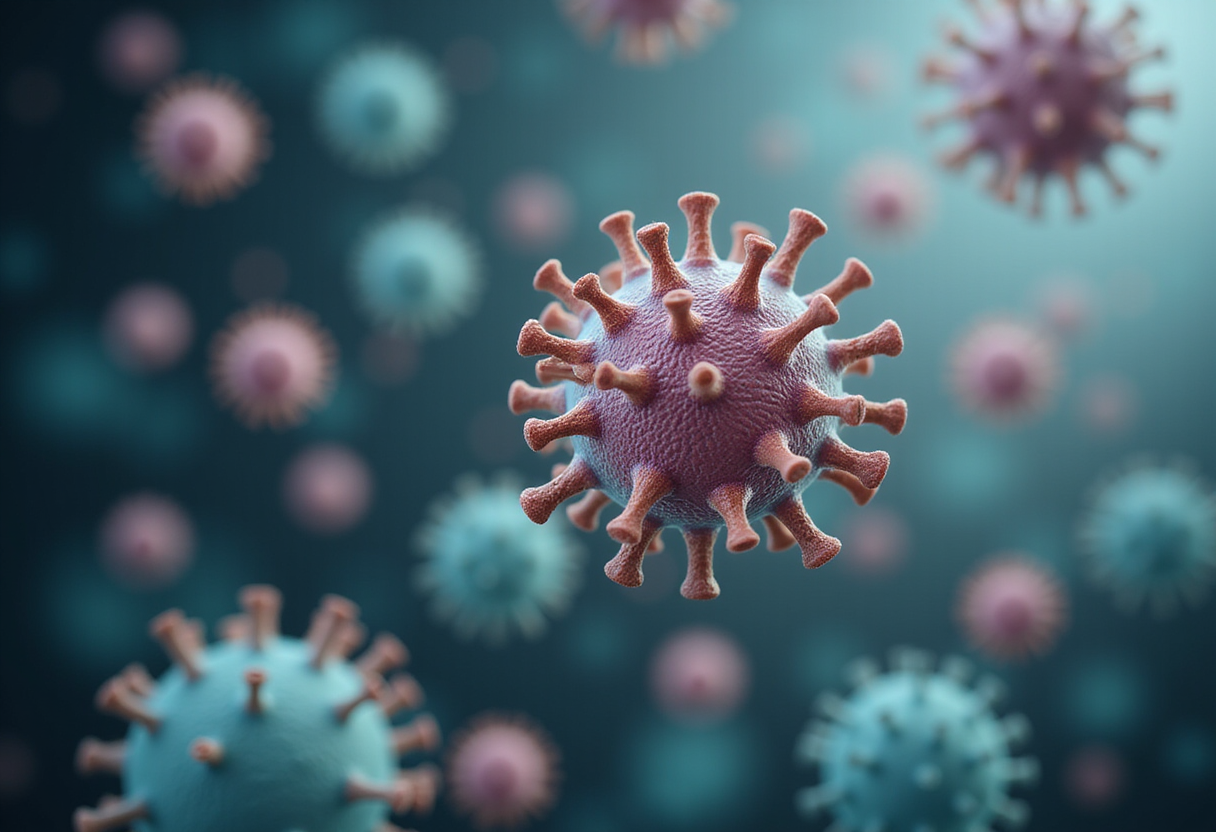
For decades, immunologists have sorted the immune system into two camps. Innate immunity reacts fast and broadly to danger. Adaptive immunity learns slowly, building specialized receptors that recognize specific threats. New research published in Nature shows that one family of immune cells refuses to respect that boundary.
Researchers at the Francis Crick Institute, King's College London and Complutense University of Madrid demonstrated that γδ T cells — read that "gamma delta" — use a receptor traditionally classified as adaptive to drive rapid, innate-like responses to tissue stress, inflammation and cancer.
Hybrid cells with a double identity
γδ T cells patrol tissues such as the skin and gut, scanning for signs of damage, infection and cancer. They detect cellular stress and dysregulation and respond quickly to abnormal cells. That combination of broad recognition and speed has made them promising candidates for next-generation cancer immunotherapies, and scores of clinical trials are already underway.
"There is a lot of interest and progress in using γδ T cells in cancer immunotherapies, or even other types of immune treatment, because they can recognize any kind of dysregulation and act quickly," says Adrian Hayday, principal group leader at the Francis Crick Institute, who has researched γδ T cells for more than 40 years. "But if we are going to use them clinically, we need to understand what underpins that rapid response."
Like other adaptive immune cells, γδ T cells carry signature receptors on their surface, called T cell receptors, that sense signals in their environment. During development, these receptors help shape how the cells mature, where they settle in the body and how ready they are to respond to specific stresses.
Many scientists have assumed that the receptor's job ends there. Hayday wanted to know whether mature γδ T cells still needed their T cell receptors to stay primed for rapid tissue surveillance.
Removing the receptor
Hayday teamed up with Miguel Muñoz-Ruiz, a former postdoc in his lab who now leads his own research program at Complutense University of Madrid. Together, their teams studied the genetic and functional consequences of removing the γδ T cell receptor.
Nicolas Veland in Hayday's lab and Bethania Garcia-Cassani in Muñoz-Ruiz's team examined mice in which the receptor could be deleted from selected populations of mature γδ T cells residing in tissues. The receptor turned out to be essential for the cells' ongoing surveillance work.
The cells did not disappear. After researchers removed the receptor, γδ T cells remained present in tissues, but their behavior changed. The scientists observed altered activity in genes involved in activation, tissue surveillance and communication with other immune cells. They also saw disruption of receptors associated with innate immune responses.
Veland then extended the work to human cells, using CRISPR gene editing to disrupt a gene encoding part of the γδ T cell receptor in laboratory-grown human γδ T cells. Removing the receptor changed gene activity and reduced the expression of several innate-associated receptors, echoing the mouse results.
A blow to cancer surveillance
The teams also tested what happens to cancer control. In mouse models of skin cancer and colorectal cancer, loss of the γδ T cell receptor impaired the animals' ability to restrain tumor development. In further laboratory experiments, receptor-deficient human γδ T cells were less able to restrict the growth of melanoma and colorectal cancer cells.
"This work came from a shared question that Adrian and I kept coming back to," says Muñoz-Ruiz. "If γδ T cells are so rapid and so innate-like, what is their receptor doing? We've shown that without receptor signaling, γδ T cells are much less able to carry out rapid tissue surveillance, showing that responses previously thought to be independent of adaptive immune recognition still rely on the γδ T cell receptor in real time."
What it means for therapy
For cancer immunotherapy, the findings carry a practical implication: γδ T cell treatments may depend on preserving or activating the receptor signal that helps the cells recognize and respond to damage and disease.
"These findings are incredibly important if we want those cells to attack tumors effectively," adds Hayday.
The results also suggest something deeper about immunology itself. "This work also points to a fundamental shift in how immune responses are understood," Hayday says. "These cells defy the traditional classifications of immunity. This is an adaptive receptor being used as part of the innate immune response. That may be why γδ T cells can be found across many different species: they offer an essential and unique form of surveillance that does not fit neatly into either category."
As with any laboratory study, the findings come with limits. The cancer results draw on mouse models and cell cultures, not patient trials, and the human experiments used cells grown in the lab rather than cells taken from living tissue. Whether the same receptor dependency holds in patients receiving γδ T cell therapies remains to be tested. Still, the study gives researchers a clearer mechanistic picture of what keeps these hybrid cells ready for action — and a warning for anyone designing therapies that might disrupt it.
Publication details: Miguel Muñoz-Ruiz et al., "γδ T cell receptor dependencies define a unique immunosurveillance modality," Nature (2026). DOI: 10.1038/s41586-026-11076-4.
via Medical Xpress (Source)
More from Elena Vasquez
Nearby plates
- Same-Day Chemotherapy Turns Into a Booster for Cancer Vaccines
- Math Model Maps How Tumor Conditions Help or Hinder Cancer Drug
- Two-Drug Combo May Force Aggressive Kidney Cancer to Self-Destruct
- Computer-Designed Protein Targets Immune Receptor at New 'Undruggable' Site
- Enzyme's Hidden Second Job May Drive Breast Cancer Drug Resistance