Plate Nº 32 · recorded September 30, 2026
Biology & EvolutionReported finding
Insects Keep Vertebrates Alive as Food, Medicine and Home Builders
Insects feed hummingbirds and grizzly bears, but also clean nests, medicate wounds and build homes. A new review maps these ties and warns of losses of 1–2% per year.
By Nathan Brooks4 min read819 words
In brief
- The review "The importance of insect biodiversity for vertebrates" was published Sept. 30 in Nature Reviews Biodiversity by authors from eight countries, co-led by Eliza Grames, Rob Cooke and Chris Elphick.
- Scientists estimate there are 14–30 million insect species; more than 200 bird species use crushed ants for grooming, and insects historically cleaned dinosaur nests.
- Insect populations are declining by roughly 1% to 2% per year, according to Grames, yet few studies examine the consequences for vertebrates beyond food supply.
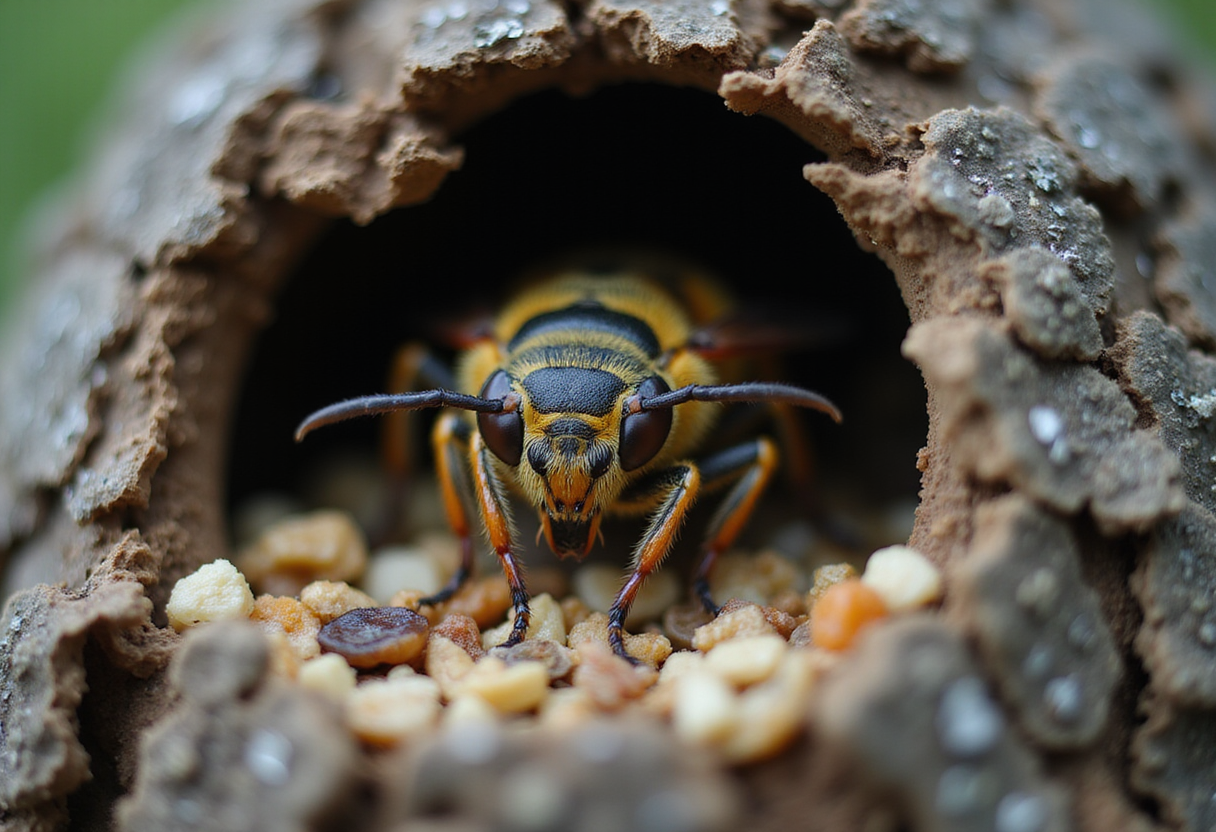
Insects do far more for vertebrates than fill stomachs. Chimpanzees use them to sterilize wounds. Herons use them as fishing bait. Sloths rely on moths to maintain the algae in their fur, which the sloths then eat. Birds and reptiles lay their eggs inside the temperature-controlled chambers of termite mounds, and some desert frogs settle into ant nests for the humidity.
These overlooked relationships are the subject of a major review paper, "The importance of insect biodiversity for vertebrates," published Sept. 30 in Nature Reviews Biodiversity. An international team of authors from eight countries spent years consolidating hundreds of studies conducted across decades to map out how insect biodiversity underpins the lives of backboned animals — including us.
"Insects are sometimes called the 'little things that run the world' because they are so important to life on Earth," said Eliza Grames, an assistant professor of biological sciences at Binghamton University, State University of New York, and co-lead author of the paper. "We often hear about their importance as pollinators, or decomposers, or food for insectivores like birds and bats, but we forget about all the other things they do for us and for other species."
Grames led the review together with Rob Cooke, an ecological modeler at the UK Center for Ecology and Hydrology, and Chris Elphick, a professor of ecology and evolutionary biology at the University of Connecticut. Additional Binghamton contributors include assistant professor of biological sciences Lindsey Swierk and two biological sciences alumni, Julianna Yager (MS '25) and Suyeon Jang ('25). Jang, an undergraduate with a painting minor, created the paper's main illustration as an independent study project.
How insects hold up vertebrate life
Start with the sheer scale. Scientists estimate there are between 14 million and 30 million insect species on Earth, and they shape the health and function of ecosystems everywhere. They feed species from hummingbirds to grizzly bears. Through pollination, they enable the existence of other food sources. They also produce substances such as honeydew, honey and wax that other species consume.
The deeper connections get stranger and more specific. Birds weave spider and insect silk into their nests, and some place those nests near stinging insects such as wasps for added protection — a living security system. More than 200 bird species rub crushed ants into their feathers as part of grooming. The ants likely release chemicals that deter parasites, essentially serving as a natural pesticide. Many vertebrates time their breeding seasons to match peaks in insect abundance, so their young hatch when food is plentiful.
The housekeeping services stretch back millions of years. Insects once lived inside dinosaur nests, cleaning them out, according to Grames. The same service continues today in the nests of some owls and kingfishers.
The project began in 2022 with the creation of the National Science Foundation–funded Status of Insects: An International Research Coordination Network. That network grew directly out of Grames' doctoral work in Elphick's lab.
Declining insects, declining vertebrates
Despite all this, few scientific studies have considered what declining insect populations mean for vertebrates — beyond a simple reduction in food supply. That blind spot worries the authors, because some insect populations have dropped sharply in recent decades, and the consequences will ripple outward to the animals that depend on them.
"We're losing insects at a rate of about 1% to 2% per year," Grames said. "When you scale that up across a few decades, we're talking about a major change to ecosystems. Insect conservation should be a top priority for anyone worried about the future of biodiversity."
A loss of 1% to 2% per year may sound modest. Compounded over 30 years, it implies a dramatically smaller insect population — and with it, fewer nest-building materials for birds, fewer cleaning crews in nests, fewer moths tending sloth fur, and fewer natural pharmacies for wound care.
Bridging two scientific worlds
The authors argue that effective conservation requires understanding these diverse roles, and that means breaking down barriers between disciplines. Elphick, an ornithologist by training, hopes the review will push scientists who study vertebrates to work more closely with those who study insects.
"If you want to have vertebrates, then you've got to be thinking about insect conservation, and we don't do that nearly enough," he said.
The review itself models that collaboration. With authors from eight countries spanning entomology, ornithology and ecology, it treats insects not as a separate conservation concern but as infrastructure for vertebrate life. Protecting a bird, in this framing, means protecting the wasps near its nest, the ants in its feathers and the silk in its walls.
As the paper makes clear, much of the evidence on these relationships remains scattered across decades of individual studies. Consolidating it is a first step. The next one — measuring how fast these connections break as insects decline — is a task the authors hope more researchers will now take up.
via Phys.org Biology (Source)
More from Nathan Brooks
Nearby plates
- Fossil Teeth Suggest Some Dinosaurs Grazed on Seaweed
- Climate Change and Mosquitoes: Why Malaria Falls While Dengue Climbs
- Butterfly Wings Trick Predators With Optical Illusions in Flight
- Bogong Moths Swarm Australia Again After Near-Collapse
- Small Crop Patches Draw 70% More Birds, Three-Year Study Finds