Plate Nº 82 · recorded November 18, 2026
Biology & EvolutionReported finding
Habitat Loss Reshapes Howler Monkey Gut Microbiomes, Study Finds
A Northwestern-led study of endangered Mexican howler monkeys in Veracruz found gut microbiomes shift sharply in fragmented forests, pointing to tree diversity as key.
By Marcus Bennett3 min read613 words
In brief
- About 60% of the original rainforest canopy in Mexico's Los Tuxtlas Biosphere Reserve has been lost.
- Researchers analyzed fecal samples from howler monkeys in 10 rainforest remnants in Veracruz.
- The study measured three biomarkers: gut microbiome, short-chain fatty acids and glucocorticoids.
- The paper is published in Animal Conservation (2026), DOI 10.1111/acv.70119.
- The study was limited to male howlers; a male-versus-female comparison is in progress.
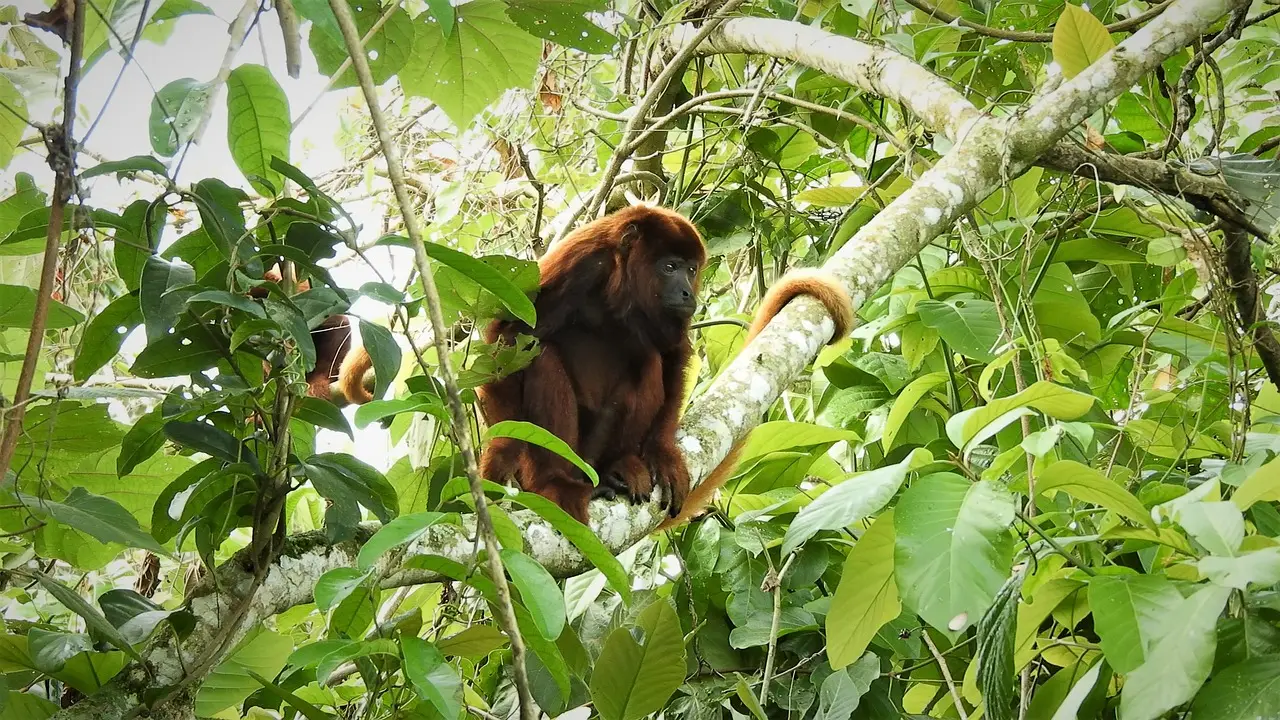
Roughly 60% of the original rainforest canopy in Mexico's Los Tuxtlas Biosphere Reserve has vanished — and new research shows the loss is reshaping the gut microbiomes of the endangered monkeys living there.
Scientists at Northwestern University and Universidad Veracruzana studied Mexican mantled howler monkeys across 10 rainforest remnants in Veracruz, finding that environmental disturbance alters the animals' gut microbes, a key indicator of health and resilience. The study, led by Tabor Whitney, appears in the journal Animal Conservation (DOI: 10.1111/acv.70119).
The findings extend the known toll of deforestation beyond shrinking ranges and declining populations, into the internal biology of the animals themselves.
What did the researchers measure?
Whitney conducted the research as a doctoral student in the lab of Katharine Amato, associate professor of anthropology at Northwestern. Prior studies, Whitney notes, showed gut microbiome differences between pristine and disturbed habitats. This study goes further in two ways:
- It analyzes three biomarkers of overall physiology at once, rather than one.
- It examines distinct habitat characteristics separately, to identify which changes matter most.
The biosphere reserve offered a natural laboratory: 10 rainforest fragments varying in shape and size, canopy maturity, tree density and diversity, and distance from humans. The team collected fecal samples from monkeys in each remnant and analyzed:
- the gut microbiome — the community of microbes living in the digestive tract;
- short-chain fatty acids — molecules produced when gut bacteria ferment fiber;
- glucocorticoids — a class of steroid hormones linked to stress.
Viewing the three together, the researchers could assess how primates in each fragment responded physiologically to their habitat.
In short: the study tracks whole-body health through droppings, not just bacteria counts.
Which habitat features matter most?
The results point to tree structure. Primates in smaller habitats — with trees of smaller diameter and less tree diversity — carried a microbiome makeup substantially different from howlers in more pristine fragments.
That specificity matters for conservation planning. The Mexican mantled howler is endangered, even though mantled howlers as a group are considered highly adaptable to disturbance, which makes the subspecies a valuable case for understanding how wildlife responds to environmental change.
"An awesome takeaway of the study is the knowledge that the gut microbiome is the most sensitive to ecological change," Whitney said. "Moving forward, samples can be collected every five or 10 years for comparing changes over time and evaluating the impact of conservation management efforts."
What could conservation look like?
The findings suggest concrete strategies for an action plan: planting more diverse trees, including fruiting trees that monkeys and birds eat, and expanding connected canopy. Without connected tree lines, monkeys are less likely to travel to other areas to supplement their diet or mate.
Landowners appear willing. "Landowners we've spoken with are really open to these conversations," Whitney said. "They've said they love seeing the monkeys, and if they can help them travel on the trees, they're very interested in it."
What are the study's limits and next steps?
The study covered only male mantled howlers — a real limitation. The team is now writing a follow-up paper comparing male and female microbiomes. Whitney also suggests the approach could extend to other categories of endangered species.
For primatology, the implications reach beyond this subspecies. Many researchers hold stored fecal samples from their own field sites that could be analyzed for evolutionary comparison, Whitney said.
Study co-authors are professor-researcher Pedro A.D. Dias and researchers Ariadna Negrín and David Roberto Chavira Ramírez of Universidad Veracruzana. Whitney is now a postdoctoral scholar in Northwestern's Trienens Institute Climate Change Research Group.
The gut, it turns out, keeps a record of the forest the monkeys have lost.
via phys.org/rss-feed/ (Source)
More from Marcus Bennett
Show full bio
News editor covering regulation, policy and their impact on general science news at SciBeat.
493 articles
Nearby plates
- Gut Microbes Traveled With Humans Out of Africa, Genome Study Finds
- Tree-rich landscapes help birds and bats nearly double Peru's cacao yields
- Tracking 4,581 Animals Reveals a Hidden Human Effect on Wildlife
- Protecting Standing Amazon Forests Beats Restoration, Study Finds
- Genome study identifies two new Amazon howler monkey species