Plate Nº 35 · recorded October 30, 2026
Space & AstronomyReported finding
ISS Solar Array Upgrade Advances With Seventh Installation
Menon and Kutryk spent 7 hours, 11 minutes installing the seventh of eight new ISS solar arrays. The eighth is set for Nov. 5, with NASA claiming up to 30% more power.
By James Calloway3 min read620 words
In brief
- A 7-hour, 11-minute spacewalk on Oct. 30, 2026 installed the seventh IROSA on the ISS's 2A power channel.
- NASA says the eighth and final array is scheduled for Nov. 5 on the 3B channel.
- Eight arrays could raise electricity generation capacity from 160 kilowatts to about 215 kilowatts, with a stated increase of up to 30%.
- U.S. spacewalk 100 marked Menon's fourth spacewalk, Kutryk's first and the station's 285th support spacewalk.
By James Calloway
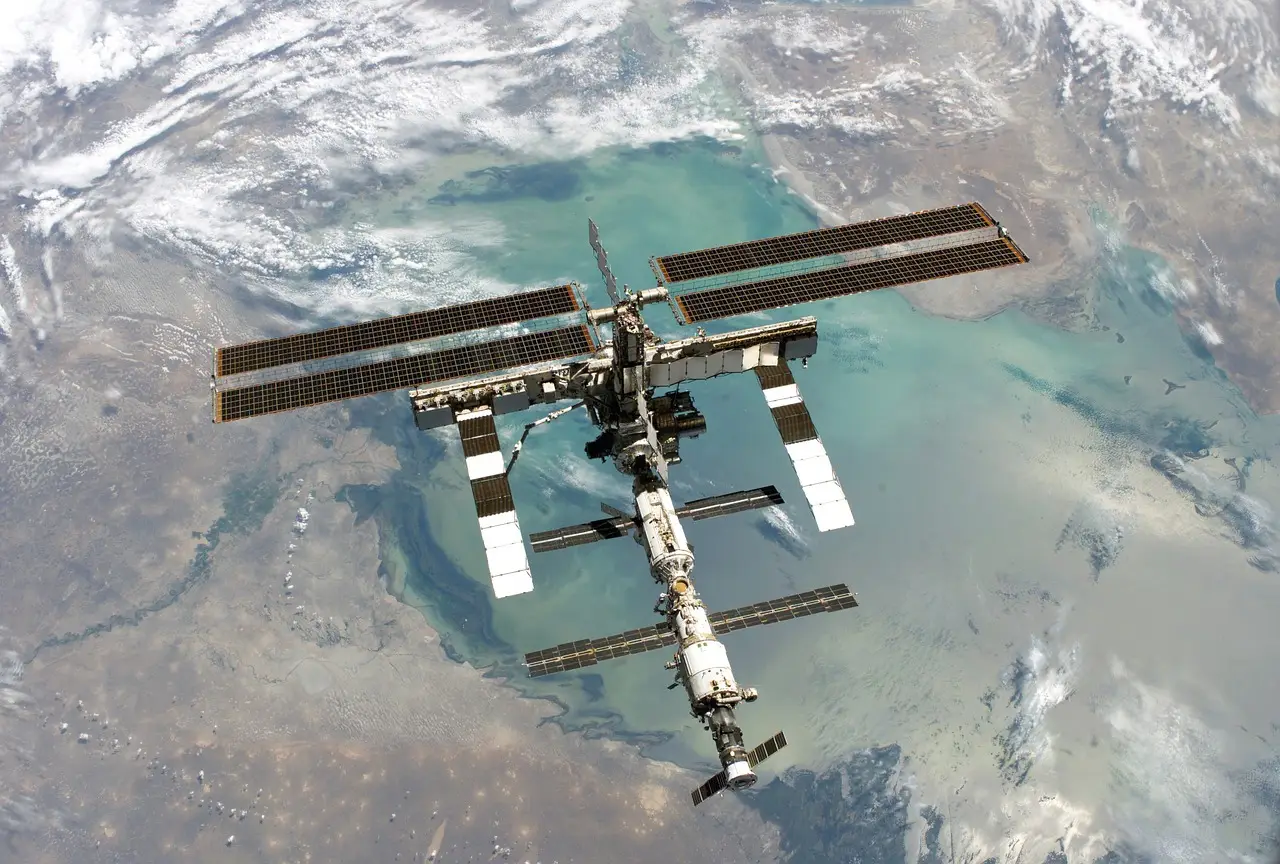
NASA astronaut Anil Menon and Canadian Space Agency astronaut Joshua Kutryk spent 7 hours, 11 minutes outside the International Space Station on Oct. 30, 2026, installing and deploying the seventh of eight planned roll-out solar arrays for an upgrade NASA says could increase the station's available power by as much as 30%.
They finished their work at 3:08 p.m. EDT. Menon and Kutryk installed the new International Space Station Roll-Out Solar Array, or IROSA, on the station's 2A electrical power channel. In plain terms, astronauts position this panel outside the orbiting laboratory, then roll out its solar surface, adding electricity from sunlight to the station's power system.
NASA framed the larger goal in its release: “Once the final array is installed, the International Space Station's solar power expansion will be complete.” That statement depends on another spacewalk. The eighth and final array remains scheduled for Thursday, Nov. 5, so the full claimed gain is not yet in place.
What did the 100th U.S. spacewalk accomplish?
The mission, designated U.S. spacewalk 100, marked Menon's fourth spacewalk and Kutryk's first. It was the 285th spacewalk supporting the station's assembly, maintenance, and improvement.
Beyond installing the seventh array, the astronauts performed preliminary tasks for the Nov. 5 mission. During that outing, astronauts will install the eighth and final array on the station's 3B power channel. NASA plans live coverage beginning at 6:45 a.m., and says it will provide viewing information through the agency.
How much additional power can the station generate?
After the final installation, the eight new arrays together could increase available power by as much as 30%. NASA says the expansion raises electricity generation capacity from 160 kilowatts to approximately 215 kilowatts.
The arithmetic deserves attention. Moving from 160 to about 215 kilowatts represents roughly a 34% increase, slightly above NASA's headline figure. The release refers to both “available power” and “generation capacity” without fully explaining the relationship, so readers should not treat those numbers as perfectly interchangeable.
The mechanism is straightforward: more deployed solar panels feed designated power channels, producing more electricity when sunlight reaches them. The operational payoff is extra power for essential station operations and, eventually, a safe and controlled deorbit, meaning a guided descent from orbit rather than an uncontrolled fall.
That is the main promise. It is also the main limit. The seventh array adds electricity now, but the full eight-array benefit awaits the scheduled Nov. 5 spacewalk. NASA provides no breakdown showing how much added power each station activity would receive, and the release does not set a deorbit date or show how power needs may change between 2026 and the station's planned end.
What does this change for station operations?
Operationally, the upgrade gives the space station more electrical capacity for ongoing work while NASA prepares for its eventual departure from orbit. It does not immediately deliver the complete advertised increase, because one array remains outstanding, and any delay to the final spacewalk would delay completion.
For readers watching the work, the practical next step is NASA's Nov. 5 broadcast at 6:45 a.m. The agency will provide the viewing details. After that outing, the useful checks will be whether the final array installs successfully and whether NASA's published power figures clarify the gap between the stated 30% gain and the approximately 215-kilowatt capacity.
The milestone is real: seven arrays are installed, the seventh went up on the 2A channel, and an eighth is scheduled for 3B. The full power claim remains conditional, though, on that final spacewalk and on numbers the release leaves slightly out of step.
via ScienceDaily: Space & Time (Source)
More from James Calloway
Show full bio
Staff writer covering regulation, policy and their impact on general science news at SciBeat.
270 articles
Nearby plates
- Space Station's Roll-Out Solar Arrays Add Over 160 Kilowatts
- NASA Seeks Industry Proposals for Commercial Space Stations
- SpaceX Delivers Brain Models, Heart Tissue and Retina Tech to Space Station
- NASA's SpaceX Crew-13 Set for Oct. 1 Launch to Space Station
- Crew-12 Astronauts Return After 237 Days and 100 Million Miles in Orbit