Plate Nº 82 · recorded November 15, 2026
Biology & EvolutionReported finding
Kelp Can Reproduce Alone When Mates Are Scarce, Study Finds
Kelp with no mate nearby can reproduce alone — and even males do it, a PLOS Biology study of South African kelp shows. The offspring, however, pay a steep price.
By Priya Raman4 min read771 words
In brief
- Mixed male-female kelp cultures produced more than twice as many offspring as single-sex cultures
- 92% of mature lab cultures from wild kelp reproduced asexually, yet none of 523 wild-sampled kelp showed genetic evidence of it
- Both male and female kelp increased asexual reproduction when potential mates were absent, even when sharing seawater through a mesh
- The study of Laminaria pallida, from South Africa and Namibia, was published in PLOS Biology
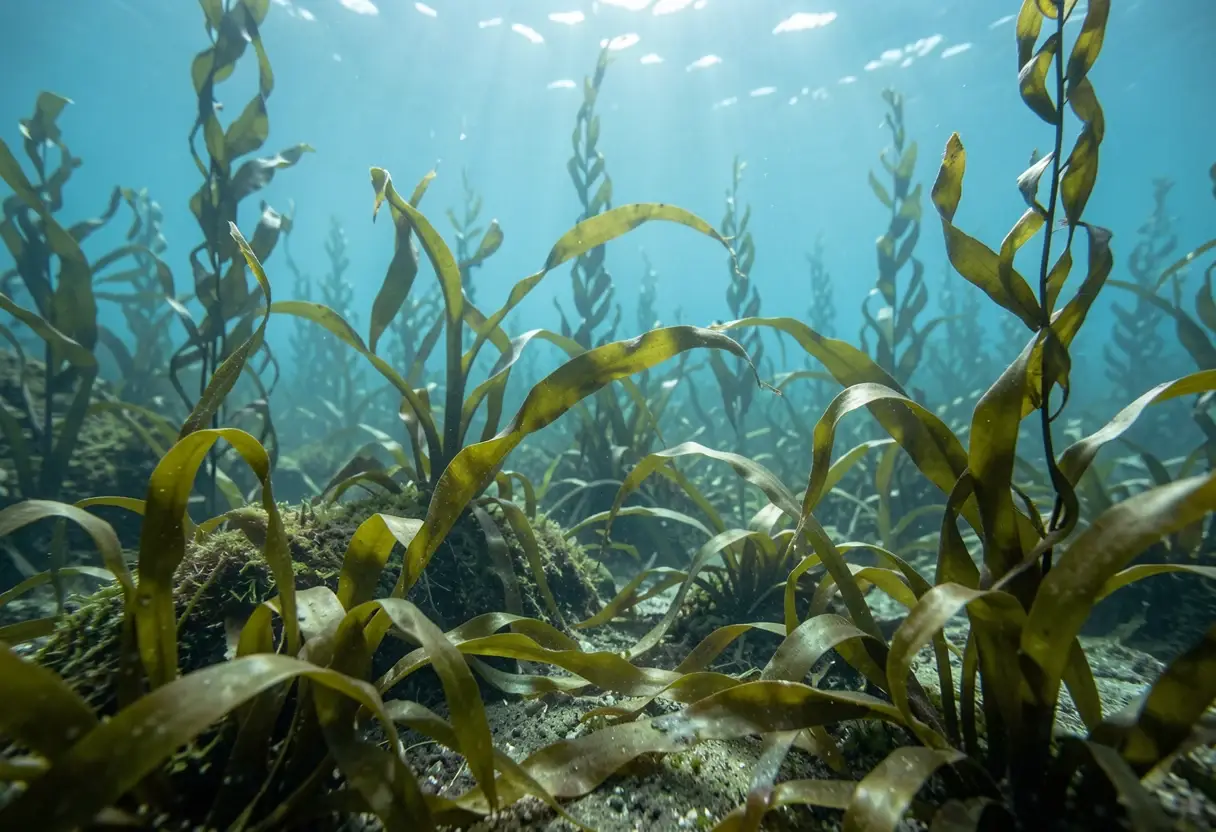
When a kelp cannot find a mate, it can produce offspring entirely on its own — and, according to a new study in PLOS Biology, even males can do it. The catch: the resulting seaweeds are stunted, with misshapen blades and poorly formed anchors, and none appear to develop reproductive structures.
The study examined Laminaria pallida, a kelp species found along the coasts of South Africa and Namibia. Its lead author, Daniel Liesner, now at the GEOMAR Helmholtz Centre for Ocean Research Kiel in Germany, told ZME Science: "Our findings highlight that kelps are even more flexible in their reproduction than previously appreciated."
How does kelp reproduction normally work?
Most people do not think of kelp as having sexes, but these giant seaweeds lead a double life. The towering underwater forests we recognize are only one stage of their life cycle. Kelp also spend part of their lives as microscopic organisms that are either male or female. These microscopic stages produce sperm and eggs, which normally join to grow a new large seaweed.
Sometimes, however, an unfertilized reproductive cell starts developing anyway. Scientists call this process parthenogenesis — literally "virgin birth," reproduction without the fusion of two cells.
To test what happens when kelp go solo, the researchers grew male and female cultures separately and compared the offspring with those produced in mixed cultures.
Sex won decisively. Mixed cultures produced more than twice as many young kelp. Offspring produced without fertilization were smaller and often had deformed blades or poorly developed anchoring structures — the holdfasts that glue a kelp to rock.
What did the DNA reveal?
The asexually produced kelp carried a genetic oddity. Their cells underwent endoreduplication, a process in which cells copy their DNA without dividing. Genetic tests confirmed that these offspring carried only one type of sex chromosome, consistent with an origin from a single unfertilized cell.
Then came a revealing experiment. The researchers placed male and female cultures on opposite sides of a fine mesh that let them share seawater without direct contact. In both sexes, asexual reproduction increased when potential mates were absent. Somehow, kelp can sense whether a partner is nearby.
Chemicals carried in the water are one candidate. "We already know that males can sense a pheromone released by the female eggs, which triggers sperm release and their attraction," Liesner said.
Why is male parthenogenesis surprising?
Sperm are specialized for one job: finding and fertilizing an egg. They are not supposed to become entire organisms on their own. Yet that is exactly what the team observed.
A 2024 study of L. pallida had already described male cultures producing egg-like structures and abnormal offspring. The new work tracked the transformation in detail, analyzing patterns of gene activity as the cells developed. Male reproductive cells grew larger, and their gene activity shifted away from a male pattern toward one resembling female cells and embryos.
Liesner explained that both sexes appear to carry the machinery for making larger reproductive cells capable of developing alone, but in males this capacity is "usually overridden by a dominant male sex locus" — the stretch of DNA that determines maleness. When genes on that locus quiet down, female-biased genes switch on, a shift the team calls "feminisation," while male-biased genes switch off. His group's earlier research on giant kelp found the same pattern: male development overrides a more female-like starting program.
Does this backup plan work in the wild?
Here the results turn paradoxical. Among 523 kelp sampled in South Africa and Namibia, the team found no clear genetic evidence of asexual reproduction in nature. Yet 92% of mature laboratory cultures established from that wild kelp produced offspring without fertilization.
"This paradox was what puzzled us most — why maintain a trait if there is seemingly no benefit?" Liesner said. His answer: asexual reproduction drops when mates are nearby, and sexually produced offspring are fitter, so asexually produced ones are likely outcompeted in healthy, dense populations.
The wider picture is mixed. A 2007 study of Chilean kelp found that asexually produced individuals could develop normally, and a 2024 study documented populations of another brown alga, Scytosiphon, that had abandoned sex entirely and reproduce better without it. "The costs or benefits of parthenogenesis definitely depend on the organism," Liesner noted.
For L. pallida, the backup may matter most in sparsely populated habitats where mates are scarce — though researchers have not established whether asexual offspring survive long enough to reproduce in nature. Notably, asexual development in the experiments mostly began only after opportunities for sex had passed.
"Simply put, it may be better to develop poorly than not at all," Liesner said.
via zmescience.com (Source)
More from Priya Raman
Show full bio
Senior reporter covering people, launches and day-to-day practice in general science news at SciBeat.
402 articles
Nearby plates
- Lab study finds split-fan kelp switch to cloning without mates
- Swimming Sea Cucumbers Intercept Sinking Carbon in the Deep Ocean
- 'Planimal' Cells Keep Nearly Whole Algal Genome for 155 Generations
- Nine Young Sea turtles Settle Into a Human-Made Lagoon in the Gulf of Oman
- Hydra loses immortality under cold, tied to taurine loss